Does spotting count as the first day of a period?
Spotting vs. a period
Updated January 20, 2026 • Medically reviewed by Dr. Emma Dickie
Medically reviewed by Dr. Emma DickieIn this article
Quick summary
- Spotting is light bleeding and often does not count as the first day of a period, especially when tracking cycles over time
- Light bleeding though can mark the start of menstruation, but period tracking usually begins from the first day of steady flow
- Understanding spotting more generally helps prevent confusion with irregular cycles
Spotting can be confusing, especially for teens who are still learning what their period looks and feels like.
Many ask luna the same question: “Has my period actually started yet?”
A lot of the uncertainty comes from not knowing how light bleeding differs from true period flow.
But knowing it allows your teen to understand their cycle and work out if they have irregular periods or what their first period looks like.
So, let’s look at what spotting actually is and how you can help your teen track their period and symptoms.
What does spotting look like?
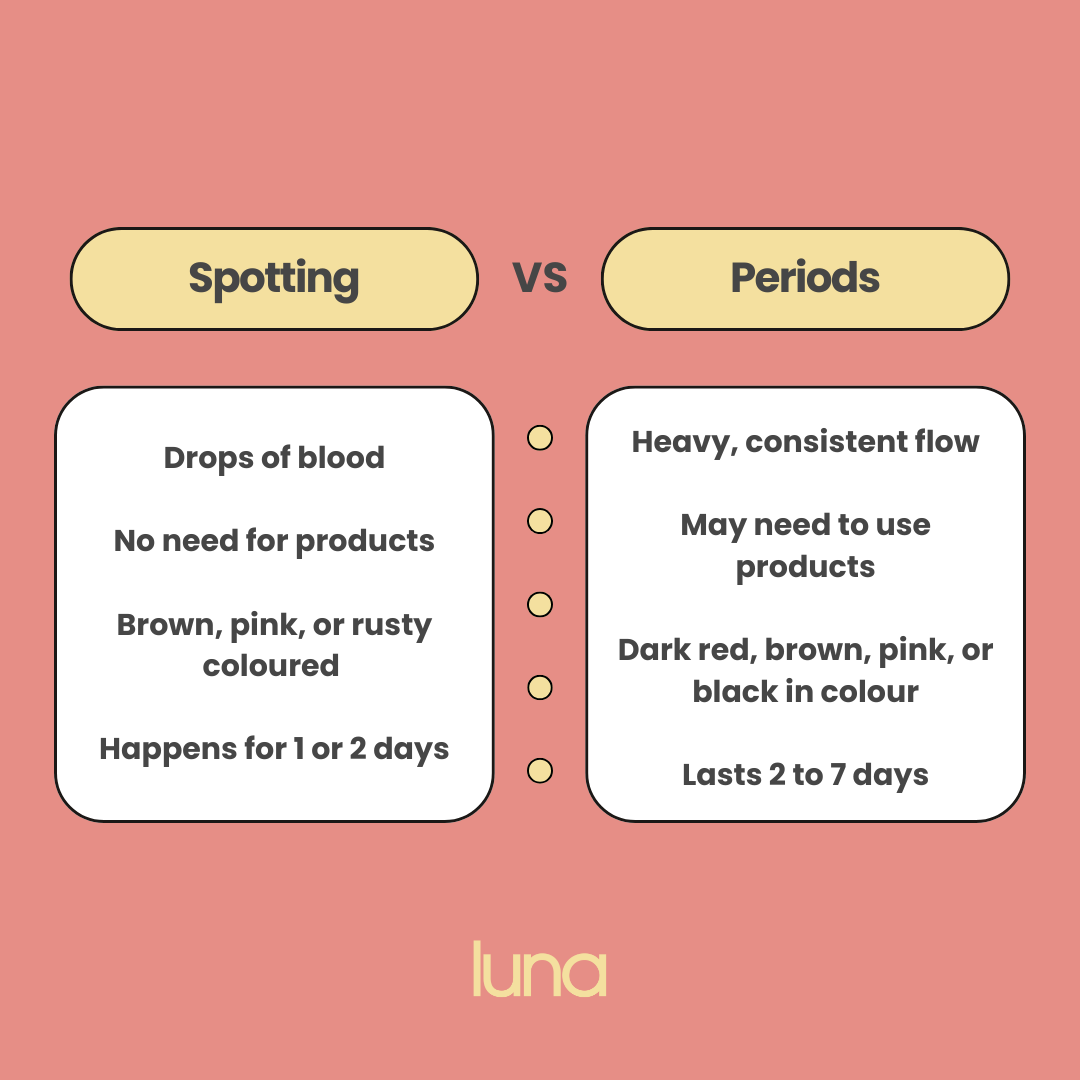
Spotting is light, faint bleeding that often shows up as:
- brown, pink, or rusty-coloured discharge
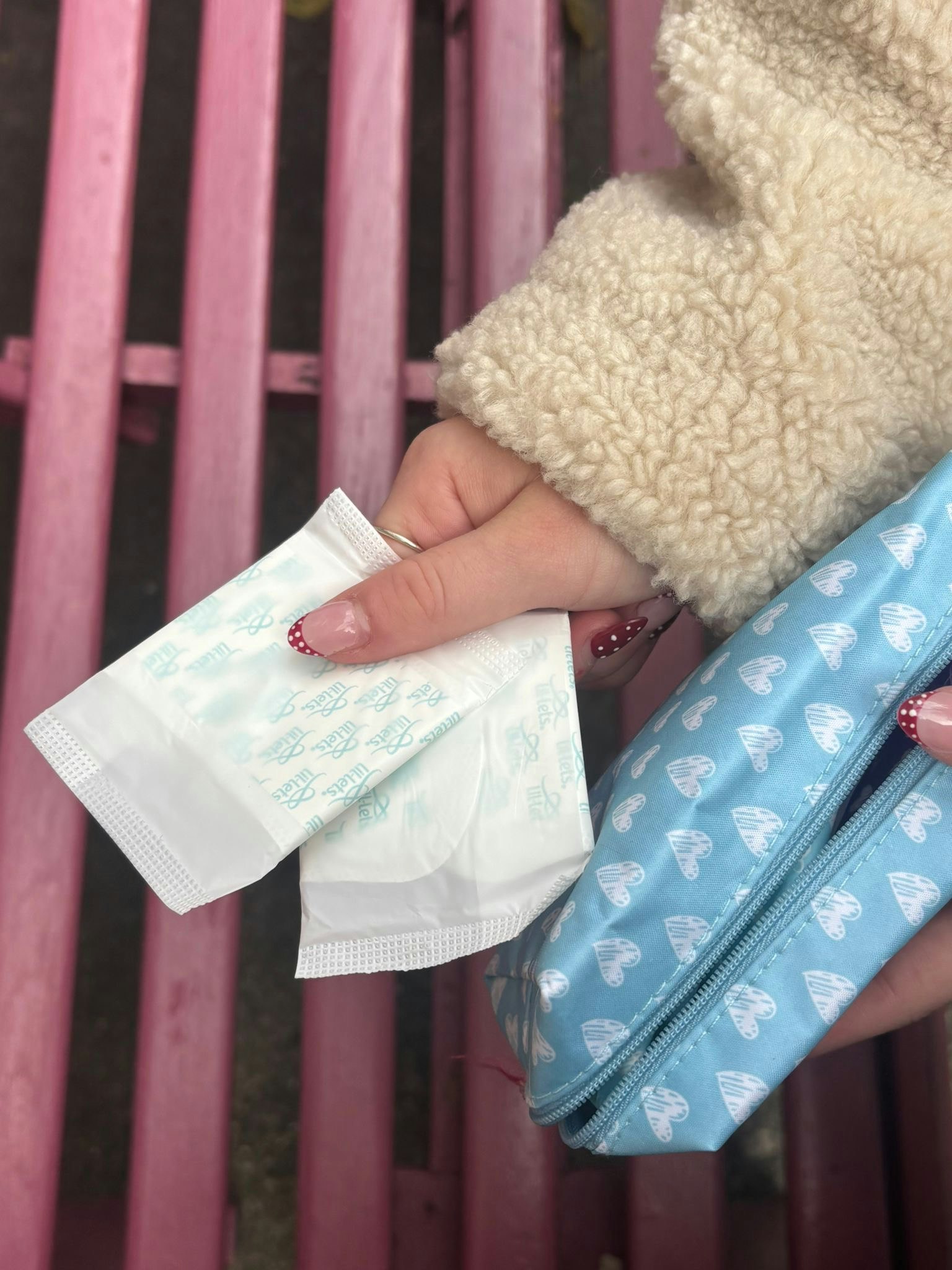
- tiny amounts on underwear or liners
- marks that appear only when wiping
It can look different from day to day, but the key idea is that spotting is minimal.
Does spotting count as a period?
For teens who have never had a period before, very light bleeding or spotting can be their first menstrual bleed.
But for tracking cycles over time, most healthcare guidance counts day one as when bleeding becomes steady.
Spotting is often described as bleeding between periods. It’s useful to track, as persistent spotting can sometimes indicate an underlying issue.
Why spotting happens before a teen’s period
So, what is spotting actually about when someone’s a teen?
It can be worrying for your teen to see bleeding when they are not actually on their period, but spotting before a period is often harmless.
Teens may notice spotting due to:
- Natural hormone shifts
- The uterus preparing to shed its lining
- Stress, sleep changes, or busy routines
- Normal cycle fluctuations
This pattern often becomes a familiar over time.
When spotting might be normal
Spotting can be a completely normal part of growing up, and it often happens at predictable times in a teen’s menstrual cycle.
Some teens notice it at the very start of puberty, when their body is still adjusting to hormonal changes.
Others might see when their period is ending, or after exercise.
It’s also common during months when hormonal ups and downs are more noticeable, such as times of stress, changes in sleep, or growth spurts.
Some teens experience spotting regularly, while others hardly notice it at all. Both are perfectly normal variations.
When spotting might need attention
Spotting isn’t usually a cause for concern, but it’s worth checking in with a doctor if your teen experiences:
- Frequent spotting between cycles
- Spotting that comes with pain that isn’t typical period cramping, such as burning, itching, or unusual abdominal pain
- Bleeding that seems unusually heavy and lasts for more than 7 days
Trust your instincts. If something feels out of the ordinary, it’s always best to ask for help.
How to help your teen track spotting and periods
Learning to track menstrual cycles takes a bit of practice, but a few simple habits can make it much easier.
One helpful approach is encouraging your teen to record spotting separately from their actual period.
This way, they can see patterns over time and understand the difference between a light pre-period bleed and steady flow.
It’s also important to wait for steady bleeding before marking “day one” of their period.
That ensures tracking stays accurate and avoids confusion about cycle length.
Teens can use simple notes in a notebook or period tracking apps to help identify trends in their cycle.
Thankfully, luna can help your teen with all of this.
On luna, your teen can track symptoms, such as acne and mood changes, and bleeding (including spotting).
When tracking their cycle with luna, your teen will begin to understand what’s normal for their body.
Over time, it gives them confidence and control over their own cycle.
How we created this article:
luna's team of experts comprises GPs, Dermatologists, Safeguarding Leads and Junior Doctors as well as Medical Students with specialised interests in paediatric care, mental health and gynaecology. All articles are created by experts, and reviewed by a member of luna's senior review team.
Sources:
NHS “Starting your periods”
https://www.nhs.uk/conditions/periods/starting-periods/NHS “Bleeding between periods”
https://www.nhs.uk/symptoms/vaginal-bleeding-between-periods-or-after-sex/We'd love to keep in touch!
Sign up to our parent newsletter for emails on the latest teen trends, insights into our luna community and to keep up to date
By signing up, you are agreeing that we can use your email address to market to you. You can unsubscribe from marketing emails at any time by using the link in our emails. For more information, please review our privacy statement.