Is there a period tracker for irregular periods?
How teens can learn their cycle
Updated January 28, 2026 • Medically reviewed by Dr. Emma Dickie
Medically reviewed by Dr. Emma DickieIn this article
- Is there a period tracker for irregular periods?
- What is considered an irregular period?
- Why are periods often irregular in teenagers?
- How should teens track irregular periods?
- How do I know when my daughter’s period is due?
- Can I trust my daughter’s period tracker if her cycles are irregular?
- How can luna help teens with irregular periods?
- When to see a doctor about irregular periods?
- Can irregular periods become regular again?
- FAQs
Is there a period tracker for irregular periods?
Yes, there are period trackers designed for irregular periods.
They work by tracking symptoms and repeating body patterns over time rather than relying only on fixed cycle dates, which can be unreliable when periods are unpredictable, especially during the teen years.
Parents who want to look into options can also read more about the best period tracker app for teenage girls, including which features matter most.
What is considered an irregular period?
A period is considered irregular if the time between periods changes often, cycles are shorter than 21 days or longer than 35 days, or periods are frequently missed.
This is common in teenagers and usually normal in the early years as hormones can take a few years to settle after a first period.
A regular menstrual cycle is often described as lasting between 21 and 35 days, but many teens fall outside this range at first. This is not usually a sign that anything is wrong.
However, if periods remain irregular for more than two years, or if your teen misses three or more periods in a row, it may be helpful to speak with a doctor to make sure no further tests are needed.
Why are periods often irregular in teenagers?
Periods are often irregular in teenagers because the hormones that control the menstrual cycle are still developing.
It can take a few years after the first period for cycles to become more predictable.
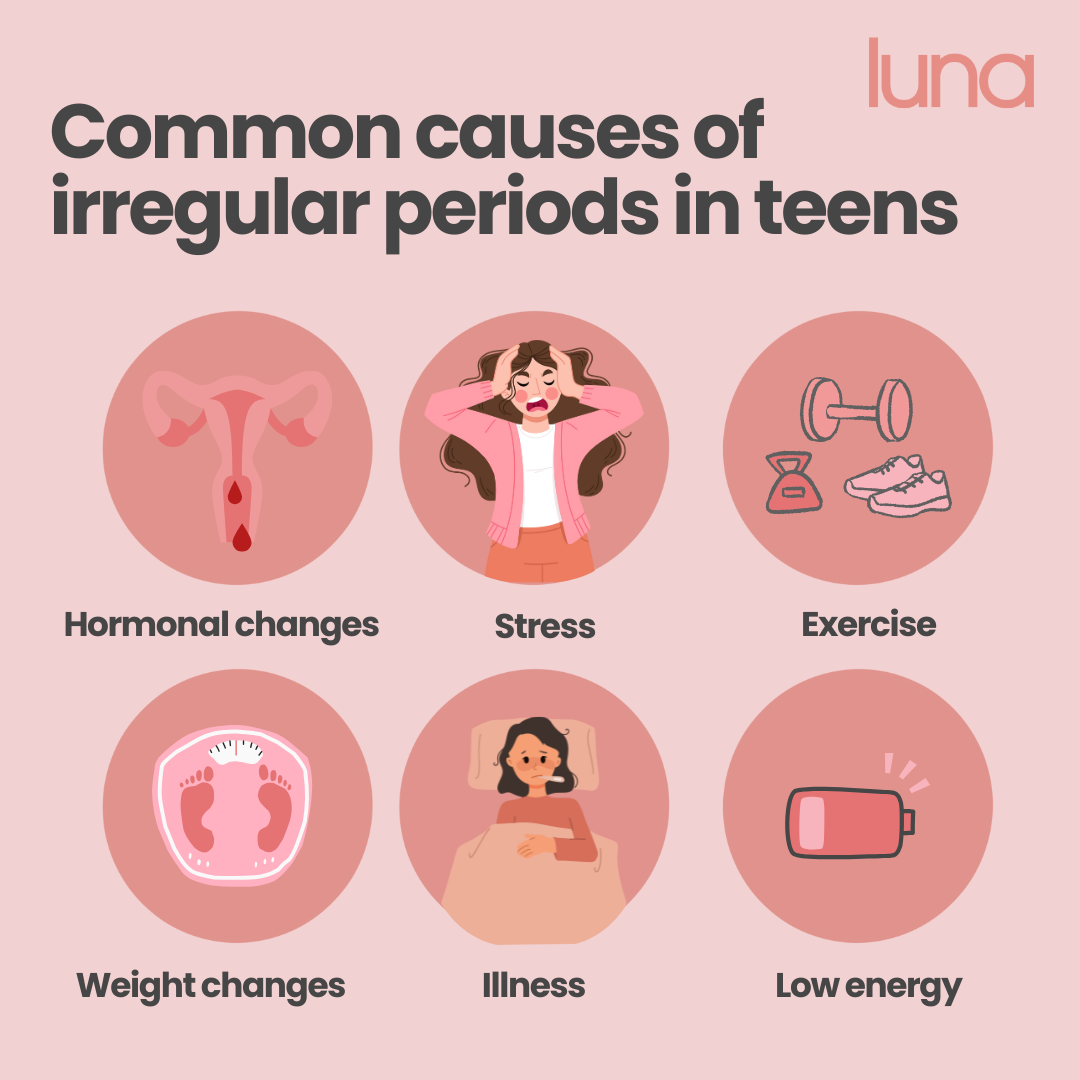
Many everyday factors can also affect cycle timing and cause irregular periods during adolescence.
Common reasons include:
- puberty and hormonal changes
- stress or emotional ups and downs
- changes in sleep, school routine, or exercise
- growth spurts and weight changes
- illness or low energy availability
Because of this, learning body signals is often more helpful for teens than focusing on calendar dates alone.
Learning about the phases of the menstrual cycle can also help explain why symptoms repeat even when cycle length changes.
How should teens track irregular periods?
Teens with irregular periods should track symptoms and body changes rather than relying only on predicted dates.
Logging physical and emotional signs can help teens recognise patterns that repeat each cycle.
Helpful things to track include:
- mood changes, such as irritability or anxiety
- skin changes, including breakouts or oiliness
- cramps or lower back pain
- breast tenderness
- bloating
- discharge changes
- energy levels
- headaches or fatigue
Even when periods arrive at different times, these signs often appear in a similar order each cycle.
If you’re supporting your teen at home, this guide on how to track your daughter’s period explains simple ways to help without pressure.
How do I know when my daughter’s period is due?
You know a period is due by noticing changes in your body or mood in the days or weeks beforehand.
For many teens, these signs tend to show up in a similar pattern each cycle, even if the timing of periods changes.
These signs can act as early warnings that a period is approaching.
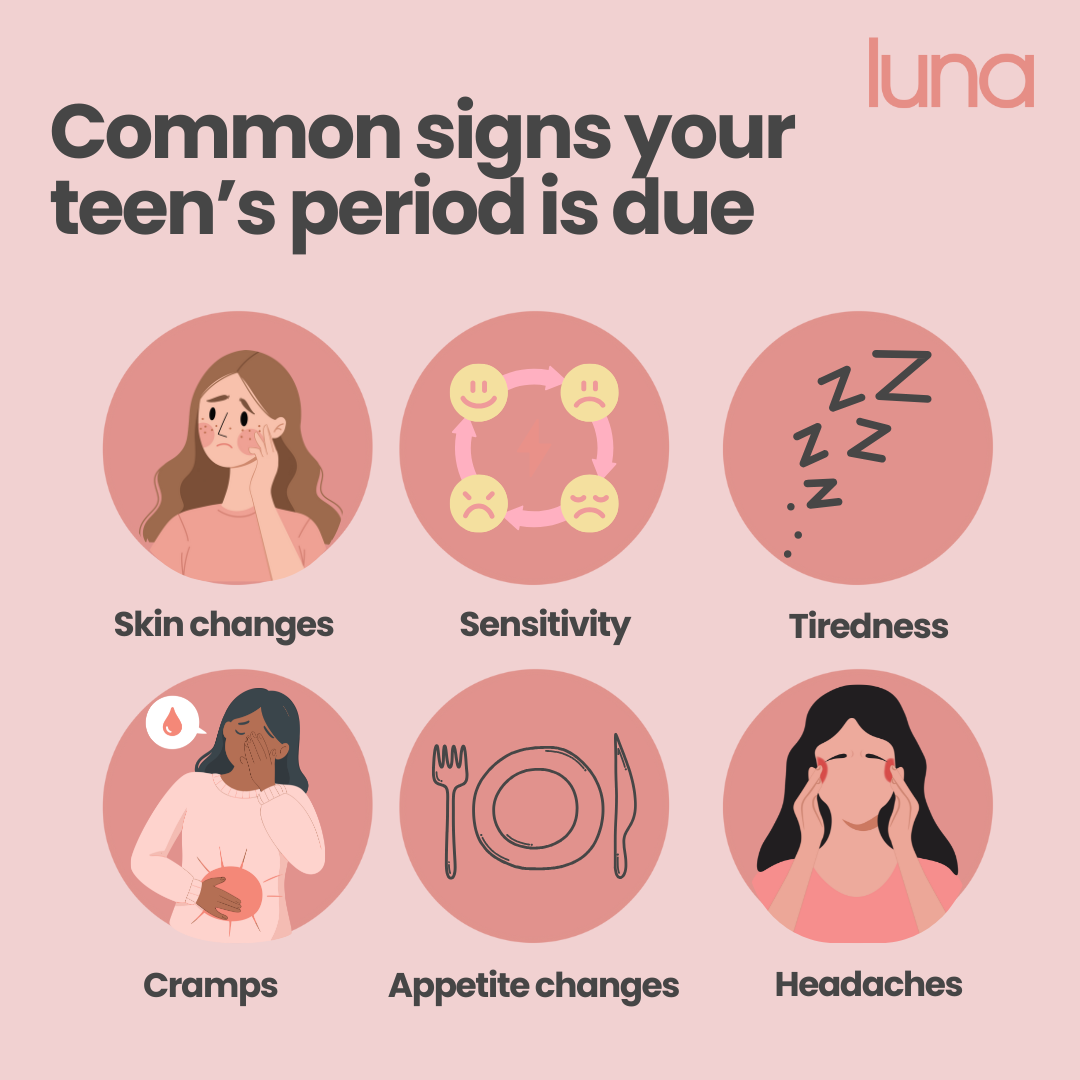
Common pre-period signs include:
- spots or changes in skin
- feeling more emotional or sensitive
- tiredness or low motivation
- cramps or achy legs
- bloating
- headaches
- changes in appetite
Not everyone experiences the same signs, which is why personalised tracking can help support your teen in developing an awareness of her own body signals that a period is approaching.
Many parents also ask when their teen’s next period might arrive, and this guide explains how common signs can help predict your teen’s next period, even with irregular cycles.
Can I trust my daughter’s period tracker if her cycles are irregular?
A period tracker can still be trusted for irregular periods when it focuses on symptom patterns rather than exact date predictions.
Accuracy improves the more consistently information is logged.
While predicted dates may be less precise at first, tracking apps can still:
- help teens notice recurring symptoms
- show patterns over time
- make periods feel less unpredictable
- support body awareness rather than calendar pressure
This can reduce anxiety around unexpected periods and help teens feel more prepared.
How can luna help teens with irregular periods?
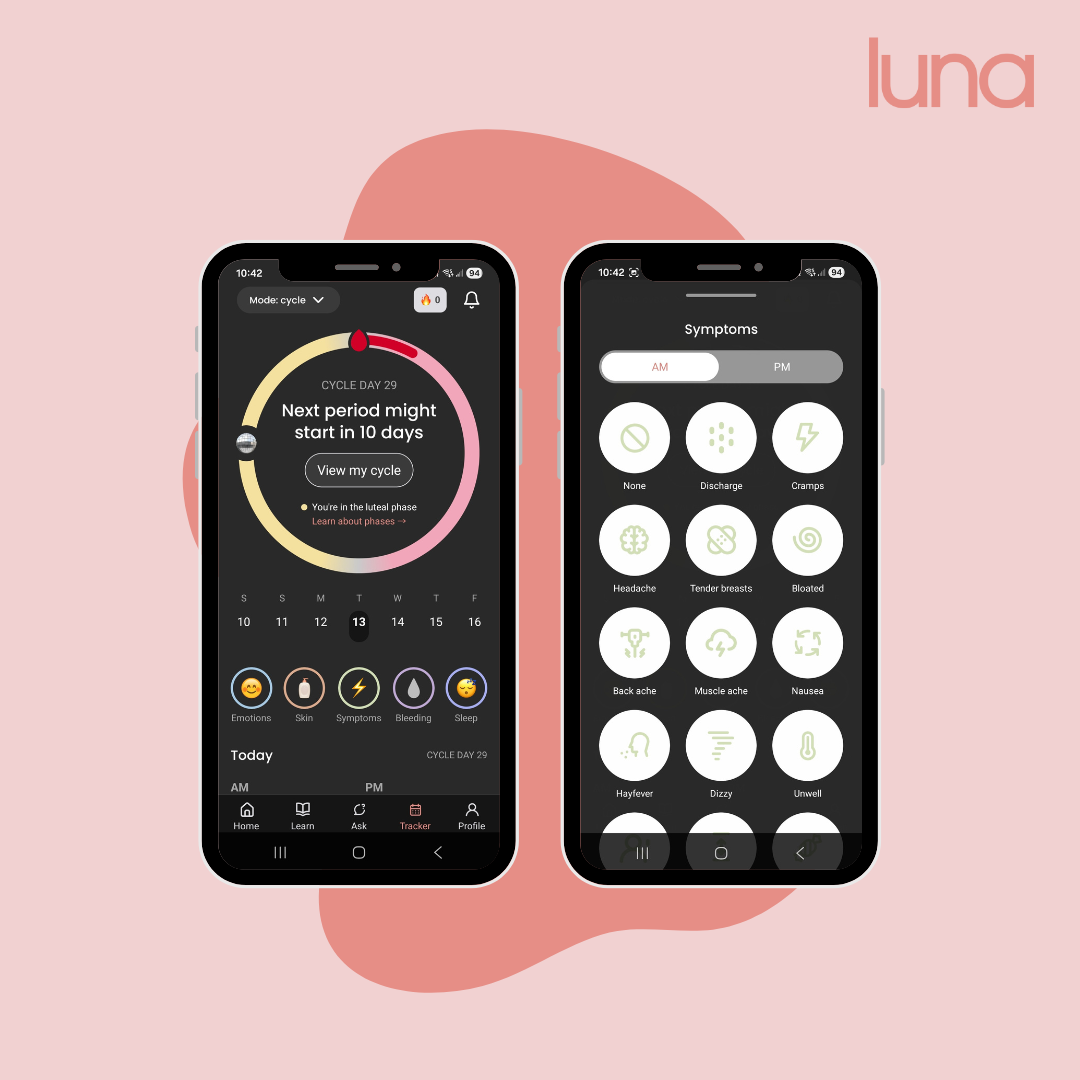
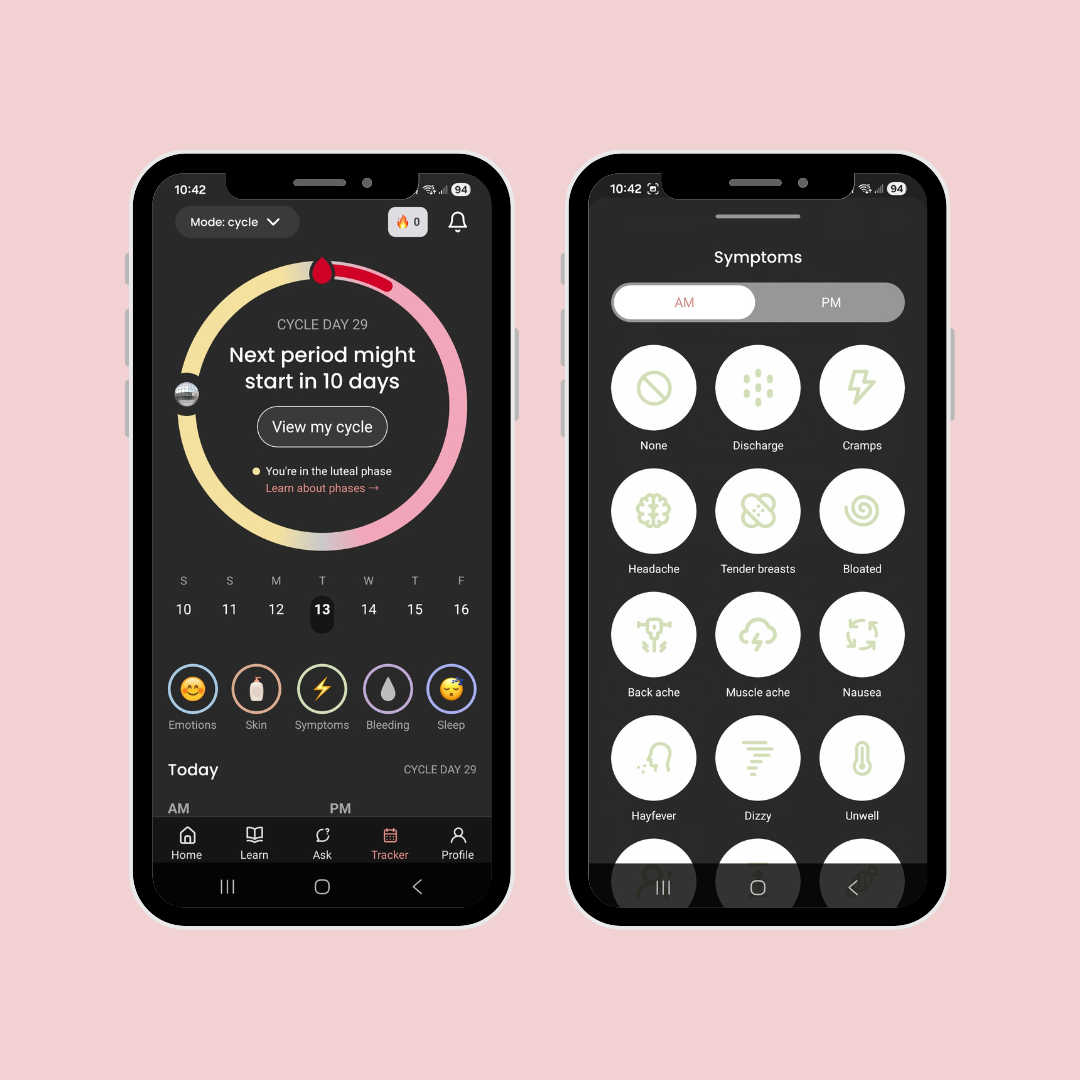
luna helps teens with irregular periods by focusing on symptoms, emotions, and body changes rather than just rigid cycle predictions (which are also available).
This allows teens to learn their own patterns at their own pace.
With luna, teens can:
- log symptoms like skin changes, mood, cramps, and energy
- see patterns build over time
- learn which signs usually come before their period
- read medically approved articles and ask anonymous questions to experts
Because luna is designed specifically for young people, it encourages learning and self-awareness rather than perfection.
If privacy is a concern, this teen period tracking app safety guide explains what to look for in an app designed for young people.
When to see a doctor about irregular periods?
It’s a good idea to see a doctor if irregular periods continue for a long time, suddenly change, or begin to affect daily life.
Signs to look out for include:
- periods stop for three months or more
- periods are very irregular beyond 2 years of having periods
- bleeding is very heavy or often lasts longer than 7 days
- Pain or bleeding interferes with daily life e.g. attending school
- Symptoms like extreme fatigue, dizziness or fainting
Tracking periods and symptoms can also be helpful information to share with a healthcare professional.
Can irregular periods become regular again?
Sometimes, periods become more predictable as hormones settle with time for many teens.
And tracking symptoms can help teens feel prepared even before cycles become regular.
Irregular periods are a normal part of growing up, but that doesn’t mean teens have to feel caught off guard every month.
By tracking patterns rather than dates alone, teens can build confidence and better understand how their body works during this stage of change.
For parents weighing different options, this guide to choosing a teen period tracker covers what matters most for irregular cycles, privacy, and ease of use.
FAQs
Is a period tracker still useful if cycles are irregular?
Yes. A period tracker can still be useful when periods are irregular because it helps teens notice symptom patterns rather than relying only on dates.
Apps like luna focus on tracking changes in mood, skin, pain, and energy, which often follow a similar order each cycle even when timing varies.
How do you track a period if it is irregular?
Instead of focusing only on predicted dates, it helps to track physical and emotional signs such as cramps, tiredness, breast tenderness, or mood changes.
Over time, these patterns can act as early warnings that a period is coming, even when cycle length changes from month to month.
At what point is a period considered irregular?
A period is usually considered irregular when cycle lengths vary a lot, when months are skipped, or when bleeding happens very frequently or very far apart.
For teens, this is common in the first 1-2 years after periods begin and often settles as hormones stabilise.
Why do predictions change so often with irregular periods?
Predictions change because the tracker is adjusting to new cycle information each time a period is logged.
When cycles vary, the app cannot rely on a stable average, so dates may shift. This does not mean the tracker is broken, just that the body is still finding its rhythm.
Can tracking make irregular periods feel less stressful?
For many teens, yes. Tracking symptoms can help make periods feel less sudden and more expected, even when timing changes.
Seeing patterns build over time can reduce anxiety and help teens feel more prepared for when bleeding starts.
Should I be worried if my teen’s periods are still irregular?
Irregular periods are usually normal in the early years after a first period.
If periods remain very irregular after about two years, stop for 3 months in a row, or are very heavy or painful, it is a good idea to speak with a doctor for reassurance and advice.
How we created this article:
luna's team of experts comprises GPs, Dermatologists, Safeguarding Leads and Junior Doctors as well as Medical Students with specialised interests in paediatric care, mental health and gynaecology. All articles are created by experts, and reviewed by a member of luna's senior review team.
Sources:
NHS "Irregular periods" | Accessed 13.01.25
https://www.nhs.uk/symptoms/irregular-periods/KidsHealth "Irregular periods" | Accessed 13.01.25
https://kidshealth.org/en/teens/irregular-periods.htmlNHS Inform "Premenstrual syndrome" | Accessed 13.01.25
https://www.nhsinform.scot/healthy-living/womens-health/girls-and-young-women-puberty-to-around-25/periods-and-menstrual-health/premenstrual-syndrome-pmsWe'd love to keep in touch!
Sign up to our parent newsletter for emails on the latest teen trends, insights into our luna community and to keep up to date
By signing up, you are agreeing that we can use your email address to market to you. You can unsubscribe from marketing emails at any time by using the link in our emails. For more information, please review our privacy statement.