Is period syncing real?
Do mothers and daughters really sync?

Updated January 16, 2026 • Medically reviewed by Dr. Emma Dickie
Medically reviewed by Dr. Emma DickieIn this article
- Period syncing with your daughter: is it possible?
- What is period syncing?
- Can my period sync with my daughter?
- Can your period sync with someone else?
- Why do periods seem to sync with other girls?
- Why do some studies mention mother-daughter period syncing?
- Is period syncing more common in teens?
- What’s a better way to understand your teen’s cycle?
- FAQs
Period syncing with your daughter: is it possible?
Periods do not biologically sync between parents and daughters.
While cycles can sometimes overlap, this is usually coincidence rather than hormones influencing each other – especially during the teenage years, when periods are still irregular.
What is period syncing?
Period syncing is the idea that people who menstruate start having their periods at the same time after spending lots of time together.
The idea of period syncing (sometimes called menstrual synchrony) first became popular in the 1970s, when researchers suggested that pheromones – natural chemicals released by the body – might influence menstrual timing in others.
More recently, the concept has resurfaced on social media, where teens sometimes describe it as “bluetoothing” periods.
In simple terms, period syncing suggests that proximity causes cycles to align.
Can my period sync with my daughter?
There is no strong scientific evidence that a parent’s period can biologically sync with their daughter’s.
If a mother and daughter have periods around the same time, it’s most likely coincidence rather than hormones influencing each other.
This is especially true for teens, whose cycles can be irregular for a few years after their first period.
Can your period sync with someone else?
Current research suggests that periods do not reliably sync between people.
While early studies suggested synchrony among roommates or family members, later research has found inconsistent results.
Most scientists now agree that apparent syncing is more likely due to chance than pheromonal influence.
Why do periods seem to sync with other girls?
Periods can seem to sync because menstrual cycles naturally shift and overlap over time.
Periods can seem to sync because:
- menstrual cycles aren’t exact and shift month to month
- teens’ cycles are often irregular, especially in the first few years
- overlapping dates are statistically likely over time
- people tend to notice alignment more than misalignment
This combination can make syncing feel real, even though it isn’t predictable or biologically driven.
Why do some studies mention mother-daughter period syncing?
A small number of older studies suggested that mothers and daughters living together showed some cycle overlap.
However, these studies were limited in size and methodology, and later research has questioned whether the findings reflect true biological synchrony or coincidence.
Today, most experts consider period syncing unproven and unreliable.
Is period syncing more common in teens?
No — period syncing isn’t more common in teens, but it can look that way.
Teen menstrual cycles often take a few years to become regular.
During this time, periods may come early, late, or skip months entirely. That natural unpredictability can make syncing seem more common than it is.
This is why comparing cycles – especially between a parent and a teen – isn’t a reliable way to predict periods.
What’s a better way to understand your teen’s cycle?
Rather than comparing cycles, it’s more helpful for teens to learn their own patterns.
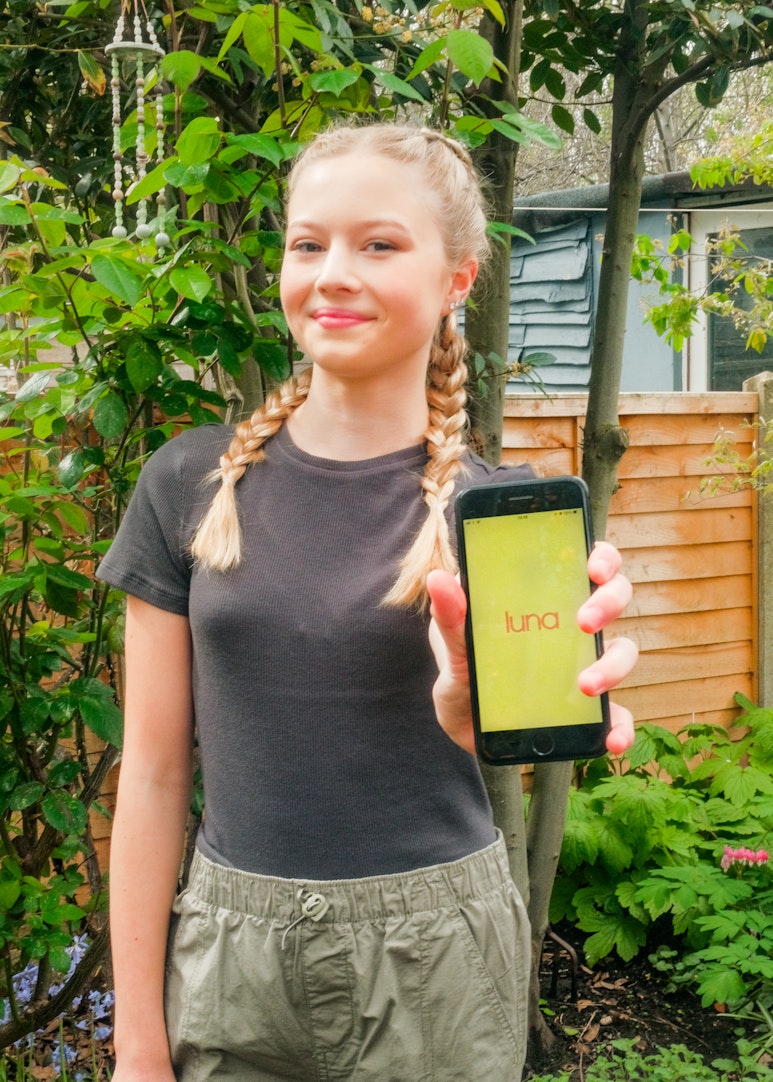
Using the luna app to track their cycles can help them notice:
- how long their cycle tends to be
- when symptoms usually appear
- how their body changes over time
This builds confidence and understanding, especially in the early years of menstruation when cycles are still settling.
FAQs
Can my period really sync with my daughter’s?
No. There’s no strong scientific evidence that a parent’s period can biologically sync with their daughter’s.
If periods happen around the same time, it’s usually coincidence rather than hormones influencing each other, especially during the teenage years when cycles are still irregular.
Why is my period in sync with my mum?
Periods can appear to line up by chance, particularly if both cycles are naturally close in length.
Because menstrual cycles shift slightly each month, overlaps are statistically common over time – this can make syncing feel real even when it isn’t biologically caused.
Do periods sync when people live together?
Most research suggests they don’t.
While early studies hinted at menstrual synchrony among people living together, later and larger studies found no reliable evidence that cycles align due to proximity or pheromones.
Why do periods seem to sync with friends or family?
Periods can seem to sync because cycles aren’t perfectly regular and tend to shift month to month.
People also tend to notice when periods align but forget when they don’t, which makes syncing feel more meaningful than it actually is.
Is period syncing more common during puberty?
No, but it can look that way.
Teen periods are often irregular for the first few years, which makes overlaps more likely and can give the impression that cycles are syncing.
Can stress or routine changes cause periods to sync?
Stress, sleep, diet, and routine changes can affect when a period arrives, but they don’t cause syncing with another person’s cycle.
Any alignment is still considered coincidence rather than a shared hormonal response.
Should my teen use my cycle to predict theirs?
No. Using someone else’s cycle isn’t a reliable way to predict periods.
Every body follows its own rhythm, and this is especially true during the early years of menstruation.
What’s the best way for my teen to understand their own cycle?
Tracking their own cycle over time is the most reliable way.
Using a teen-friendly period tracker like luna can help them notice patterns, symptoms, and changes without comparing themselves to others.
How we created this article:
luna's team of experts comprises GPs, Dermatologists, Safeguarding Leads and Junior Doctors as well as Medical Students with specialised interests in paediatric care, mental health and gynaecology. All articles are created by experts, and reviewed by a member of luna's senior review team.
Sources:
PubMed "Women do not synchronise their menstrual cycles" | Accessed 14.05.25
https://pubmed.ncbi.nlm.nih.gov/26181612/PubMed "Menstrual synchrony and suppression" | Accessed 14.05.25
https://pubmed.ncbi.nlm.nih.gov/4994256/We'd love to keep in touch!
Sign up to our parent newsletter for emails on the latest teen trends, insights into our luna community and to keep up to date
By signing up, you are agreeing that we can use your email address to market to you. You can unsubscribe from marketing emails at any time by using the link in our emails. For more information, please review our privacy statement.