Does your daughter have PMS or PMDD?
What are the differences?
Updated August 7, 2026 • Medically reviewed by Dr. Katie Knight
Medically reviewed by Dr. Katie KnightIn this article
What is the difference between PMS and PMDD in teens?
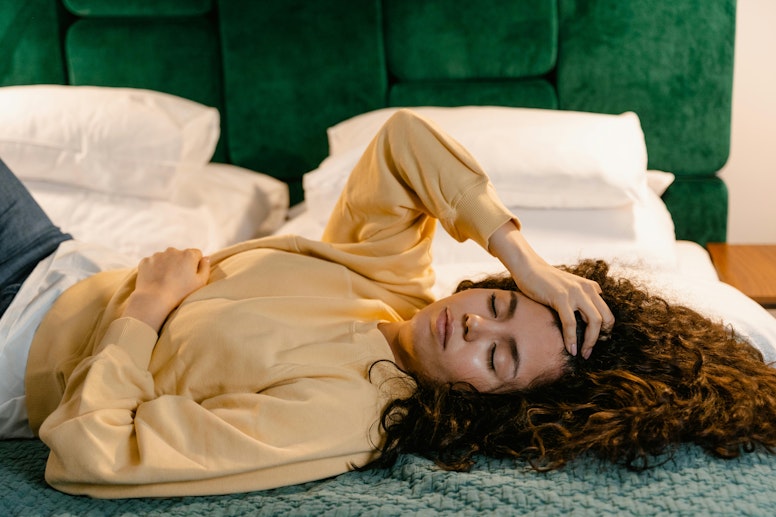
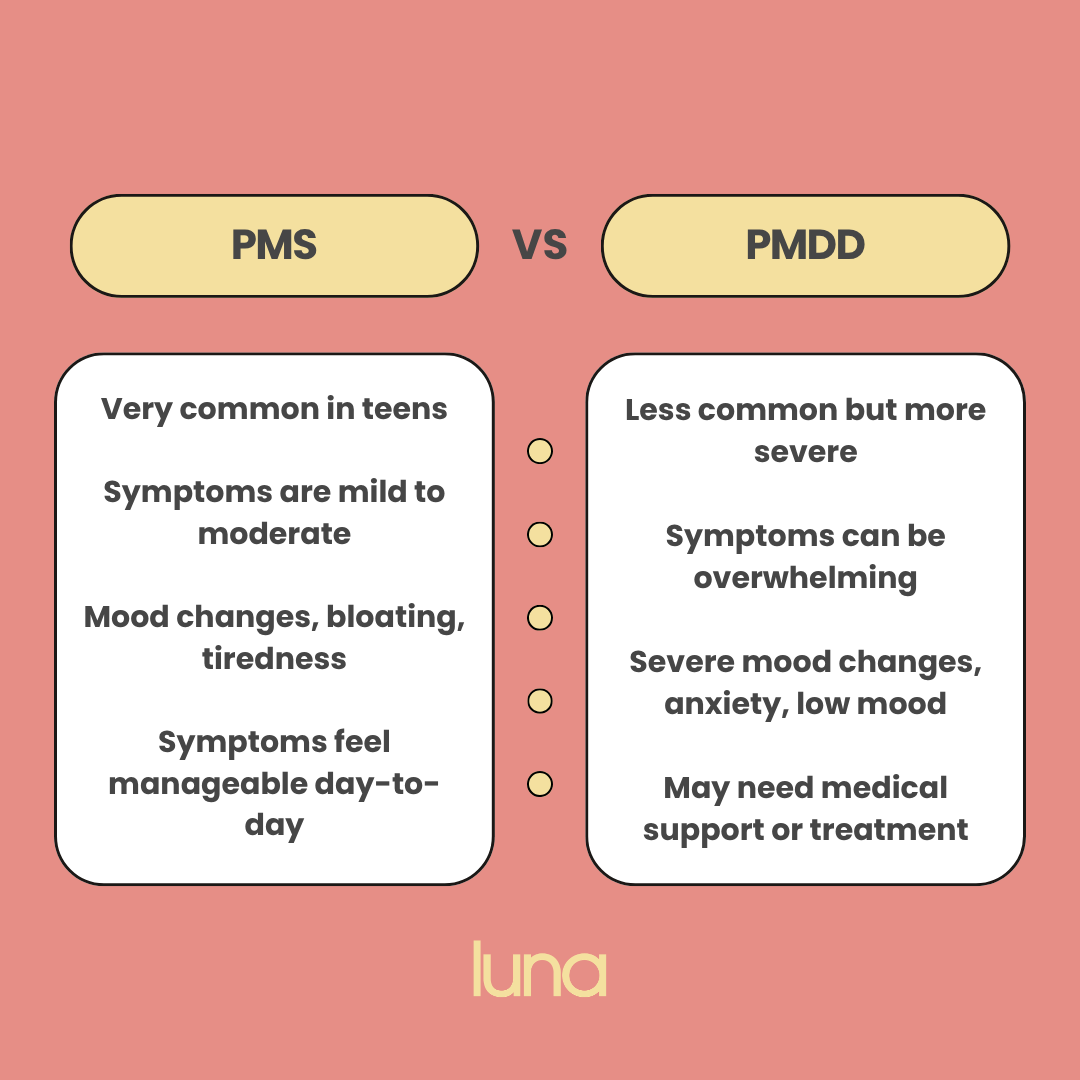
The key difference is that PMS (premenstrual syndrome) is common and usually manageable, while PMDD (premenstrual dysphoric disorder) is a much more severe condition that can significantly affect a teen’s mood, daily life, and wellbeing.
PMS involves mild to moderate emotional and physical symptoms before a period, while PMDD causes intense psychological symptoms that may require medical support.
For example, a teen with PMS might feel more tearful or tired before their period, while a teen with PMDD might experience overwhelming mood changes that affect school, friendships, or daily functioning.
Both are linked to hormonal changes in the menstrual cycle phases - but PMDD is a sign that medical advice and extra support may be needed.
What are the symptoms of PMS in teens?
PMS (premenstrual syndrome) refers to a group of symptoms that typically appear in the luteal phase of the menstrual cycle, usually the 1-2 weeks before a period.
It is extremely common in teens, with around 3 in 4 experiencing some form of PMS.
Common PMS symptoms include:
- PMS mood swings or increased emotional sensitivity
- Irritability or feeling “on edge”
- Feeling tearful, anxious, or low
- Tiredness or low energy
- Bloating or cramps
- Breast tenderness
- Headaches
- Changes in appetite or cravings
- Skin breakouts or increased acne
- Difficulty sleeping
For many teens, these symptoms can feel confusing at first - especially when they seem to appear suddenly each month.
How do I help my daughter with her PMS?
PMS symptoms can vary from mild to uncomfortable, and the most helpful support often comes from small, consistent changes and emotional reassurance.
You might notice your daughter seems more sensitive, tired, or withdrawn in the week before their period - and they may not always connect this to their cycle.
Honest conversations and education about their cycle and what causes PMS (hormones changing) can empower your daughter.
You can also:
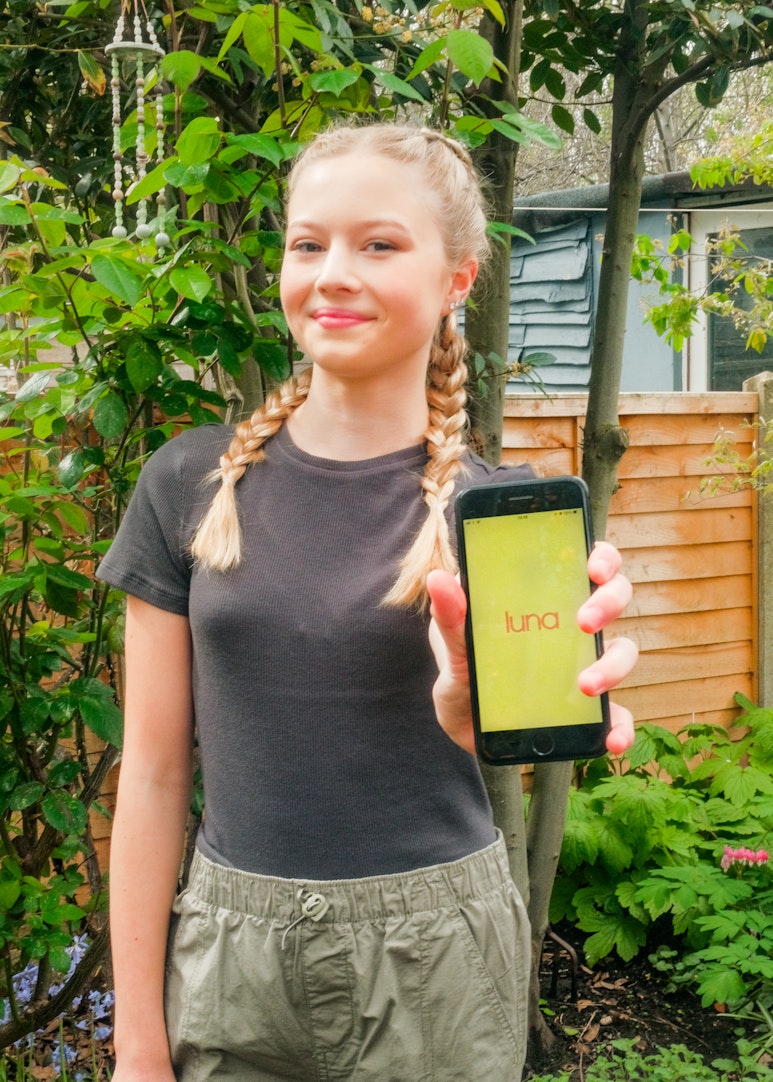
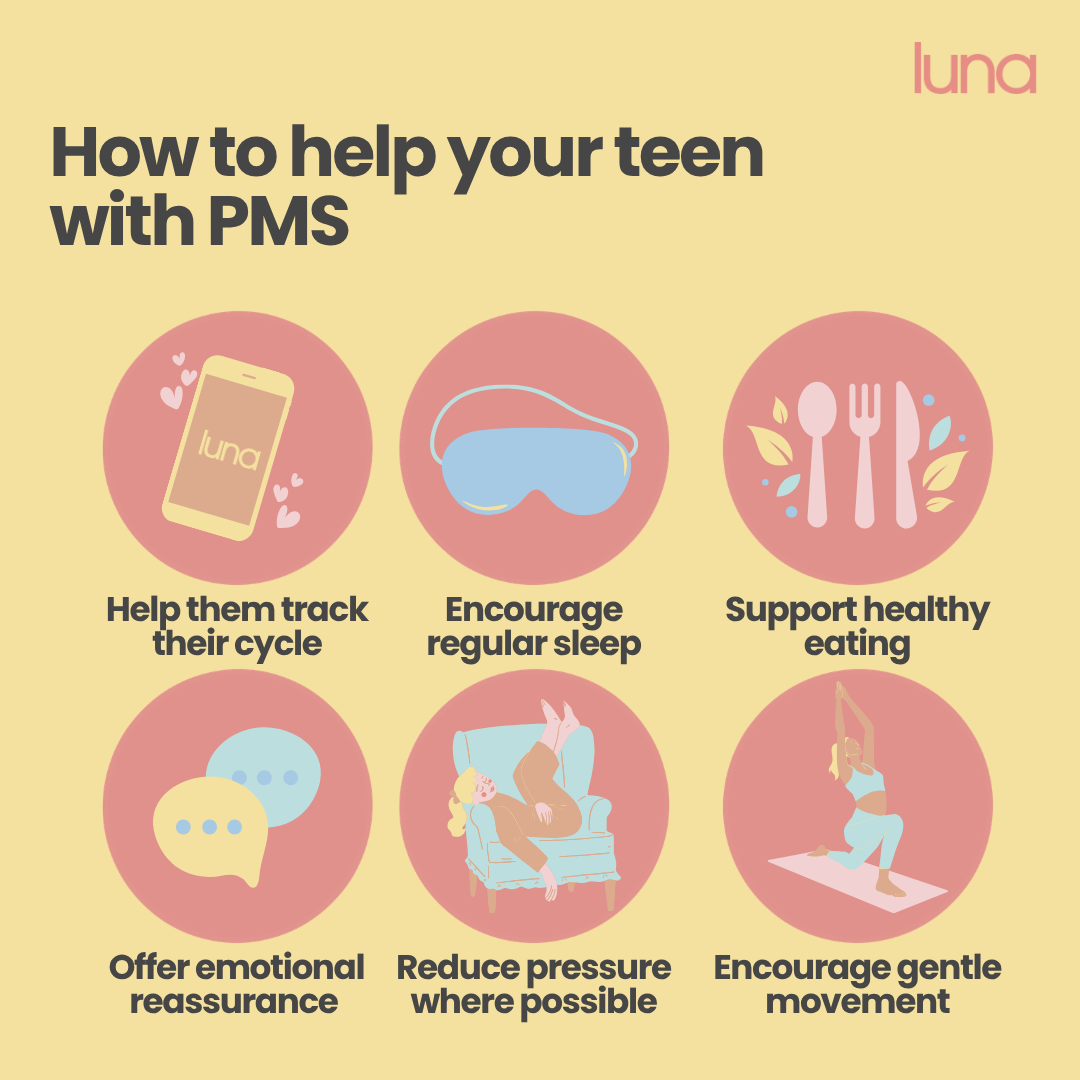
- Help them track their cycle: using a period tracker app for teenage girls like luna can help your daughter notice patterns in mood and symptoms, making the changes feel more predictable and less overwhelming
- Support healthy routines: encourage regular sleep, hydration, healthy eating, and gentle movement like walking or stretching
- Offer emotional reassurance: remind them that PMS is common and temporary, making sure to validate their feelings, too
- Use simple symptom relief when needed: over-the-counter pain relief (like ibuprofen or paracetamol) may help with cramps, if appropriate
- Reduce pressure where possible: teens may need more rest or emotional space during this time - flexibility can really help
Can you have PMDD as a teenager?
Yes - PMDD (premenstrual dysphoric disorder) can affect teenagers, although it is less common than PMS.
Studies have suggested that around 2% to 6% of girls between the ages of 14 and 16 meet criteria for PMDD.
Unlike PMS, PMDD is not just mild mood changes.
It can include severe emotional and physical symptoms in the 1-2 weeks before a period.
For example, a teen with PMDD might struggle with intense sadness, anxiety, anger, or loss of motivation that affects school attendance, friendships, or home life.
Because of this, PMDD is recognised as a clinical condition and should be assessed by a healthcare professional.
PMDD symptoms to watch out for in your daughter include:
- Headaches
- Joint and muscle pain
- Feeling very anxious, depressed, or suicidal
- A lack of motivation and energy
- A lack of interest in activities they usually enjoy
- Appetite changes
- Tiredness
- A lack of concentration
How can I help my daughter with her PMDD?
Supporting a daughter with PMDD can feel overwhelming, but by validating their feelings and focusing on self-care, you can help them feel a little better.
The most important thing is steady, non-judgemental support and exploring mental health resources together.
You may also want to:
- Encourage medical support: if you suspect PMDD, speak to a doctor as they may suggest cycle tracking, talking therapies like CBT, or other treatment options
- Track symptoms together: keeping a record of mood and physical symptoms can help identify patterns and support diagnosis
- Validate what they’re experiencing: avoid minimising symptoms. Instead, say things like, “I can see this feels really hard for you right now”
- Plan ahead for difficult days: creating a PMDD comfort box full of healthy snacks and self-care items like face masks or cosy socks with your daughter can help them feel prepared
- Reduce pressure during the pre-period phase: teens with PMDD may need extra rest, reduced expectations, and more emotional support in the days before their period
- Support healthy routines: balanced meals, gentle exercise, and getting enough sleep can all positively impact PMDD symptoms
How can luna help?
PMS and PMDD are both linked to the menstrual cycle, but they are very different in severity.
PMS is common and manageable with lifestyle support and reassurance, whereas PMDD is more serious and may require medical treatment and ongoing support.
In both cases, what matters most is understanding, patience, and helping your daughter feel supported rather than dismissed.
To help your daughter navigate their cycle and feel prepared, introduce them to luna.
On luna, your daughter can track their cycle, read medically-verified articles, and ask questions in a safe space.
How we created this article:
luna's team of experts comprises GPs, Dermatologists, Safeguarding Leads and Junior Doctors as well as Medical Students with specialised interests in paediatric care, mental health and gynaecology. All articles are created by experts, and reviewed by a member of luna's senior review team.
Sources:
Mind “Self-care for premenstrual dysphoric disorder (PMDD)” | Accessed 10.04.26
https://www.mind.org.uk/information-support/types-of-mental-health-problems/premenstrual-dysphoric-disorder-pmdd/self-care-for-pmdd/Mind “Helping someone with PMDD” | Accessed 10.04.26
https://www.mind.org.uk/information-support/types-of-mental-health-problems/premenstrual-dysphoric-disorder-pmdd/helping-someone-with-pmdd/Women's Mental Health “Teen PMS and PMDD Guide” | Accessed 10.04.26
https://womensmentalhealth.org/resource/patient-support-services/teen-pms-and-pmdd-guide/National Association for Premenstrual Syndromes “Adolescent PMS” | Accessed 10.04.26
https://www.pms.org.uk/members-library/adolescent-pms/Women’s Mental Health “PMS and PMDD” | Accessed 10.04.26
https://womensmentalhealth.org/specialty-clinics/pms-and-pmdd/NHS “PMS” | Accessed 10.04.26
https://www.nhs.uk/conditions/pre-menstrual-syndrome/We'd love to keep in touch!
Sign up to our parent newsletter for emails on the latest teen trends, insights into our luna community and to keep up to date
By signing up, you are agreeing that we can use your email address to market to you. You can unsubscribe from marketing emails at any time by using the link in our emails. For more information, please review our privacy statement.