What does yellow discharge mean?
Should I be worried if my daughter's discharge is yellow?

Updated February 25, 2026 • Medically reviewed by Dr. Emma Dickie
Medically reviewed by Dr. Emma DickieIn this article
- What does yellow discharge mean?
- What does yellow discharge mean for teens?
- Why does my daughter have yellow discharge?
- Is yellow discharge normal?
- Should I worry about yellow discharge in my daughter?
- How is vulvovaginitis treated in children?
- Can tracking discharge help identify problems?
- What should parents know about yellow discharge?
What does yellow discharge mean?
Yellow discharge can be a normal part of puberty or the menstrual cycle, especially if it is pale, mild-smelling, and not painful.
However, darker yellow, green, or strong-smelling discharge may indicate irritation, vulvovaginitis, bacterial infection, or, in sexually active teens, sexually transmitted infections.
Medical advice is recommended if yellow discharge occurs with itching, burning, pelvic pain, fever, or unusual bleeding.
What does yellow discharge mean for teens?
Yellow discharge can be normal or a sign of irritation or infection, depending on its colour, odour, and whether other symptoms are present.
Light yellow discharge without pain or odour is often harmless, while darker, strong-smelling, or irritating discharge should be checked by a doctor.
For parents, noticing yellow discharge can be worrying, especially in children or early teens.
But in many cases it’s linked to normal body changes or mild irritation.
Understanding what’s typical helps you know when to monitor and when to seek medical advice.
Why does my daughter have yellow discharge?
In teens, yellow discharge is most often caused by normal pubertal changes or mild irritation.
Infections are less common in younger children but may occur if other symptoms are present.
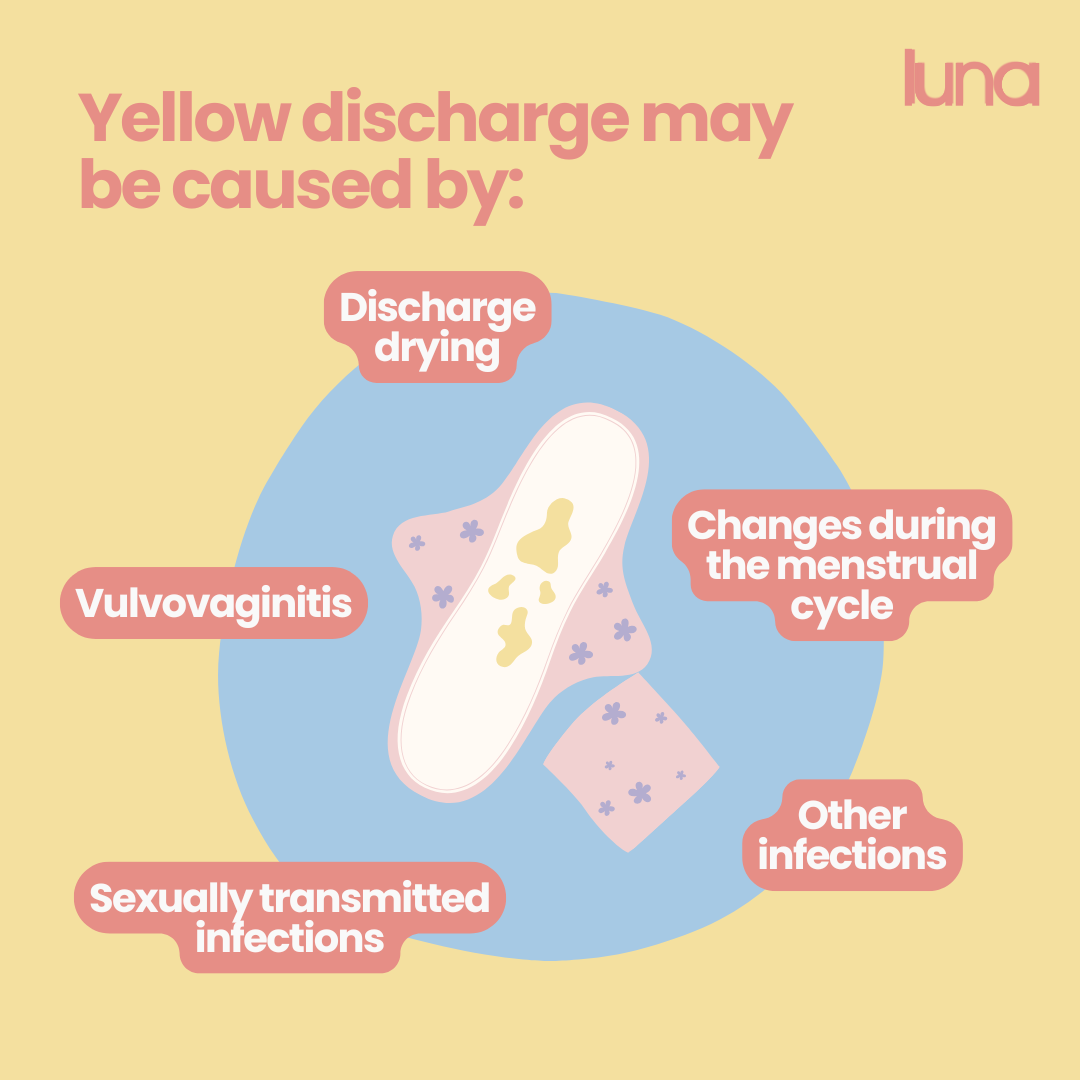
Common causes include:
- Normal discharge: dried discharge can appear light yellow on underwear or panty liners
- Hormonal changes: discharge often increases at certain points in the menstrual cycle
- Vulvovaginitis: mild inflammation or irritation caused by bacteria, yeast, soaps, tight clothing, or moisture
- Other infections: bacterial infections can sometimes affect discharge
- Sexually transmitted infections: uncommon in children and younger teens, but possible in older adolescents and may be associated with pelvic pain or irregular bleeding
If discharge appears more brown or like it’s turning brown, or changes around the menstrual cycle, learning about brown discharge can help explain what’s happening.
Is yellow discharge normal?
Yes, mild yellow or off-white discharge can be normal during puberty as the body starts producing more vaginal secretions.
This type of discharge is usually light in colour, not strong-smelling, and not painful.
Normal pubertal discharge often:
- appears gradually
- varies from day to day
- has little or no odour
- increases before a period
Tracking these changes over time can help teens learn what’s normal for their bodies and help parents spot changes that may need to be checked. We also have a deep dive on discharge before a period, if this is helpful!
Should I worry about yellow discharge in my daughter?
Light yellow discharge without other symptoms usually isn’t cause for worry.
But knowing patterns and symptoms means parents can support teens and seek help early when needed.
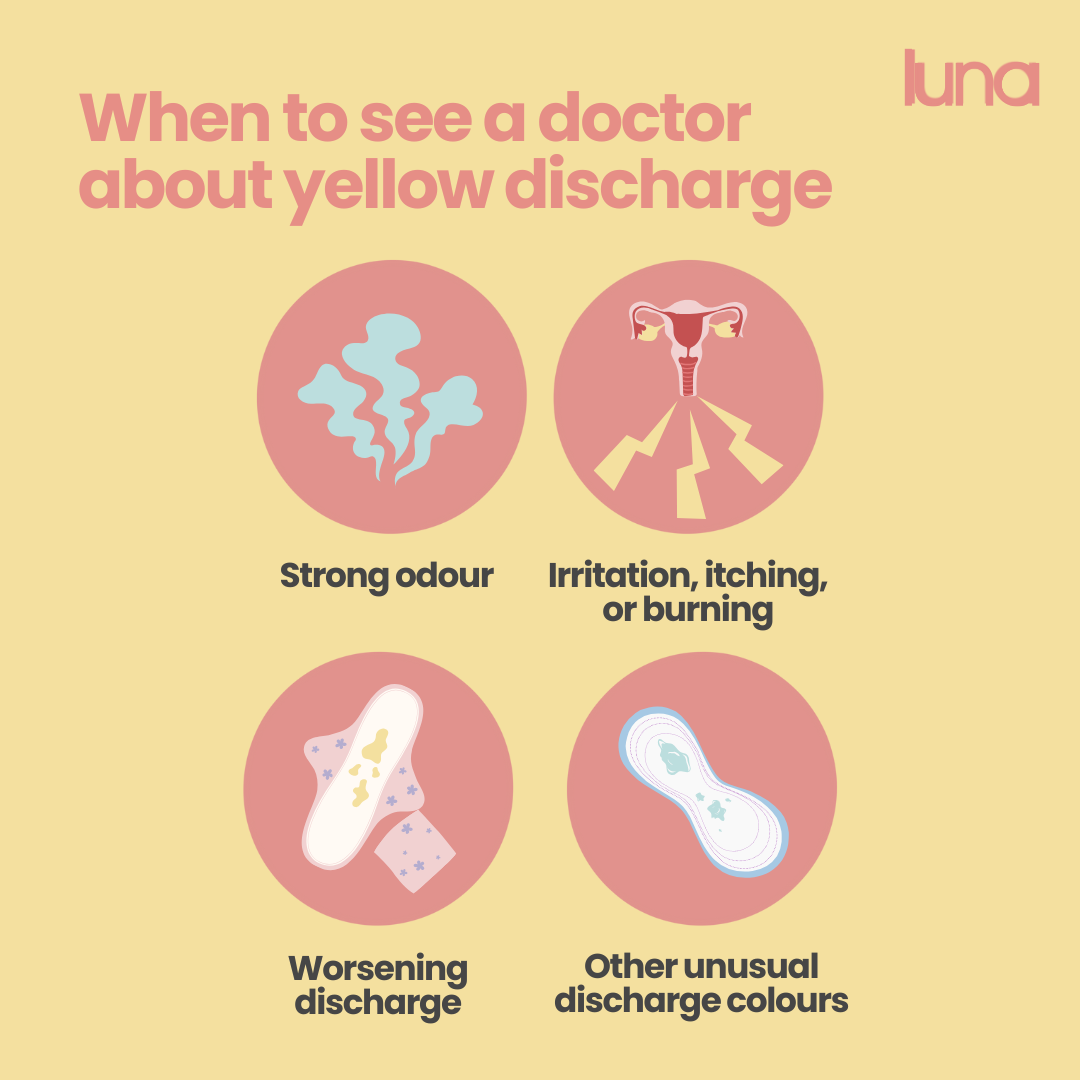
It’s best to speak to a doctor if your child or teen has:
- a strong or unpleasant odour
- itching, burning, or redness
- pain when urinating
- green or grey discharge
- fever or signs of being unwell
Early assessment can provide reassurance and help rule out infection.
How is vulvovaginitis treated in children?
Vulvovaginitis in children is usually treated by reducing irritation and supporting gentle hygiene. Medication is only needed if infection is confirmed.
Supportive treatment includes:
- Washing with warm water only
- Avoiding bubble baths and scented products
- Wearing loose cotton underwear
- Changing underwear daily
- Keeping the area dry
Most cases improve within a few days once irritants are removed.
If your child uses liners, it can help to understand whether panty liners are good for regular use or whether they may increase moisture and irritation.
Can tracking discharge help identify problems?
Yes, tracking discharge patterns helps identify what is normal and when something changes.
This makes it easier to decide when medical advice is needed.
Tracking helps:
- Notice cycle-related patterns
- Spot unusual smell or colour changes
- Provide clear information to a doctor
For menstruating teens, tracking discharge alongside cycle changes can also help predict when a period is coming.
What should parents know about yellow discharge?
Most yellow discharge is normal, especially if it is light in colour and not painful or strong-smelling.
Infection is more likely if there are additional symptoms.
Most importantly, discharge is a normal body function.
Calm conversations and monitoring symptoms are usually enough. When in doubt, a doctor can provide reassurance.
How we created this article:
luna's team of experts comprises GPs, Dermatologists, Safeguarding Leads and Junior Doctors as well as Medical Students with specialised interests in paediatric care, mental health and gynaecology. All articles are created by experts, and reviewed by a member of luna's senior review team.
Sources:
Cleveland Clinic "Vaginal discharge" | Accessed 22.01.26
https://my.clevelandclinic.org/health/symptoms/4719-vaginal-dischargeNHS "Vulvovaginitis in children information for parents and carers" | Accessed 22.01.26
https://www.cuh.nhs.uk/patient-information/vulvovaginitis-in-children-information-for-parents-and-carers/KidsHealth "Is my vaginal discharge normal?" | Accessed 22.01.26
https://kidshealth.org/en/teens/vdischarge2.htmlNHS "Vaginal discharge" | Accessed 25.02.26
https://www.nhs.uk/symptoms/vaginal-discharge/We'd love to keep in touch!
Sign up to our parent newsletter for emails on the latest teen trends, insights into our luna community and to keep up to date
By signing up, you are agreeing that we can use your email address to market to you. You can unsubscribe from marketing emails at any time by using the link in our emails. For more information, please review our privacy statement.