What does almond boyfriend mean?
What to do if your teen has one

Updated March 18, 2026
In this article
What does “almond boyfriend” mean?
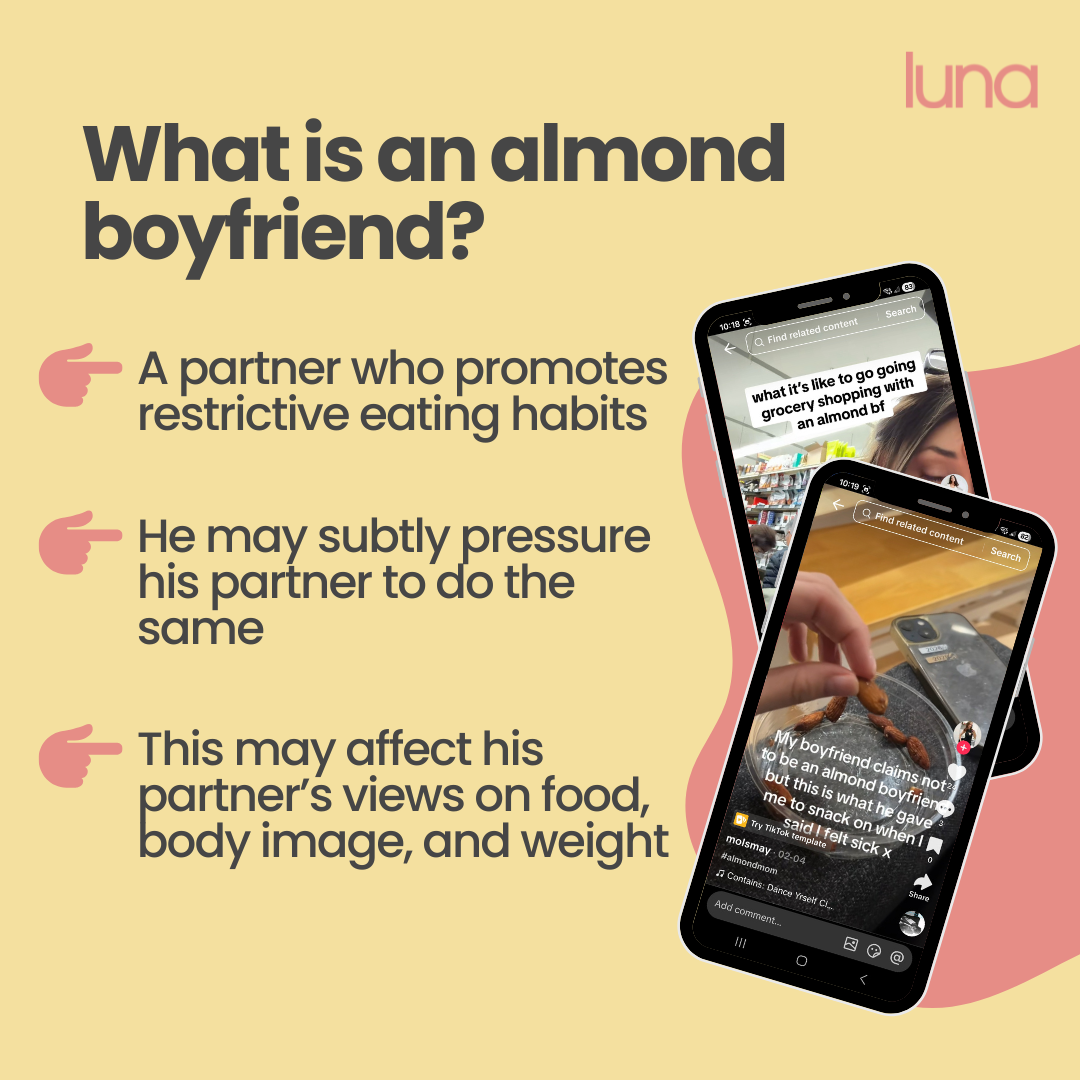
An “almond boyfriend” is a term used online to describe a boy or young man who promotes restrictive eating habits or an overly rigid “clean” lifestyle and may subtly pressure his partner to do the same.
The phrase builds on the idea of the “almond mum,” referring to adults who model restrictive food behaviours in the name of being “healthy.”
An almond boyfriend may not openly criticise his partner’s body, but he might frequently comment on calories, “good” and “bad” foods, gym routines, or weight.
Over time, this can influence how a teen girl thinks about her own body, food, and self-worth.
What does it mean to be “almond”?
To call someone “almond” usually means they display restrictive, diet-focused behaviours that frame thinness or control as health.
The phrase originated from conversations around diet culture and the pressure some parents - often labelled “almond mums” - placed on daughters to eat less or maintain a certain body type.
Now, teens are using the term more broadly to describe anyone who:
- Categorises foods as strictly “good” or “bad”
- Frequently talks about calories, macros, or weight
- Encourages restriction rather than balance
- Frames self-control around food as a moral virtue
It’s important to note that caring about health or fitness is not the same as being “almond.”
The term usually implies rigidity, pressure, or subtle shame around eating.
What if my daughter has an almond boyfriend?
If your teen has an almond boyfriend, you might notice changes in how she talks about food, her body, or exercise.
His “healthy” lifestyle may be unintentionally - or intentionally - influencing her habits.
This can affect her in several ways:
- She may start restricting food to match his eating patterns
- She might feel pressure to look a certain way
- Meals could become stressful rather than enjoyable
- Her self-esteem may become tied to weight or “discipline”
- She may feel judged, even if comments seem subtle
- She may show almond daughter signs
Teen relationships can be influential during adolescence.
When identity and body image are still developing, repeated exposure to rigid food messaging can shape how she sees herself.
That doesn’t automatically mean the relationship is harmful - but it does mean awareness matters.
What can I do if my daughter has an almond boyfriend?
If you’re concerned that your teen has an almond boyfriend, the most important thing is to keep communication open and calm.
Criticising her boyfriend directly can cause defensiveness and shut down conversation.
Instead, you can:
- Gently ask how she feels around him at meals
- Model balanced, non-judgemental language about food at home
- Encourage healthy eating that focuses on how food helps your teen stay strong and energetic
- Reinforce that bodies need nourishment, not punishment
- Encourage body neutrality rather than appearance focus
- Watch for warning signs of restrictive eating or anxiety around food
- Seek professional advice if you notice significant changes in eating habits
Try to centre the conversation around how she feels, not whether he is “good” or “bad.”
The goal isn’t to attack the relationship - it’s to protect her confidence and body image.

What do I need to keep in mind in this situation?
If your teen has an almond boyfriend, it’s worth remembering that he may be under pressure too.
While it doesn't excuse bad behaviour, teenage boys are increasingly exposed to messages about being lean, muscular, disciplined, and “clean” with food.
What can look like control or rigidity may actually stem from insecurity or social pressure, or being influenced by manosphere messaging.
Focus on how your daughter feels in the relationship and keep conversations open and judgement-free rather than blaming him outright may keep her on side.
And giving her access to supportive, teen-friendly resources like luna can also help her build body confidence and recognise unhealthy patterns early.
With calm guidance and steady reassurance, you’re helping her develop boundaries and self-trust that will last far beyond this relationship.
How we created this article:
luna's team of experts comprises GPs, Dermatologists, Safeguarding Leads and Junior Doctors as well as Medical Students with specialised interests in paediatric care, mental health and gynaecology. All articles are created by experts, and reviewed by a member of luna's senior review team.
We'd love to keep in touch!
Sign up to our parent newsletter for emails on the latest teen trends, insights into our luna community and to keep up to date
By signing up, you are agreeing that we can use your email address to market to you. You can unsubscribe from marketing emails at any time by using the link in our emails. For more information, please review our privacy statement.