What can you do about your daughter's eczema?
Managing eczema in teen girls

Updated July 7, 2026 • Medically reviewed by Dr. Emma Dickie
Medically reviewed by Dr. Emma DickieIn this article
In short
Eczema (atopic dermatitis) affects 1 in 5 children in the UK.
There's no cure, but it's very manageable.
The NHS recommends applying an emollient at least twice a day as the cornerstone of care, with a steroid cream short-term for flare-ups.
Symptoms tend to improve with age, though the skin barrier never fully normalises.
Why does my daughter have eczema?
Eczema isn't caused by anything your daughter has done, or anything you have.
It's a genetic, immune-driven condition where the skin barrier doesn't work the way it should, making it easier for irritants to get in and moisture to escape.
You're more likely to see it if eczema runs in the family, or if your daughter also has asthma or hay fever.
This overlap, known as the "atopic triad", is very common.
DermNet notes that eczema starts before age six in around 80% of affected children, though for some girls it persists or changes through the teen years.
How do I manage my daughter's eczema day to day?
Emollients applied at least twice a day are the single most effective thing you can do.
The NHS is clear that moisturising should continue even when skin looks clear, not just during flares.
Choose a thick, fragrance-free cream or ointment, and use a pump dispenser or spoon rather than fingers to prevent bacterial contamination of the tub.
A few things that help day to day:
- Wash with an emollient instead of soap or shower gel
- Avoid biological washing powders and fabric softeners on clothes and bedding
- Choose soft cotton fabrics next to skin and avoid wool or synthetics
- Keep nails short to reduce damage from scratching
- Stay cool where possible as heat makes itch worse
It's also worth thinking about the products your daughter reaches for herself.
A gentle, eczema-aware teen skincare routine can prevent the well-meaning products she picks up, such as fragranced toners, harsh exfoliants, certain sunscreen, from making things worse.
What's triggering my daughter's eczema flares?
Identifying your daughter's personal triggers is one of the most practical things you can do.
Common ones listed by the NHS include: soaps, shower gels, washing detergents, pet dander, certain fabrics, pollen, and house-dust mites.
Stress is also a recognised trigger, and the body's stress response is genuinely inflammatory, so if you've noticed flares around exam time or difficult weeks, that pattern is real, not imagined.
It may be helpful to learn how to support a stressed-out teen as well as how to manage the more physical triggers of eczema.
Infection can also worsen eczema.
The bacteria Staphylococcus aureus is found on the skin of most people with eczema and can drive flares.
If her skin is suddenly much worse, weeping, crusty or has pus-filled spots, she needs to see a doctor promptly as she may need antibiotics.
Does puberty make my daughter's eczema worse?
It can.
Hormonal changes are a recognised eczema trigger, and puberty is one of the most significant hormonal shifts of your daughter's life.
Some girls who had mild childhood eczema find it resurfaces or intensifies in their teens; others find it settles.
luna's article on teen eczema and puberty covers this in more detail, including why eczema can appear on new parts of the body in adolescence.
If you've noticed a pattern to her flares, understanding how teen hormones affect skin, mood, and more can help you see the bigger picture.
A simple diary noting flares alongside what's been happening that week can be surprisingly useful.
When should I take my daughter to a doctor about her eczema?
If over-the-counter emollients aren't keeping things under control, or if eczema is affecting her sleep or confidence, it's worth seeing a doctor.
A doctor can prescribe a short course of topical corticosteroids in the right strength for the right area to manage eczema flares.
Getting this right matters, since steroids that are too strong for sensitive areas like the face can cause problems over time.
See a doctor urgently if her eczema:
- Is blistered, weeping fluid, crusty or has pus-filled spots
- Feels painful, swollen, or warm to touch
- Suddenly spreads or gets significantly worse
- Comes with a high temperature or her feeling generally unwell
These can be signs of a skin infection or, rarely, a serious condition called eczema herpeticum.
The NHS advises contacting a doctor urgently or calling 111 in these situations.
If her eczema is affecting her mental health, such as her sleep, her confidence, and how she feels about herself, raise that too.
A doctor can refer for additional support, and it's a completely legitimate reason to seek help.
FAQs
Is eczema contagious?
No.
Eczema is a genetic immune condition, which means it can't be caught or passed on.
If your daughter has ever felt self-conscious about being near others during a flare, it's worth telling her this directly.
Will my daughter grow out of her eczema?
The odds are in her favour.
DermNet reports that only around 20% of children with eczema have persistent disease eight years later, and fewer than 5% by age 20.
That said, the skin barrier is never completely normal even during remission, so good daily moisturising habits are worth keeping up long-term.
Can diet affect my daughter's eczema?
The NHS is clear: don't change her diet unless a doctor has advised it.
The assumption that food triggers eczema is widespread, but the evidence is limited and restricting foods in a growing teen can cause more harm than good.
If you genuinely suspect a connection, speak to a doctor before cutting anything out.
Can my daughter share an emollient with me or a friend?
The NHS advises against sharing emollients.
Partly to prevent bacterial contamination, and partly because what suits one person's skin won't necessarily suit another's.
Her emollient should be hers.
Are there treatments beyond creams and moisturisers?
Yes.
If basic treatment isn't working, a doctor may consider topical calcineurin inhibitors (tacrolimus or pimecrolimus), which reduce local inflammation without the risks associated with long-term steroid use.
For moderate-to-severe eczema in adolescents, phototherapy or biologic treatment, including dupilumab, now licensed from age six months, may be considered by a specialist when other options haven't worked.
What to do next
If her eczema feels out of control right now, a doctor appointment is the most useful next step as there's far more available than over-the-counter moisturisers.
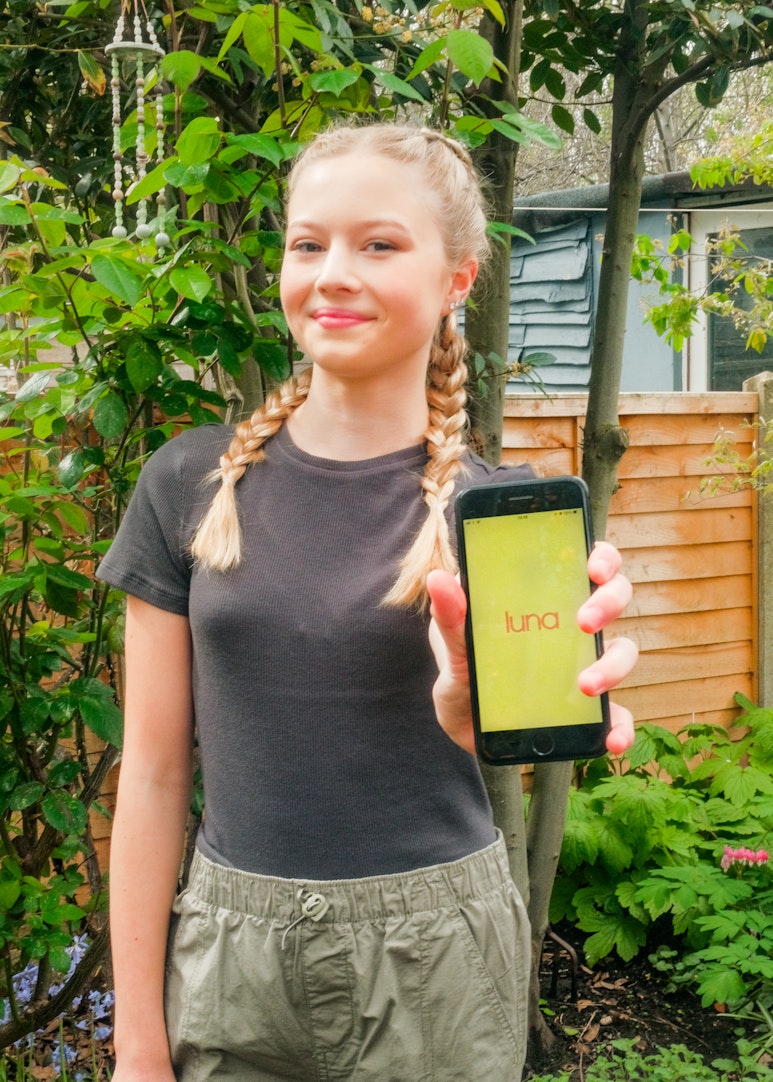
luna gives teen girls a space to explore skin and health topics at their own pace, with content reviewed by medical experts and no commercial noise.
It can be a useful place for her to read and ask questions without feeling judged.
How we created this article:
luna's team of experts comprises GPs, Dermatologists, Safeguarding Leads and Junior Doctors as well as Medical Students with specialised interests in paediatric care, mental health and gynaecology. All articles are created by experts, and reviewed by a member of luna's senior review team.
Sources:
NHS "Atopic eczema" | 23.06.26
https://www.nhs.uk/conditions/atopic-eczema/NICE "Atopic eczema in under 12s: diagnosis and management" | 23.06.26
https://www.nice.org.uk/guidance/cg57DermNet "Atopic dermatitis (atopic eczema): symptoms and causes" | 23.06.26
https://dermnetnz.org/topics/atopic-dermatitisCork MJ et al. "Atopic dermatitis epidemiology and unmet need in the United Kingdom" | 23.06.26
https://pubmed.ncbi.nlm.nih.gov/31631717/We'd love to keep in touch!
Sign up to our parent newsletter for emails on the latest teen trends, insights into our luna community and to keep up to date
By signing up, you are agreeing that we can use your email address to market to you. You can unsubscribe from marketing emails at any time by using the link in our emails. For more information, please review our privacy statement.