What age should you let your daughter get a piercing?
The rules, the risks and how to decide

Updated August 11, 2026
In this article
- In short
- Is there a legal age for my daughter to get a piercing?
- What age can my daughter get a second or cartilage ear piercing?
- Is a belly button piercing safe for my daughter?
- How do I decide if my daughter is ready?
- What are the risks I should know about?
- How do I look after my daughter's new piercing?
- FAQs
In short
In England there's no legal minimum age for ear or most body piercings, unlike tattoos, which are 18 and over.
But every studio sets its own rules, and reputable piercers usually need a parent's consent for under-16s.
Nipple and genital piercings aren't done on under-16s.
Earlobes heal easily, while cartilage and belly button piercings carry more risk.
Is there a legal age for my daughter to get a piercing?
If your daughter has come home asking for a second lobe piercing or a belly bar "because everyone's got one" and it is part of a teen aesthetic trend, you're probably wondering what the actual rules are before you even get to how you feel about it.
In England, there's no minimum legal age for ear or most body piercings.
This is different from tattoos, which can't be done on anyone under 18.
In practice, the rules come from the studio, not the law.
Reputable piercers usually ask for a parent's consent, and often a parent present, for anyone under 16.
There are two firm limits worth knowing: nipple and genital piercings are not carried out on under-16s by responsible studios.
The rules can also differ across the UK, so it's worth checking your local council and the specific studio before your daughter's heart is set on anything.
What age can my daughter get a second or cartilage ear piercing?
There's no medical "right age" for a second lobe piercing, but the earlobe is the lowest-risk spot to pierce and the quickest to heal, which is why it's usually the first piercing girls get.
Cartilage piercings, like a helix at the top of the ear, are a different story.
Because cartilage has a poorer blood supply than the fleshy lobe, it heals more slowly and is more prone to problems.
Ear piercing is one of the most common things teens ask for, so your daughter is far from alone in wanting one.
But cartilage infections can occasionally be serious, and in rare cases can affect the shape of the ear permanently.
It can help to think less about a magic number and more about whether she's ready to look after it properly for the weeks it takes to heal.
A belly button (navel) piercing can be done safely by a licensed piercer, but it's one of the trickier piercings to heal and one that many studios won't do until 16.
The navel sits right where waistbands, school uniforms and sports kit rub against it all day, so it snags easily and takes longer to settle than an earlobe.
That makes patient, consistent aftercare the difference between a piercing that heals well and one that gets irritated or infected.
If she's very active, plays contact sports, or swims a lot, it's worth factoring that in, as the healing period asks for a bit of a pause on some of that.
How do I decide if my daughter is ready?
The honest answer is that readiness is more about maturity and aftercare than a birthday.
A piercing is a small wound that needs looking after daily for weeks, so the real question is whether she'll actually do that.
Some parents find it helps to talk it through together first.
A few things worth weighing up:
- Whether she can commit to cleaning it daily and keeping her hands off it while it heals
- Whether the studio is licensed, clean and happy to talk you both through aftercare
- Whether the timing works around swimming, sport or an upcoming holiday
- How she'd feel if it had to come out because it got infected
Wanting a piercing is often less about rebellion and more about self-expression and fitting in, in the same way that decisions about when your daughter starts shaving are.
Letting her have a say in these smaller choices can be part of encouraging her growing independence.
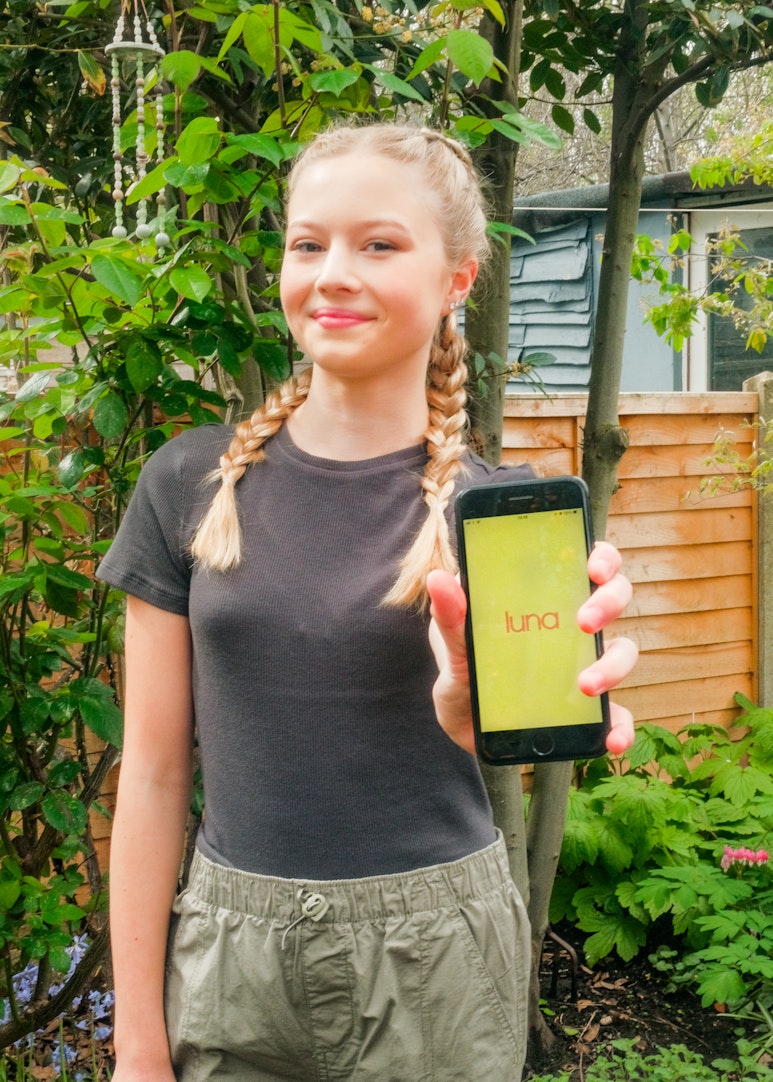
luna gives teen girls a space to explore questions about their bodies and how they look at their own pace, with content reviewed by medical experts rather than driven by influencers or ads.
What are the risks I should know about?
Most piercings done properly heal without drama, but it's worth knowing what can go wrong so you can spot it early.
The main things to be aware of are:
- Infection, which is the most common problem, especially in the first few weeks
- An allergic reaction to the metal, most often to nickel in cheaper jewellery
- Lumps of trapped fluid called granulomas, which can form around cartilage piercings
- Keloids or scarring, where the skin heals in a raised bump
- Jewellery embedding or migrating if it's caught or the wrong size
- Blood-borne infections like HIV or hepatitis if equipment isn't sterile
That last point is exactly why a licensed studio matters so much.
A registered piercer sterilises their equipment, displays their environmental health certificate, and will check your daughter's medical history before starting.
According to the NHS, signs that a piercing has become infected include:
- The area being swollen, hot, very red or painful
- Pus that's white, green or yellow
- Feeling hot, shivery or generally unwell
If that happens, a doctor can help, and it's worth knowing the jewellery should usually be left in unless a doctor tells her to take it out.
How do I look after my daughter's new piercing?
Good aftercare is genuinely the thing that makes or breaks a piercing, and it's simple once she's in a routine.
The NHS suggests the following:
- Wash your hands before touching the piercing
- Clean it once or twice a day as part of your daughter’s hygiene routine with a fragrance-free soap or warm salty water
- Dry it gently with clean kitchen paper, not a towel or cotton wool
- Leave the original jewellery in for at least six weeks before changing it
- Avoid swimming for the first 24 hours and don't pick at any crusting
If it looks a little red, tender or itchy in the first few weeks, that's usually part of normal healing.
It's the spreading redness, heat, pus or feeling unwell that mean it's time to see a doctor.
FAQs
Can my daughter get her ears pierced at any age?
There's no legal minimum age for ear piercing in England, but studios set their own policies and usually need a parent's consent for under-16s. It's always worth calling ahead to check.
How long does a piercing take to heal?
It varies by site. Earlobes are the quickest, while cartilage and belly button piercings take considerably longer and need more care.
The NHS advises leaving the original jewellery in for at least six weeks before changing it.
What should I do if my daughter's piercing looks infected?
Look out for swelling, heat, spreading redness, or white, green or yellow pus, and check whether she feels unwell.
A doctor can advise and may prescribe antibiotics, and the jewellery should usually stay in unless a doctor says otherwise.
Are piercing guns or needles better?
Many professional piercers prefer a sterile single-use needle to a piercing gun, particularly for cartilage.
The most important thing is that the studio is licensed, uses sterile equipment and displays its environmental health certificate.
Should I worry if my daughter wants lots of piercings?
Wanting piercings is usually about self-expression rather than anything to worry about.
If it seems tied up with how she feels about her appearance more broadly, it can be worth gently exploring that together.
How we created this article:
luna's team of experts comprises GPs, Dermatologists, Safeguarding Leads and Junior Doctors as well as Medical Students with specialised interests in paediatric care, mental health and gynaecology. All articles are created by experts, and reviewed by a member of luna's senior review team.
Sources:
NHS "Infected piercings" | 11.08.26
https://www.nhs.uk/conditions/infected-piercings/NHS "Piercings and tattoos" | 11.08.26
https://www.fyinorfolk.nhs.uk/my-health/piercings-tattoos/NHS 111 Wales "Infected piercings" | 11.08.26
https://111.wales.nhs.uk/encyclopaedia/i/article/infectedpiercingsWe'd love to keep in touch!
Sign up to our parent newsletter for emails on the latest teen trends, insights into our luna community and to keep up to date
By signing up, you are agreeing that we can use your email address to market to you. You can unsubscribe from marketing emails at any time by using the link in our emails. For more information, please review our privacy statement.