Should you let your daughter drink alcohol at a party?
What to allow, and how to keep her safe
Updated August 14, 2026
In this article
In short
NHS guidance is that under-18s shouldn't drink alcohol, as this can harm their health. However, if they do, they should be at least 15 years of age.
If a 15 to 17 year old does drink, it should be rare, supervised and never more than 2 to 3 units.
For a party, decide your rule in advance, agree how she'll get home, and talk about staying safe.
Should I let my 14 year old drink at a party?
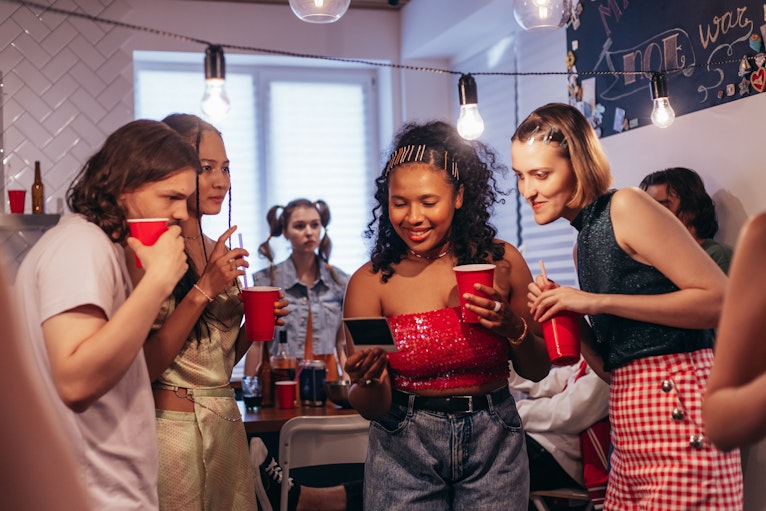
When the invite comes with a rumour of drink involved, it's hard to know whether you're being sensible or the strict one nobody else is being.
The NHS is clear on this age: children shouldn't drink alcohol at all before 18, and drinking before 15 carries the most risk.
At that age, alcohol can affect the normal development of the brain, liver, bones and hormones.
So for a 14 year old, the guidance points one way: not drinking is the safest option.
It might also help to know she's far from the only one not drinking.
In 2023, 37% of 11 to 15 year olds in England had ever tried alcohol, down from 40% in 2021.
Regular drinking at 14 is rarer still.
If the party is part of a bigger question about how much freedom she's ready for, luna's guide to how much to let your teenage daughter go out can help you think it through.
How much alcohol should I allow my teenager?
If your daughter is 15 to 17 and you decide to allow a drink, NHS guidance is that it should be occasional, supervised and kept to a very small amount.
One unit is 10ml of pure alcohol. For an adult, the low-risk limit is no more than 14 units a week, and a teenager's ceiling sits well below that.
If you do allow a drink at 15 to 17, the NHS guidance is:
- Keep it occasional, and never more than once a week
- Never more than 2 to 3 units, which is a small amount, around a large glass of wine or a pint
- Always supervised by you or another trusted adult
The point isn't a precise measurement so much as the principle: small, rare, and never unsupervised.
Is it better to let her drink at home than behind my back?
Lots of parents wonder whether introducing alcohol gently at home teaches sensible drinking better than an outright ban.
However, the evidence doesn't clearly back the idea that supervised sips at home protect against problems later.
Health guidance still lands on the same place: not drinking is the safest option for under-18s.
NICE, which sets health guidance in England, has also found that scare tactics and fear-based messages don't work and can even do harm.
So a calm, honest line tends to land better than either a lecture or a free pass.
Legally, children aged 5 to 17 can drink alcohol at home in England and Wales, so the call is yours.
Legal and recommended aren't the same thing, though.
How do I keep her safe if she goes to a party with alcohol?
Whether or not she drinks, the most useful thing you can do is agree a plan for getting home and talk through how to stay safe when drink is around.
The NSPCC flags a few specific risks worth naming with her: drink spiking, being pressured into situations she's not comfortable with, and looking out for friends who've had too much.
Before she goes, it can help to agree:
- How she's getting home, whether that's you collecting her or letting her get an Uber home
- A check-in text or a code word she can send if she wants picking up, no questions asked
- Never to leave a drink unattended, and to be wary of drinks from people she doesn't know, because of the risk of spiking
- To stay with her friends and look out for each other
None of this means you're expecting the worst. It just means she has a plan if the night goes sideways.
How do I talk to my daughter about drinking without it turning into a lecture?
Short, calm conversations spread over time tend to land better than one big warning, and asking what she already knows is a good place to start.
The NSPCC suggests starting early and keeping it light rather than delivering a single serious talk.
Simply telling a teenager alcohol is bad and not for children rarely stops them taking risks.
Asking "what do you already know about drinking?" often tells you more than any speech, and it keeps her talking rather than switching off.
If other substances are on your radar too, luna’s guide on what to do if your daughter is vaping may be useful to read.
FAQ
Is it illegal for my daughter to drink alcohol?
It's illegal for anyone under 18 to buy alcohol, or for someone else to buy it for them, in a shop or pub.
But children aged 5 to 17 can legally drink alcohol at home or on other private premises in England and Wales, and 16 and 17 year olds can have beer, wine or cider with a meal in a licensed venue if an adult buys it.
Legal and recommended aren't the same thing.
What if all the other parents are letting their kids drink?
It can feel isolating to be the one saying no.
It's worth remembering that most young teens aren't actually drinking regularly, and you're allowed to set a different rule for your daughter than another family sets for theirs.
How do I know if she's drinking too much?
Getting drunk regularly, drinking alone, or drinking a lot in one go are signs worth paying attention to.
If you're worried she's relying on alcohol, a doctor can help, and you can call the free, confidential Drinkline service on 0300 123 1110 for advice.
Deciding what to allow is rarely a one-off conversation, and there's no single answer that fits every family or every age.
Trust that you know your daughter, lean on the guidance where it helps, and keep the conversation going rather than closing it down.
luna is there for her too, as a judgement-free place to ask the questions she might not always bring to you.
How we created this article:
luna's team of experts comprises GPs, Dermatologists, Safeguarding Leads and Junior Doctors as well as Medical Students with specialised interests in paediatric care, mental health and gynaecology. All articles are created by experts, and reviewed by a member of luna's senior review team.
Sources:
NHS "Should my child drink alcohol?" | 14.08.26
https://collingwoodsurgery.nhs.uk/collingwood/common-questions/childrens-healthshould-my-child-drink-alcoholNHS "Alcohol units" | 14.08.26
https://www.nhs.uk/live-well/alcohol-advice/calculating-alcohol-units/NHS Digital "Smoking, drinking and drug use among young people in England, 2023: part 5, alcohol drinking prevalence and consumption" | 14.08.26
https://digital.nhs.uk/data-and-information/publications/statistical/smoking-drinking-and-drug-use-among-young-people-in-england/2023/part-5-alcohol-drinking-prevalence-and-consumptionWe'd love to keep in touch!
Sign up to our parent newsletter for emails on the latest teen trends, insights into our luna community and to keep up to date
By signing up, you are agreeing that we can use your email address to market to you. You can unsubscribe from marketing emails at any time by using the link in our emails. For more information, please review our privacy statement.