My daughter is angry about having her period
Why some teens struggle to accept it
Updated April 30, 2026
In this article
In short
If your daughter is angry about her period, it’s usually linked to hormonal changes, physical discomfort, or feeling unprepared for this stage. Periods are a huge change, and it can take time for your daughter to feel confident about them.
It can be worrying to see your daughter upset, but supporting her with validation, practical tools, and clear information can help her feel more in control.
Why is my daughter angry about her period?
Your daughter may feel angry about her period because of teen hormonal shifts, discomfort, or feeling emotionally unready for the change. It’s a common reaction, especially in the early stages, and it is usually something you and your teen can work through together.
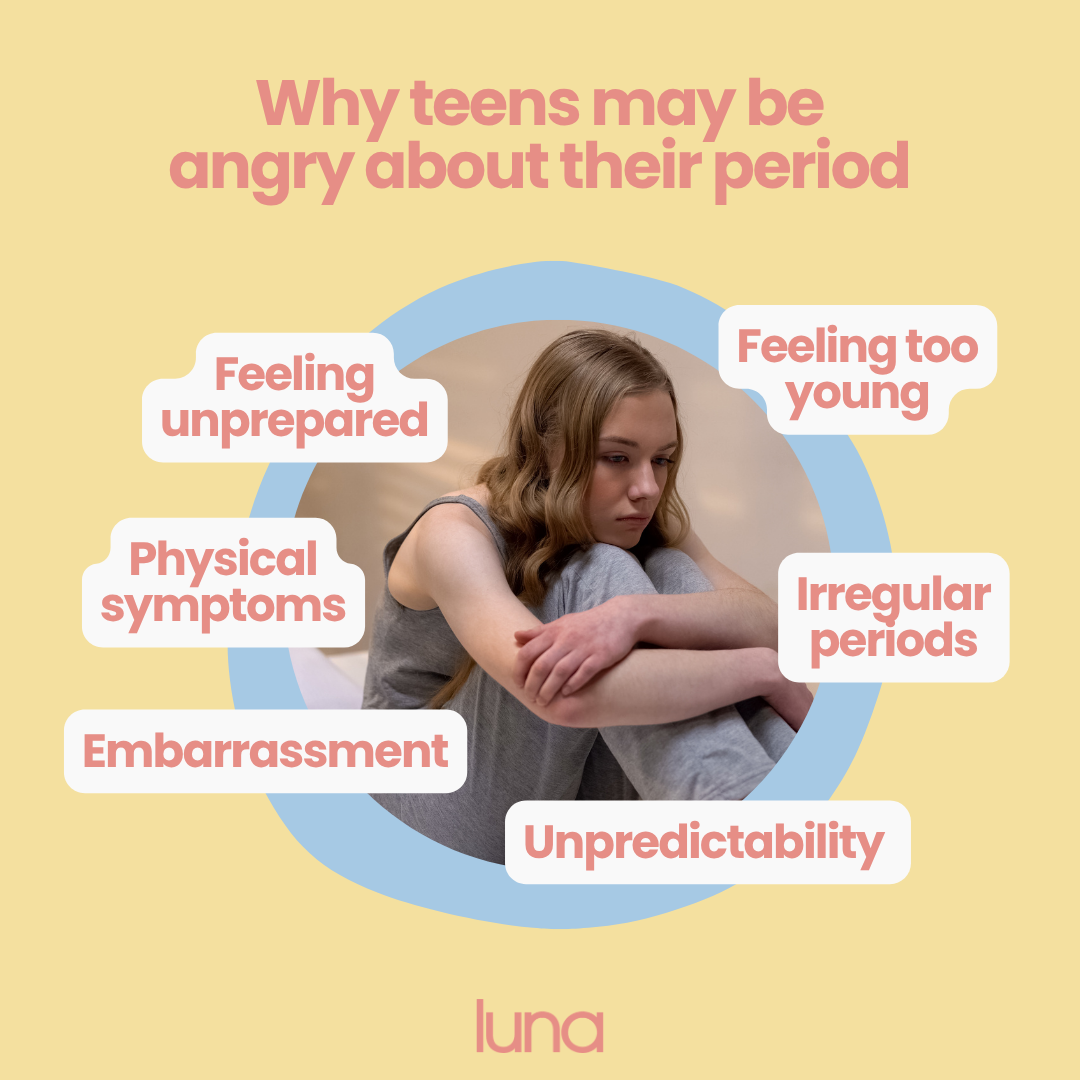
It can be hard to see, but this anger often has clear reasons behind it:
- Feeling unprepared or too young: she may feel this has happened before she was ready, which can feel unfair
- Hormonal changes: shifts in oestrogen and progesterone can affect mood and make emotions feel more intense
- Physical symptoms: cramps, fatigue, and period headaches can make everyday life feel harder
- Loss of control: periods can feel unpredictable, especially at first
- Social pressure or embarrassment: managing periods around others can feel stressful
For some teens, this can also feel like a shift away from childhood, which can bring up frustration or resistance.
How can I help my daughter who is angry about her period?
The most helpful approach is to validate how she feels while helping her feel more comfortable and in control. You don’t need to fix the feeling straight away, but little by little, you can create a safe space for her to figure things out.
You might want to:
- Validate her feelings: let her know it makes sense that she feels this way. Simple phrases like “I get why that feels frustrating” can reduce defensiveness and help her feel understood
- Help her stay in control of her routine: reassure her that having a period doesn’t mean stopping normal life. This may look like exploring different period products and planning ahead for leaks or irregular periods
- Support symptom management: If pain is part of the anger, practical support matters. According to the NHS, warm baths, heat pads, painkillers, and self-massaging can all ease period pain
- Make periods feel more predictable: uncertainty often fuels frustration, so it may be helpful to talk through what's normal and explain to her what she should expect every month
- Offer private ways to learn: if she doesn’t want to talk, she may still want answers. Tools like luna give your daughter a private space to learn about her cycle, understand what’s happening in her body, and feel more in control without pressure
Is it normal for my daughter to be angry about her period?
Yes, it’s completely normal for some teens to feel angry about their period, particularly when it first starts. It often reflects adjustment, not a problem.
Periods can feel uncomfortable, inconvenient, and emotionally loaded. For some teens, it can even feel like a loss of childhood, which can bring up strong reactions.
In most cases, these feelings improve as your daughter becomes more familiar with her cycle.
When should I be concerned about my daughter’s mood around her period?
It’s worth paying attention to your daughter's mood about her period if the emotional impact feels intense or ongoing.
You may want to seek support if:
- Her mood is very low, anxious, or overwhelming
- Anger affects her daily life or relationships
- She struggles to cope each month
- Symptoms, such as PMS mood swings, suggest severe premenstrual changes (such as premenstrual dysphoric disorder (PMDD))
A doctor can help rule out underlying issues and suggest support if needed.
FAQs
Why does my daughter get so emotional on her period?
Hormonal changes can affect brain chemistry, which may make emotions feel stronger or harder to regulate during this time.
Can periods really cause anger?
Yes, mood changes, including irritability or anger, are common due to hormonal fluctuations and physical discomfort.
Should I be worried about PMDD?
PMDD is less common but more severe. If symptoms are intense, ongoing, and impact daily life, it’s worth speaking to a doctor.
What should I do next?
If your daughter is struggling, small steps can make a big difference.
Alongside your support, having the right tools can help her feel more in control. On luna, your teen can learn about her period, understand what’s happening in her body, and track her cycle so it feels more predictable and manageable.
You may also want to learn how to help your daughter plan for an unexpected period, as luna gets loads of questions from teens about this, and it can cause anger and stress for those who are new to it all!
How we created this article:
luna's team of experts comprises GPs, Dermatologists, Safeguarding Leads and Junior Doctors as well as Medical Students with specialised interests in paediatric care, mental health and gynaecology. All articles are created by experts, and reviewed by a member of luna's senior review team.
We'd love to keep in touch!
Sign up to our parent newsletter for emails on the latest teen trends, insights into our luna community and to keep up to date
By signing up, you are agreeing that we can use your email address to market to you. You can unsubscribe from marketing emails at any time by using the link in our emails. For more information, please review our privacy statement.