Planning for an unexpected period
Practical tips to help your teen feel prepared
Updated January 28, 2026 • Medically reviewed by Dr. Emma Dickie
Medically reviewed by Dr. Emma DickieIn this article
How to help my daughter plan for an unexpected period
You can help your daughter plan for an unexpected period by preparing a small period kit, explaining that irregular cycles are normal in the early years, and encouraging cycle tracking on luna.
These steps help teens feel more confident and less stressed if their period starts unexpectedly.
For teens, getting a period unexpectedly, at school, on a trip, or while out with friends, can feel stressful or embarrassing.
We get thousands of questions about this in the luna app!
Not knowing what to do or not having supplies can turn an ordinary day into a stressful one.
Thankfully, a little planning can make a huge difference.
Being prepared doesn’t just prevent awkward moments. It also gives your teen confidence and a sense of control in an otherwise very unpredictable time.
What does my daughter need for unexpected periods?
A period kit
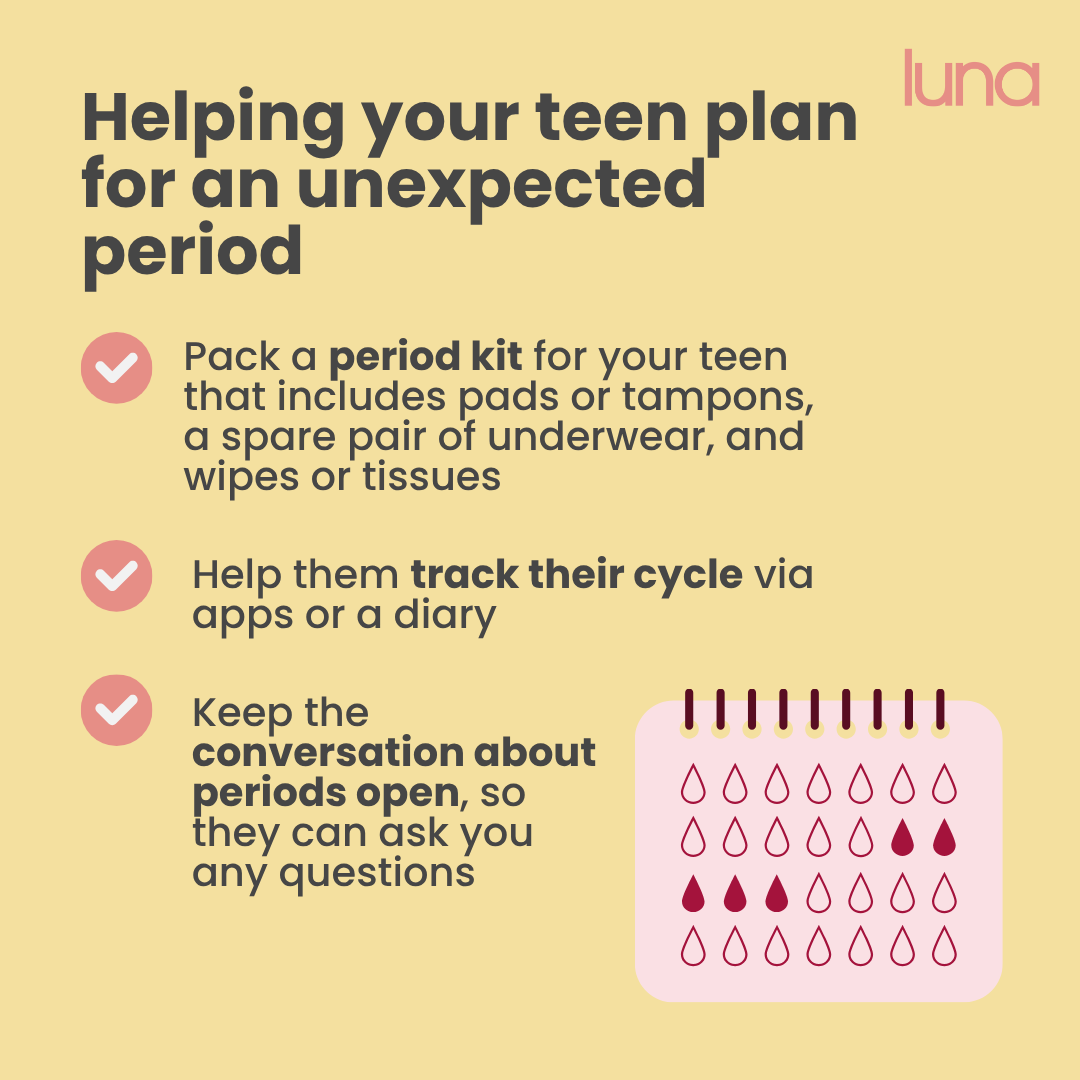
A period kit helps teens manage unexpected bleeding by giving them quick access to basic supplies wherever they are. Having a kit reduces panic and makes it easier to handle a surprise period calmly.
What to put in a period kit
A period kit might include:
- A mix of pads (daytime and nighttime absorbencies)
- Panty liners for spotting or discharge
- Period underwear (optional, but great for heavier days or overnight)
- Unscented wipes (baby wipes are totally fine!)
- Tissues
- A small washable pouch or wet bag to keep everything in
- A mini hot water bottle or stick-on heat patches
Encourage your teen to check and refresh their kit regularly. This small habit can help them feel prepared, independent, and in control.
A period tracking app for teens
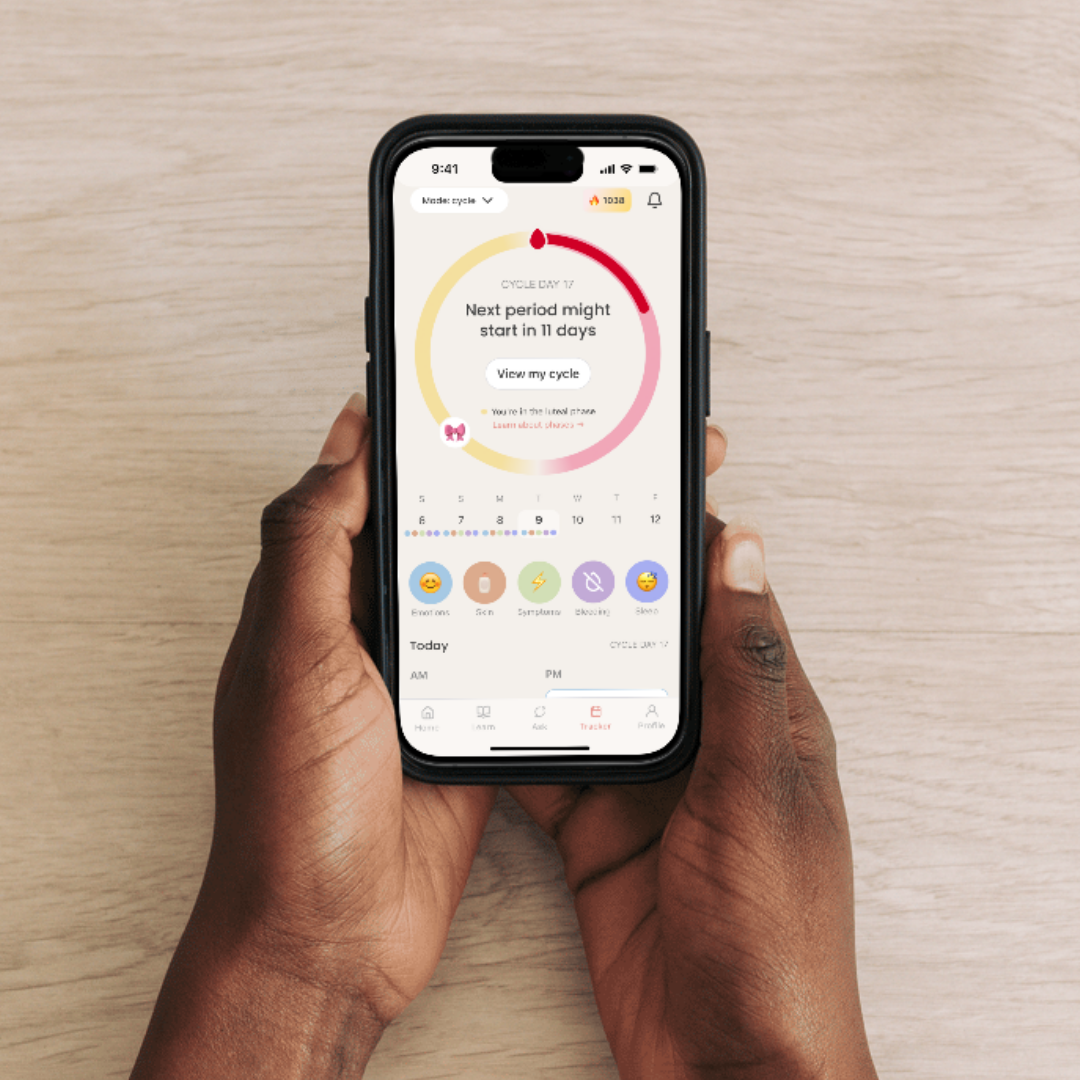
Even when periods are irregular, tracking them can help teens notice patterns and feel more prepared for when their period might start.
Tracking does not need to be about getting an exact prediction. It is more about helping teens understand what is normal for their own body.
Tracking periods can help teens:
- Feel less caught off guard by unexpected periods
- Notice patterns in flow, pain, mood, skin, and energy
- Recognise early signs a period may be coming, such as cramps, headaches, breast tenderness, discharge, or mood changes
- Share clearer information with a doctor if something does not feel right
For many teens, a simple tracking app can be an easy and private way to build this awareness over time (luna's also got info on finding a safe period tracker)
Why are teen periods often irregular?
Research shows that around 41% of girls report irregular menstrual cycles, with younger teens more likely to be affected than older teens.
Only 13% of girls polled on the luna app claimed their periods were regular immediately.
In the first few years after periods begin (usually between ages 9 and 14), irregular cycles are very common and often nothing to worry about.
Common reasons teens experience irregular or late periods include:
- Puberty: it can take around 1-2 years after a first period for cycles to become more regular
- Stress or anxiety: emotional stress can delay ovulation and affect the timing of periods
- Weight changes or restrictive eating: losing or gaining weight quickly can disrupt hormone levels
- High levels of physical activity: especially in sports like gymnastics, dance, swimming, or endurance training
- Illness or changes in routine: being unwell, poor sleep, or travel can temporarily affect cycles
These causes are very common in teenage girls and are usually temporary. In many cases, periods become more regular as the body matures.
When should I be concerned about my daughter's period?
While irregular periods are common during puberty, there are times when it’s important to seek medical advice.
You should consider speaking to a doctor if any of the following apply:
- Your teen has not started their period by age 15
- They have missed three or more periods in a row
- Their periods are still very irregular more than two years after their first
- Periods regularly last longer than 7 days or less than 2 days
- Bleeding is very heavy (for example, needing to change a pad or tampon every 1-2 hours for several hours, or passing large clots that exceed the size of a 10p coin)
- They experience severe pain, dizziness, fainting, or extreme tiredness during periods
- There is bleeding between periods
A doctor can assess whether further tests are needed and help rule out any underlying conditions.
If your teen is sexually active and has missed a period, pregnancy should always be ruled out by a healthcare professional.
Seeking medical advice doesn’t mean something is wrong – it’s often simply a way to get reassurance and support.
Can you really plan for an unexpected period?
Yes. By preparing a period kit and encouraging cycle tracking, teens can feel ready for their period even when it starts unexpectedly.
Having supplies on hand and some awareness of their cycle helps teens continue with their day without panic or disruption.
Planning does not mean predicting the exact day a period will start. It means helping your teen feel confident that they can manage it if it happens at school, during activities, or while out with friends.
FAQs
Why do periods sometimes start unexpectedly?
Unexpected periods are common in teens because hormones are still settling after the first period. Stress, growth, illness, or changes in routine can also affect timing.
Tracking cycles and early symptoms in luna can help teens spot patterns and feel less surprised over time.
What should my daughter do if her period starts suddenly?
If a period starts unexpectedly, having a small period kit with pads or period underwear makes it much easier to manage calmly.
In the absence of period products, speaking to someone like a school nurse or friend can help them get spare products, or they can make an emergency pad by folding up toilet paper until they get a chance to have this conversation.
Using luna to track symptoms and cycle changes can also help her feel more prepared next time.
How we created this article:
luna's team of experts comprises GPs, Dermatologists, Safeguarding Leads and Junior Doctors as well as Medical Students with specialised interests in paediatric care, mental health and gynaecology. All articles are created by experts, and reviewed by a member of luna's senior review team.
Sources:
Kids Health "Irregular periods" | Accessed 28.01.26
https://kidshealth.org/en/teens/irregular-periods.htmlNHS "Irregular periods" | Accessed 28.01.26
https://www.nhs.uk/symptoms/irregular-periods/NHS "Missed or late periods" | Accessed 28.01.26
https://www.nhs.uk/symptoms/missed-or-late-periods/We'd love to keep in touch!
Sign up to our parent newsletter for emails on the latest teen trends, insights into our luna community and to keep up to date
By signing up, you are agreeing that we can use your email address to market to you. You can unsubscribe from marketing emails at any time by using the link in our emails. For more information, please review our privacy statement.