What to do if your daughter has green discharge
Does it need medical attention?

Updated September 8, 2026 • Medically reviewed by Dr. Emma Dickie
Medically reviewed by Dr. Emma DickieIn this article
What does green discharge mean?
Green vaginal discharge is not usually normal and is often linked to an infection that needs medical assessment.
In teens, it is most commonly associated with bacterial infections or certain sexually transmitted infections (STIs), although other causes are possible.
If your teen has green discharge, it is sensible to speak with a doctor for advice.
What causes green discharge in teens?
Green discharge is most often caused by infections affecting the vagina.
It can appear alone, or alongside other symptoms such as irritation, discomfort, or unusual odour.
A proper assessment by a healthcare professional is important.
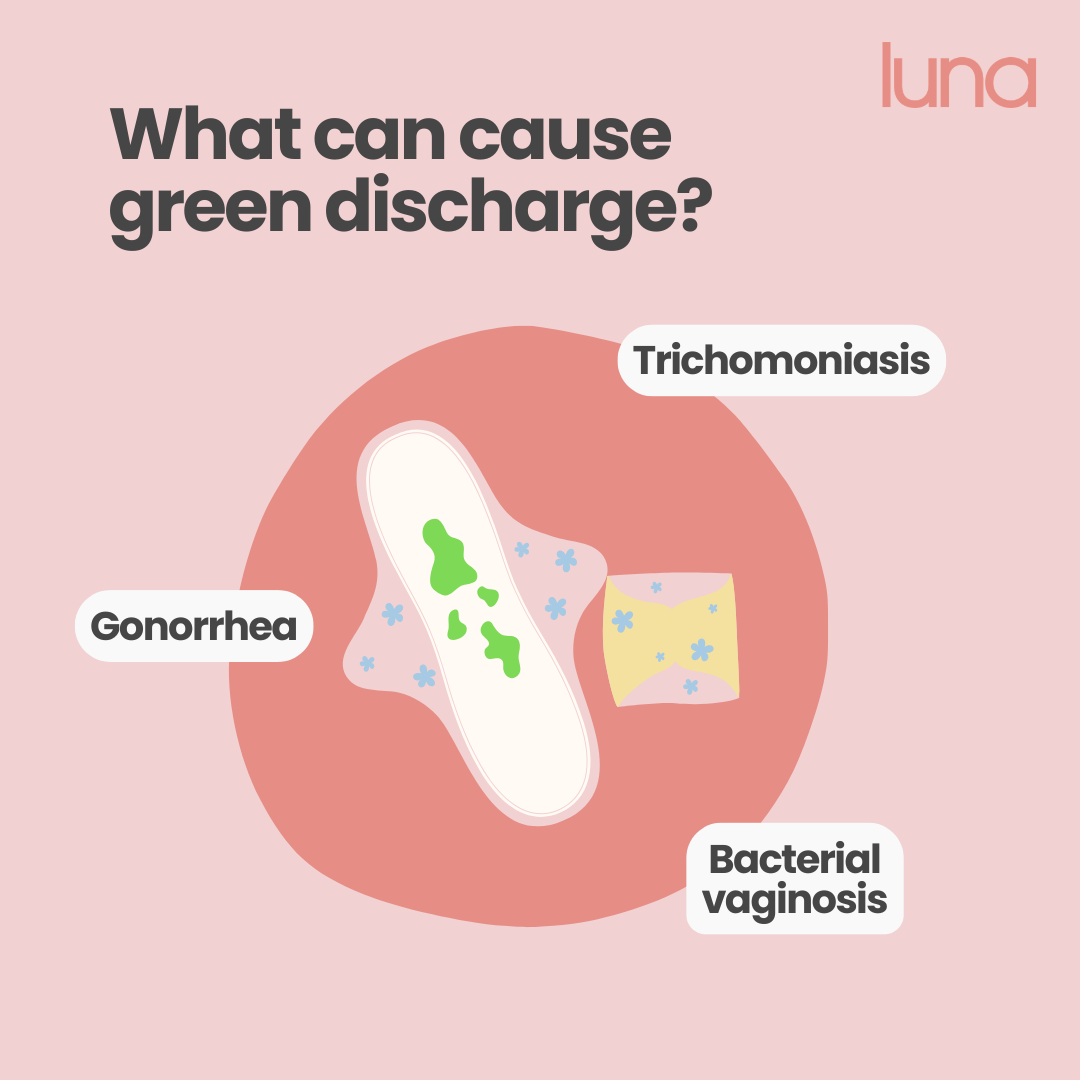
Common causes include:
- Trichomoniasis: a parasitic infection that can cause yellow, green or frothy discharge, often with itching or discomfort
- Gonorrhoea: a bacterial STI that may cause green or yellow discharge with burning during urination or pelvic pain
- Bacterial vaginosis: a bacterial imbalance that can sometimes cause grey-green discharge and a noticeable, often fishy smelling, odour
Less commonly, discharge colour can be affected by irritation, retained foreign material, or mixed infections.
A doctor or sexual health clinic can identify the exact cause.
Does green discharge always mean an STI?
No, green discharge does not always mean your teen has a sexually transmitted infection.
While some STIs can cause green discharge, bacterial vaginosis and other infections can also be responsible.
Medical assessment is important because green discharge is not typical of normal hormonal changes.
Avoid jumping to conclusions before your teen has been properly assessed.
A clinician can advise on testing if needed.
When should I worry about green discharge?
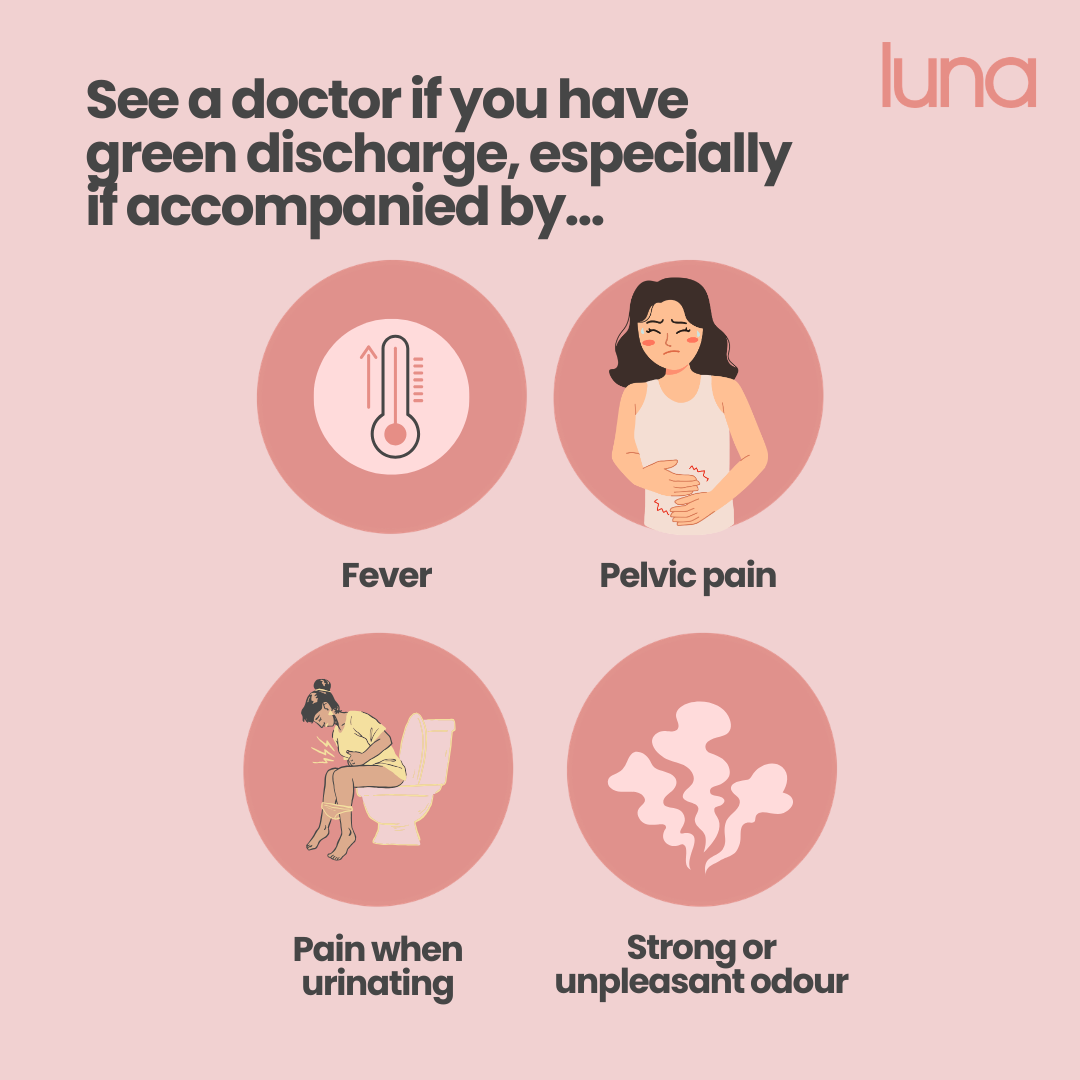
Green discharge should be checked by a doctor, especially if your teen also has additional symptoms.
Changes in colour, smell, or comfort are usually more important than the amount of discharge.
Seek medical advice if there is:
- Strong or unpleasant odour
- Itching, burning, or redness
- Pain when urinating
- Lower abdominal or pelvic pain
- Irregular bleeding or bleeding between periods
- Fever or feeling generally unwell
If you are unsure, it is always appropriate to seek medical reassurance.
Do you need antibiotics for green discharge?
Not all green discharge requires antibiotics, but infections that cause it often do.
The correct treatment depends on the underlying cause, which is why medical assessment is important.
A doctor may prescribe antibiotic cream or tablets, or another treatment based on test results.
It is important to:
- Avoid using leftover antibiotics
- Avoid harsh home remedies
- Follow the full treatment plan if medication is prescribed
Can green discharge go away on its own?
Green discharge caused by infection often does not resolve without treatment.
Leaving an infection untreated can lead to ongoing discomfort or complications in some cases.
If green discharge persists, it is best to have your teen assessed by a doctor.
Tracking symptoms can help you notice whether things are improving or worsening before the appointment.
How can tracking discharge help teens?
Tracking discharge can help your teen notice patterns more clearly.
This information can also make medical appointments more useful and reassuring.
Tracking can help teens and parents:
- Notice changes over time
- Spot patterns in the menstrual cycle
- Provide clearer information to healthcare professionals
- Feel more confident about what is normal

How we created this article:
luna's team of experts comprises GPs, Dermatologists, Safeguarding Leads and Junior Doctors as well as Medical Students with specialised interests in paediatric care, mental health and gynaecology. All articles are created by experts, and reviewed by a member of luna's senior review team.
Sources:
NHS "Vaginal discharge" | Accessed 08.09.26
https://www.nhs.uk/symptoms/vaginal-discharge/Cleveland Clinic "Bacterial vaginosis" | Accessed 08.09.26
https://my.clevelandclinic.org/health/diseases/3963-bacterial-vaginosisNHS "Gonorrhoea" | Accessed 08.09.26
https://www.nhs.uk/conditions/gonorrhoea/Cleveland Clinic "Trichomoniasis" | Accessed 08.09.26
https://my.clevelandclinic.org/health/diseases/4696-trichomoniasisWe'd love to keep in touch!
Sign up to our parent newsletter for emails on the latest teen trends, insights into our luna community and to keep up to date
By signing up, you are agreeing that we can use your email address to market to you. You can unsubscribe from marketing emails at any time by using the link in our emails. For more information, please review our privacy statement.