What is the hopecore trend and is it dangerous for your daughter?
Should you worry about hopecore?

Updated September 16, 2026 • Medically reviewed by Dr. Emma Dickie
Medically reviewed by Dr. Emma DickieIn this article
In short
Hopecore is a TikTok trend of wholesome slideshow videos: motivational quotes, feel-good clips and uplifting images, shared as an antidote to doomscrolling.
Mental health experts broadly welcome it.
The main watch-out isn't the content itself; it's whether your daughter is using it as a quick mood boost or as a substitute for real support.
What is the hopecore trend?
Hopecore (sometimes written as two words: hope core) is a TikTok aesthetic that took off in late 2023 and has stayed in circulation since.
It centres on short slideshow-style videos filled with motivational quotes, wholesome photos and feel-good images, all set to uplifting music.
The name follows TikTok's "-core" naming tradition (cottagecore, balletcore, corecore) but where most "-cores" describe a visual aesthetic, hopecore is about emotional tone.
It's a curated mood board of content designed to make you feel that life is beautiful and that better days are coming.
Early hopecore leaned on sports interview clips and motivational speeches from celebrities.
It's since evolved into something softer: animals, children, handwritten quotes, old films, and quiet messages of self-compassion.
The phrases that appear most often are "life is beautiful", "be kind for no reason" and "you're doing good."
TikTok's own trends team reported the hashtag generating over 200,000 pieces of content in a single week at its peak, far outpacing bigger aesthetic trends like Barbiecore.
Why is my daughter watching hopecore content?
If your daughter is saving hopecore videos, she's in very good company, and her reasons are probably straightforward.
YoungMinds, the UK's leading youth mental health charity, found that only 9.2% of young people had never seen something online that made them feel uncomfortable, upset, or distressed.
Hopecore is a direct pushback against doom scrolling in teens: it's teens actively choosing to fill their feeds with something that feels good rather than something that feels threatening.
TikTok's own trends data found that hopecore videos have unusually high save rates.
Unlike most content, people aren't just watching and scrolling.
They're stockpiling these videos to return to when they're feeling low.
That's a fairly healthy coping instinct, and one that tells you something about why this trend resonated with young people in particular.
Is hopecore the same as toxic positivity?
This is the main concern critics have raised, and it's worth taking seriously.
Toxic positivity is the harmful practice of suppressing genuine difficult emotions with forced cheerfulness: "just be grateful", "good vibes only", pushing people to smile through real pain.
When hopecore first appeared, some commentators worried it would fall into the same trap.
But there’s a meaningful distinction we can draw.
Toxic positivity dismisses pain and covers a wound with a sticker.
Hopecore, at its best, acknowledges that things are hard and actively chooses to look for light anyway.
The content tends to be soft and self-compassionate rather than high-performance.
It's not asking your daughter to hustle or pretend everything is fine.
That said, some hopecore content does promote an oversimplified worldview, particularly content that suggests positive thinking alone can fix structural problems.
This isn't unique to hopecore (it runs through a lot of online wellness content), but it's worth being aware of if your daughter seems to be absorbing it uncritically.
Does hopecore actually help my daughter's mental health?
The research isn't specifically on hopecore, but the underlying science on hope and adolescent wellbeing is encouraging.
A 2025 study of eighth and ninth grade adolescents published in the journal Healthcare found that higher levels of hope are directly linked to better positive mental health outcomes in teens.
The researchers specifically recommended educational approaches that actively promote hope in young people as a protective factor.
YoungMinds also notes that social media can genuinely support mental wellbeing when it helps young people feel less alone and builds a sense of community.
Hopecore fits that pattern.
Choosing to seek out content that makes you feel more hopeful is an active psychological choice, and for many girls, it's a useful one.
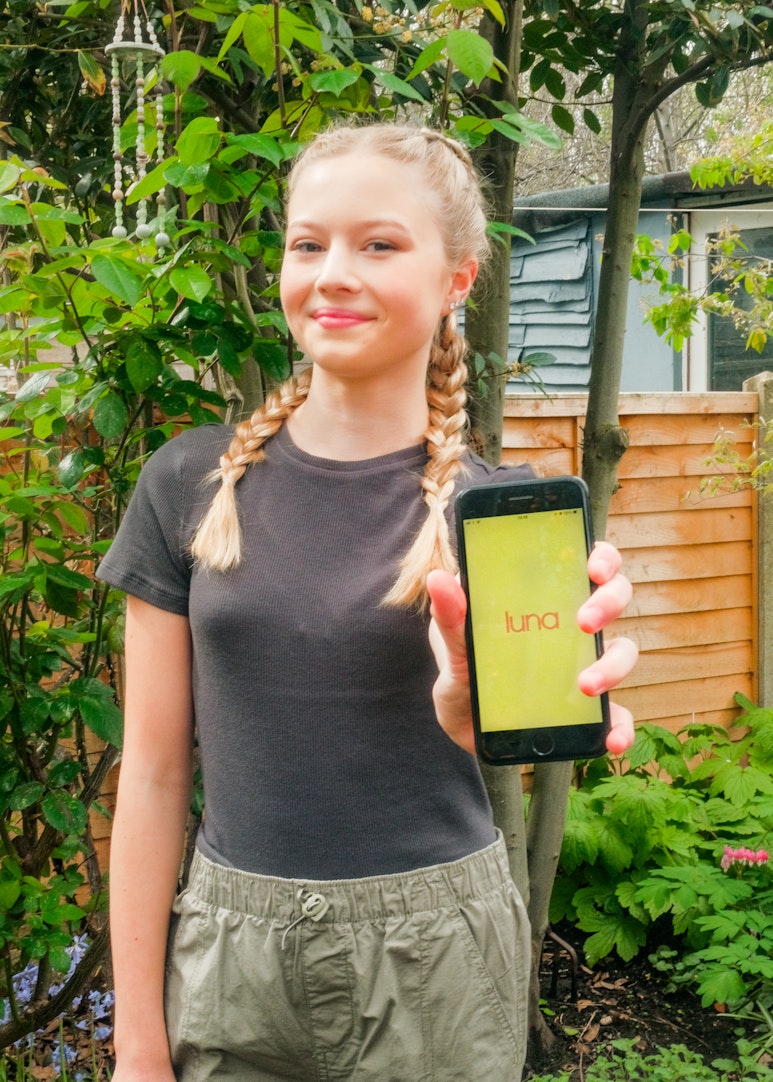
luna gives teen girls a space to explore mental health and wellbeing topics at their own pace, without an algorithm deciding what she sees next.
If your daughter is a hopecore fan, she might also find it a useful place to actually reflect on what she's feeling.
What should I watch out for with hopecore?
Hopecore itself is not a red flag, but context matters.
Occasional hopecore scrolling as a mood reset is a healthy enough coping tool.
If your daughter is spending extended time on it and still seems persistently low, withdrawn, or anxious, it's possible she's using it to manage feelings that need more support than a TikTok video can give.
This isn't about the content being harmful; it's about recognising when a coping tool has reached its limit.
It's also worth knowing that hopecore is rarely the only thing in a teenager's feed.
7 TikTok trends parents need to know about is a useful starting point for building a broader picture of what your daughter might be encountering online.
And if popcorn brain is something you've been noticing (the sense that she can't settle or tolerate boredom), that's a broader social media conversation worth having separately.
The key question isn't what she's watching, but how she's using it and how she's feeling overall.
FAQs
Is hopecore safe for teen girls?
Yes, broadly.
The content is wholesome, non-commercial, and non-harmful.
The main consideration isn't the content but the context: excessive screen time before bed, or using feel-good content as a substitute for real support if she's struggling.
Is hopecore just another name for toxic positivity?
No. Toxic positivity suppresses negative emotions.
Hopecore, at its best, acknowledges difficulty and actively chooses hope as a response.
Mental health professionals draw a clear distinction between the two.
Should I be worried if my daughter saves a lot of hopecore videos?
Probably not.
Teens often save hopecore specifically to return to when they're feeling low, using it as a personal library of comfort.
That's a healthier habit than many social media behaviours.
Can hopecore replace real mental health support?
No. If your daughter is persistently struggling, how to help your teen's mental health is a better place to start, and where needed, professional support is what actually helps.
Hopecore can sit alongside support, not instead of it.
What age is hopecore relevant for?
It's most popular with teenagers and young adults.
There's no concern with the content itself for younger teens; it's typically uplifting and age-appropriate.
If your daughter's hopecore habit is one small corner of an otherwise balanced life, there's very little to worry about.
If you've noticed she seems persistently low even with a lot of screen time, it might be worth opening a gentle conversation about how she's really feeling.
luna gives teen girls a space to explore their feelings at their own pace, without the pressure of an algorithm.
If she'd benefit from somewhere quiet to reflect, it's there for her.
How we created this article:
luna's team of experts comprises GPs, Dermatologists, Safeguarding Leads and Junior Doctors as well as Medical Students with specialised interests in paediatric care, mental health and gynaecology. All articles are created by experts, and reviewed by a member of luna's senior review team.
Sources:
YoungMinds "Social media" | Accessed 03.07.26
https://www.youngminds.org.uk/parent/parents-a-z-mental-health-guide/social-media/YoungMinds "Our report on the Online Safety Bill" | Accessed 03.07.26
https://www.youngminds.org.uk/about-us/reports-and-impact/policy-reports/our-report-on-the-online-safety-bill/Healthcare "Levels of hope, stigma, psychological vulnerability, and positive mental health: a descriptive study of eighth- and ninth-grade adolescents" | Accessed 03.07.26
https://pubmed.ncbi.nlm.nih.gov/40508872/We'd love to keep in touch!
Sign up to our parent newsletter for emails on the latest teen trends, insights into our luna community and to keep up to date
By signing up, you are agreeing that we can use your email address to market to you. You can unsubscribe from marketing emails at any time by using the link in our emails. For more information, please review our privacy statement.