What is anxiety?
Signs and causes 🧠
Quick summary 📝
1️⃣ Anxiety is something that describes feeling uneasy, scared, or worried
2️⃣ Anxiety can make your breathing and heart speed up, and you may get butterflies
3️⃣ Anxiety has different causes, so figuring out your triggers can help you understand it better and feel more in control
You’ve probably heard people talk about "anxiety" or "feeling anxious", but what does it mean?
And how do you know if you have anxiety?
Let's talk about it 👇
What actually is anxiety?
Everyone feels anxious sometimes, and that’s a totally normal part of being human. It’s when worry sticks around or starts getting in the way of your life that it’s worth getting some support.
Anxiety often starts with a feeling of unease, fear, or worry that can be hard to control.
Sometimes anxiety's triggered (or kicked off) by something specific, but other times, the cause isn't so clear 🫣
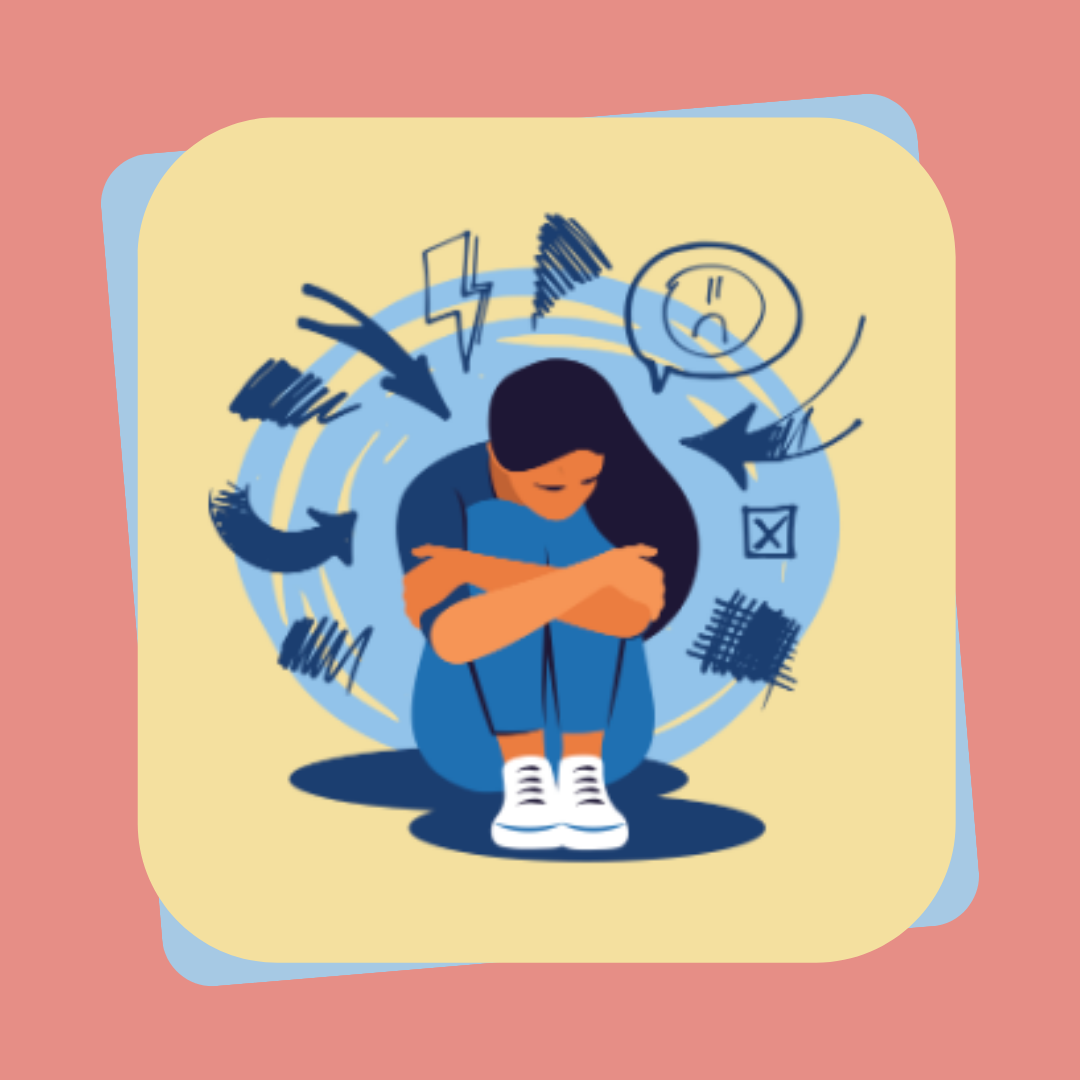
What can cause anxiety?
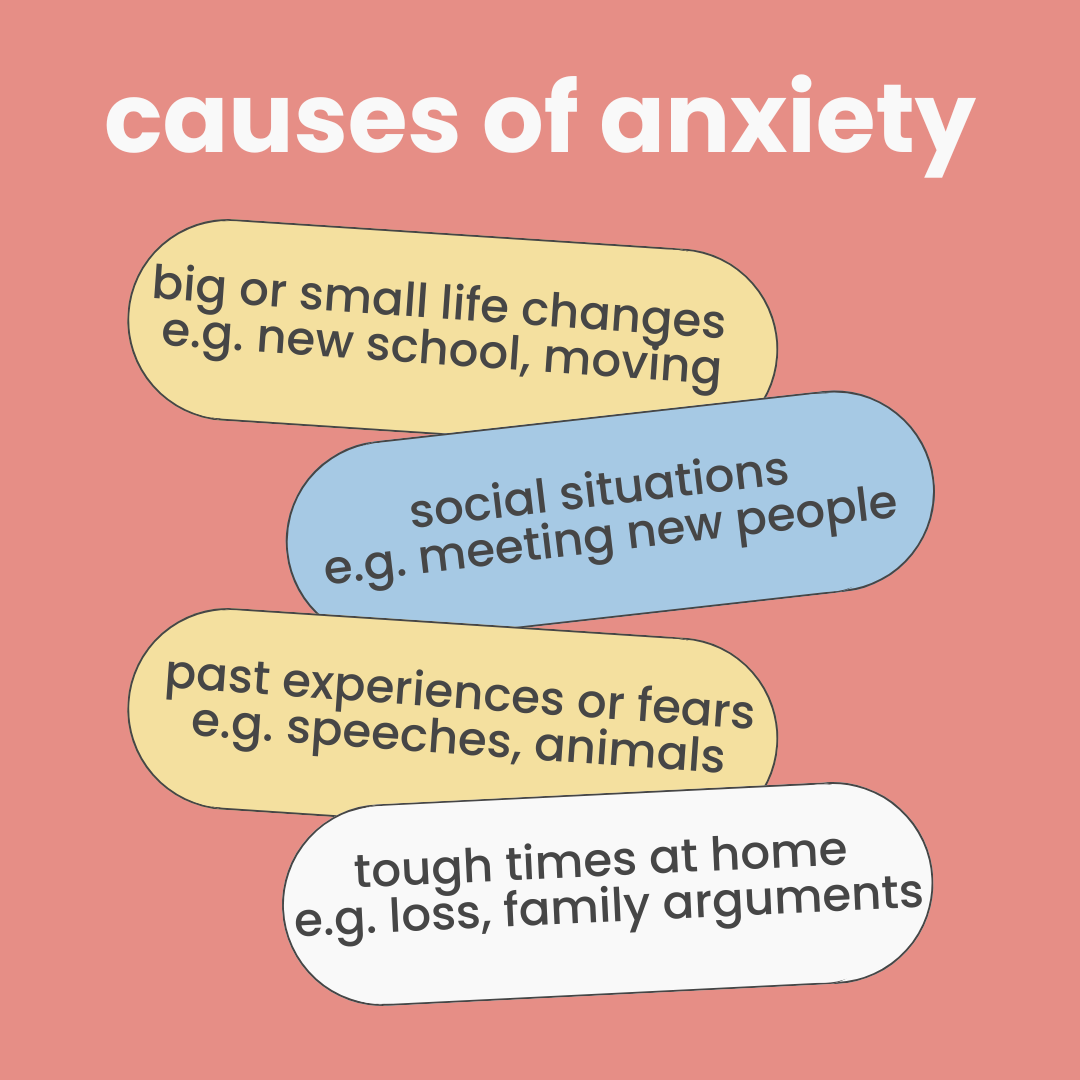
Different things cause different people to worry, including:
👉 Life changes: big or small, like moving school, changing houses, or starting college
👉 Social situations: like meeting new people or forming new relationships
👉 Fears or past experiences: like a fear of public speaking, or something tough that happened before, like bullying
👉 Difficult moments: like losing a loved one or family arguing at home
Figuring out what your anxiety cause or ‘trigger’ is can really help you understand it.
Avoiding triggers can actually make anxiety worse over time, so small steps towards them are usually more helpful.
What does anxiety feel like in the body?
luna's about to get a little sciency here 🤓
Did you know that your body's designed to deal with very stressful scenarios?
When something feels overwhelming, your body triggers a "fight or flight" response.
This response means stress hormones, such as adrenaline, noradrenaline, and cortisol, rush into the bloodstream.
Basically: when you're stressed and anxious, your body makes your...
👉 Breathing speed up
👉 Heart pound
👉 Stomach feel like it has butterflies
How does anxiety show up in everyday life?
Anxiety can show up in many different ways and at different levels.
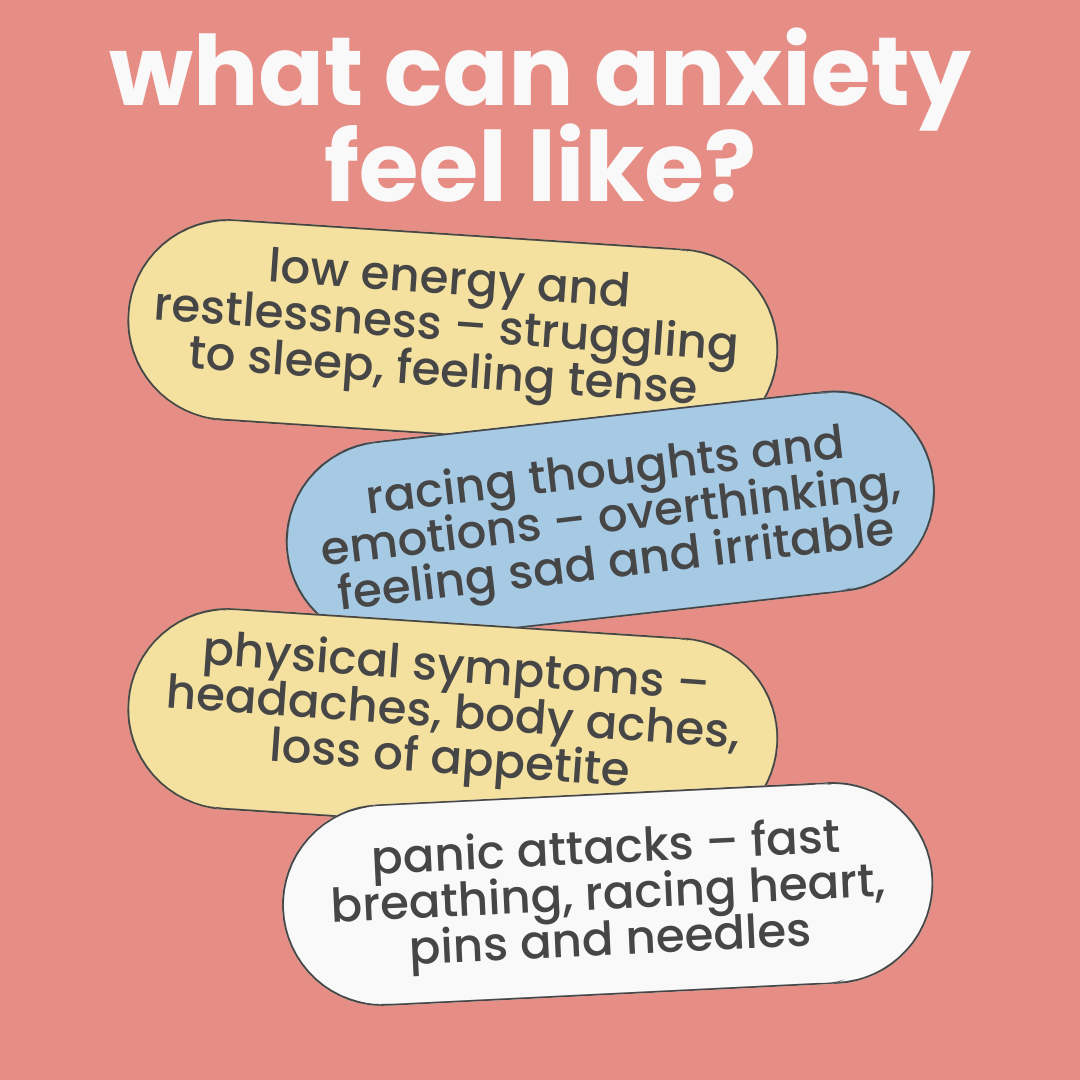
Some common signs are...
👉 Feeling easily tired or exhausted
👉 Struggling to fall or stay asleep
👉 Getting stuck on the same worries
👉 Having trouble concentrating
👉 Feeling sad or teary
👉 Headaches, muscle aches, stomach pain, or unexplained aches
👉 Feeling irritable and tense
👉 Not feeling very hungry
👉 Finding it hard to control feelings of worry
👉 Panic attacks, which might include fast breathing, a racing heart, or pins and needles
Panic attacks can feel really scary, but they’re not dangerous and usually pass within 5 to 20 minutes.
What can help?
Anxiety can feel really overwhelming, but there are things you can try that might help you feel calmer 🌷
👉 Talk about it: telling a friend, family member or school counsellor how you feel can make it feel lighter
👉 Move your body: walking, swimming, dancing or yoga can help your body relax
👉 Try slow breathing: breathing in and out slowly can help calm a racing heart
👉 Eat regular meals: this keeps your energy steady, which can help your mood too
👉 Take small steps: instead of avoiding what worries you, try facing it bit by bit
👉 Go easy on yourself: set little goals you know you can manage, rather than doing everything at once
If you’ve tried these and things still feel hard, that’s okay. It just means it’s time to get a bit more support.
You're not alone in this
If you think you have anxiety and it's impacting your everyday life, please talk to someone you trust like a parent, teacher, or school counsellor.
Anxiety can feel overwhelming, but you’re absolutely not alone 🌷
A trusted adult can help you book a chat with a doctor, who can help you figure out what’s next.
If it ever feels like too much, you can call Childline for free on 0800 1111, any time.
How we created this article:
luna's team of experts comprises GPs, Dermatologists, Safeguarding Leads and Junior Doctors as well as Medical Students with specialised interests in paediatric care, mental health and gynaecology. All articles are created by experts, and reviewed by a member of luna's senior review team.
Sources:
NHS "Anxiety, fear, panic" | Accessed 12.10.26
https://www.nhs.uk/mental-health/feelings-symptoms-behaviours/feelings-and-symptoms/anxiety-fear-panic/NHS “Anxiety In Children” | Accessed 12.10.26
https://www.nhs.uk/mental-health/children-and-young-adults/advice-for-parents/anxiety-in-children/NHS "Signs of anxiety" | Accessed 12.10.26
https://www.nhs.uk/every-mind-matters/mental-health-issues/anxiety/#signs-of-anxiety