Is the HPV vaccine safe for your daughter?
Safety, consent and what to expect
Updated August 11, 2026
In this article
In short
The HPV vaccine protects your daughter against several cancers, including cervical cancer, by guarding against a very common virus.
In England, it's offered free to all children in school year 8, usually as a single injection.
It's been used for years, is closely monitored, and is considered very safe.
You'll be asked to give consent before she has it.
Why is my daughter being offered the HPV vaccine?
Because it's one of the most effective ways to protect her from certain cancers later in life.
The vaccine guards against human papillomavirus (HPV), a very common virus that most people catch at some point.
HPV usually causes no problems and clears on its own within about two years.
But some types can lead to cervical, mouth and throat, anal, vulval and vaginal cancers, as well as genital warts.
The virus spreads through close skin-to-skin contact of the genital area, so the vaccine works best when it's given before your daughter is ever exposed to it.
That's why it's offered at ages 12 to 13, well ahead of time.
Since the vaccine was introduced, there's been a big drop in the number of young people getting HPV-linked conditions.
The NHS aims to help eliminate cervical cancer in England by 2040.
Is the HPV vaccine safe for my daughter?
Yes. The vaccine used in the UK, Gardasil 9, has been used for years and is carefully tested and closely monitored.
Any worry about putting something new into your daughter's body is completely understandable, especially when you're reading about it late at night.
It's worth knowing that serious side effects are very rare, and the staff giving the vaccine are trained to deal with any allergic reaction straight away.
Most side effects are mild and don't last long.
They can include:
- Swelling, redness or soreness where the injection was given
- A headache
- A high temperature
- Feeling dizzy or sick
- Feeling tired
The main reason a child can't have it is if they've had a severe allergic reaction to the vaccine or one of its ingredients before.
If your daughter has any serious allergies, the school vaccination team can talk it through with you.
How does consent work for the HPV vaccine at school?
You'll be asked to give consent before the vaccination day, usually through an online form sent to you by text or email.
You can use it to agree to or decline the vaccine, and the team will send a reminder if you haven't replied.
The vaccine is given during the autumn term, so it can land in the middle of all the usual back to school worries.
Here's roughly how the process runs:
- The school sends you information about the vaccine and a link to the consent form
- You complete the form to give or decline consent
- The vaccination team visits the school and gives the jab as a single injection into the arm
- If your daughter is absent or misses the session, she's usually offered a catch-up
One thing that sometimes surprises parents: young people aged 13 and over can occasionally consent for themselves if a health professional judges they fully understand what's involved.
This only happens if a parent hasn't already responded. If you've replied and declined, the team won't vaccinate her.
What if my daughter misses the HPV vaccine at school?
She can still have it for free. If she misses the session, is off school that day, or you decide later that you'd like her to have it, there's a catch-up route.
In England the HPV vaccine is free on the NHS up to your daughter's 25th birthday.
You can arrange a catch-up through the school vaccination team or your doctor.
The jab lands in year 8, right in the thick of the stages of puberty and all the changes that come with them, so it's easy for it to slip down the list.
There's no need to panic if she misses it, but it's worth knowing the offer stays open for years.
How do I talk to my daughter about the HPV vaccine?
Keep it simple and matter of fact. You might explain that it's a routine jab that protects her from getting seriously ill later on, in the same way lots of other childhood vaccines do.
Some parents find it helps to mention it a week or so beforehand, so it isn't a surprise on the day.
If she's nervous about needles, it can help to remind her it's one quick injection and it's over fast.
You don't need to get into the detail of how HPV spreads unless she asks.
If she does, it's a natural moment to open up a wider conversation about sex and relationships at her own pace.
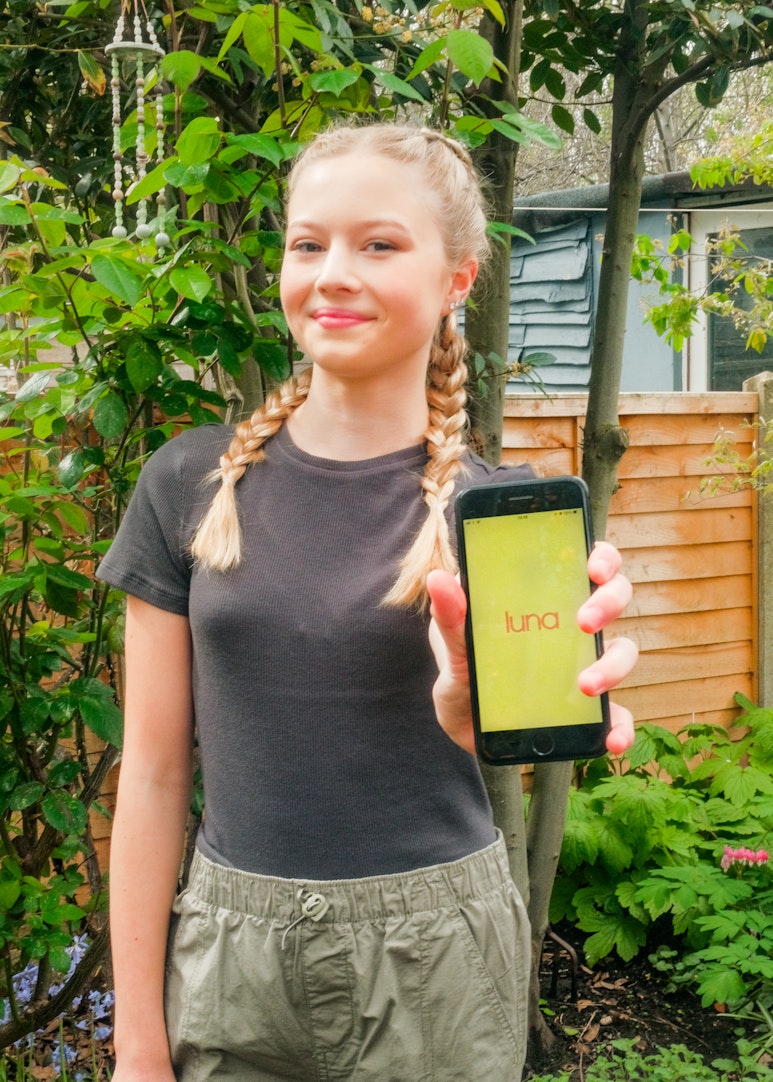
luna gives teen girls a space to explore questions about their bodies and health without judgement, with all the content reviewed by medical experts rather than driven by influencers or ads.
It can be a good place for her to read up on the vaccine herself if she'd rather not ask out loud.
Frequently asked questions
Does my daughter need the HPV vaccine if she hasn't had sex?
Yes. The vaccine is offered at ages 12 to 13 precisely because it works best before any contact that could pass on the virus.
HPV is very common and spreads through skin-to-skin genital contact, not just penetrative sex, so having it early gives her the strongest protection.
Can boys have the HPV vaccine too?
Yes. Since 2019 the vaccine has been offered to all children in school year 8, not just girls.
Boys born after 1 September 2006 can also have it free on the NHS up to their 25th birthday.
How many doses will my daughter need?
Most people under 25 now need just one dose.
Those who have it later, between 25 and 45, usually have two, and anyone with a weakened immune system has three.
What if my daughter is unwell on the day?
If she has a high temperature or feels too unwell to do her normal activities, it's usually best to wait until she's feeling better.
The team will offer her a catch-up appointment, so a missed session doesn't mean a missed vaccine.
Feeling unsure about a vaccine you can't remember having yourself is completely normal, and asking questions is exactly the right instinct.
If you'd like to talk anything through, the school vaccination team or your doctor can answer questions specific to your daughter.
How we created this article:
luna's team of experts comprises GPs, Dermatologists, Safeguarding Leads and Junior Doctors as well as Medical Students with specialised interests in paediatric care, mental health and gynaecology. All articles are created by experts, and reviewed by a member of luna's senior review team.
Sources:
NHS "HPV vaccine" | 11.08.26
https://www.nhs.uk/vaccinations/hpv-vaccine/NHS "Human papillomavirus (HPV)" | 11.08.26
https://www.nhs.uk/conditions/human-papilloma-virus-hpv/NHS England "Thousands more young people urged to take up HPV vaccine to meet NHS cervical cancer elimination goal" | 11.08.26
https://www.england.nhs.uk/2024/01/thousands-more-young-people-urged-to-take-up-hpv-vaccine/Leicestershire Partnership NHS Trust "School aged immunisation service: HPV vaccination information hub for parents and carers of secondary school children" | 11.08.26
https://www.leicspart.nhs.uk/school-aged-immunisation-service-hpv-vaccination-information-hub-for-parents-and-carers-of-secondary-school-children/We'd love to keep in touch!
Sign up to our parent newsletter for emails on the latest teen trends, insights into our luna community and to keep up to date
By signing up, you are agreeing that we can use your email address to market to you. You can unsubscribe from marketing emails at any time by using the link in our emails. For more information, please review our privacy statement.