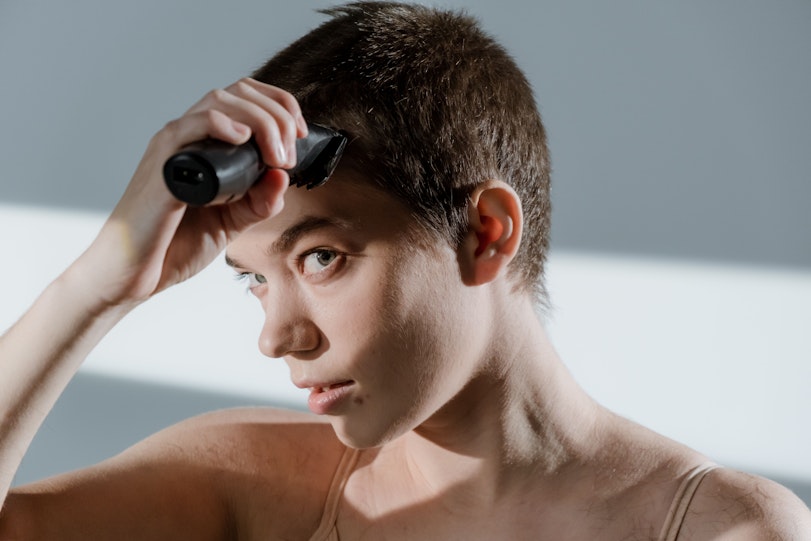
Why does your daughter want to shave her head?
What it means when she wants a buzz cut
Updated August 4, 2026
In this article
In short
Most teenage girls who want to shave their heads are expressing who they are, not signalling a crisis.
Hair is one of the few things a teenager fully controls, so shaving it can be about self-expression, style, comfort, or a fresh start.
It's usually a normal part of growing up, though occasionally it's worth a gentle check-in.

Why does my daughter suddenly want to shave her head?
If she's gone from straighteners every morning to asking for a buzz cut, it can feel like it's come out of nowhere. Usually it hasn't.
Shaving her head is one of the clearest ways she can say something about who she is.
Some of the most common reasons a teenage girl wants to shave her head include:
- Self-expression and standing out when everyone around her has similar hair
- Copying a look she loves, from a musician, an actor, or someone on TikTok
- Wanting something low-maintenance that takes minutes rather than an hour
- Comfort, especially if she finds long hair hot, heavy, or irritating to her senses
- Solidarity, like shaving for charity or to support someone losing their hair
- Marking a fresh start after a breakup, a hard year, or a big change
Researchers who study mental development in adolescence suggest the teenage years are a period of intense identity exploration, when she works out who she is by trying things on and seeing what fits.
Sometimes this may feel as if your daughter’s personality has changed completely, but it can be good for them to explore who they are.
A dramatic hair change is one of the safest, most reversible ways to do that.
luna gives teen girls a space to explore questions about their body, identity, and confidence at their own pace, with content reviewed by medical experts rather than driven by influencers.
Is it normal for my daughter to want to shave her head?
Yes. Wanting to change her appearance, sometimes dramatically, is a normal part of being a teenager.
Hair carries a lot of meaning, and for many girls it's bound up with how "girl" they're expected to look. Shaving it can be a way of stepping outside that expectation and feeling more like herself.
Her appearance is also one of the few areas of her life she gets to fully control, at a stage when a lot can feel decided for her.
That sense of control is closely linked to confidence, which is why some of the same feelings show up when girls have body image worries.
For some girls, changing their hair is part of exploring gender expression, meaning how they present themselves to the world. That doesn't automatically say anything fixed about her gender or sexuality.
If she does start talking about identity, though, knowing how to support your teenager if she comes out can help you feel ready for the conversation.
Should I let my daughter shave her head?
That's your call, and you know her best. It helps to remember that hair grows back, so this is one of the more reversible things she can experiment with.
Some parents find it helps to get curious before getting worried.
Asking what she likes about the idea often tells you more than a straight yes or no, and it shows her you're taking her seriously.
If you do go ahead, there are a few practical things worth thinking through together: trying a longer clipper guard first so it isn't all or nothing, checking whether her school has rules on hairstyles, and deciding between a salon and doing it at home.
Letting her lead these small decisions is also a gentle way of encouraging her independence.
How do I know if it's a sign something's wrong?
This is usually the worry underneath the question, so here's the reassuring part: wanting to shave her head, on its own, is not a warning sign.
It's worth paying closer attention if the wish to shave comes alongside:
- Pulling her hair out, rather than wanting it cut or shaved off
- Lasting low mood, withdrawal, or losing interest in things she used to love
- Wanting to disappear or be less noticed, rather than to express herself
- Doing it in secret, or real distress and regret straight afterwards
There's a difference between choosing to shave and not being able to stop pulling.
Trichotillomania, a hair pulling disorder, is an irresistible urge to pull hair out that often builds tension and then relief, and it usually starts between the ages of 10 and 13.
If you notice patchy hair loss or catch her pulling, a doctor can help.
If your instinct is telling you something feels off, that's worth listening to. luna’s guide on telling normal teen behaviour from signs something's wrong can help you weigh it up.
How should I respond when she tells me?
Try to react to the message before the haircut. When she raises it, staying calm keeps the door open, even if your first instinct is to talk her out of it.
You don't have to say yes on the spot, and you don't have to hide your own feelings either.
Something like "tell me more about it" buys you both time and tells her she can bring things to you. That trust is worth more than any single hairstyle.
A good next step
More often than not, a shaved head is your daughter telling you something about who she's becoming, not a red flag.
Staying curious will usually tell you more than stepping in.
If the wish comes wrapped in low mood or withdrawal, it's always okay to check in with a doctor for reassurance.
And luna is there as a judgement-free space for her to explore her identity, body, and wellbeing, with everything reviewed by medical experts, so she has somewhere to turn as she works out who she is.
FAQs
Is shaving her head a sign of depression?
Not by itself. One change in appearance isn't a symptom. It's the wider picture that counts: ongoing low mood, withdrawal, or loss of interest in things she enjoyed.
If those are there too, a doctor is a good next step.
My daughter wants to shave her head for charity, should I worry?
This is usually a sign of empathy, not distress. Charity head shaves raise money and show solidarity with people losing their hair, often through illness.
It can be a proud thing to support her through.
Will shaving her head damage her hair?
No. Shaving doesn't touch the root, so her hair grows back at its usual rate. It can feel different in texture as it grows through, but that tends to settle as it gets longer.
What if I say no and she does it anyway?
Teenagers test boundaries, and hair is a common place to do it. If it happens, staying calm protects the relationship, which matters far more than the hair. And it grows back.
How we created this article:
luna's team of experts comprises GPs, Dermatologists, Safeguarding Leads and Junior Doctors as well as Medical Students with specialised interests in paediatric care, mental health and gynaecology. All articles are created by experts, and reviewed by a member of luna's senior review team.
Sources:
NHS "Coping with your teenager" | 04.08.26
https://www.nhs.uk/mental-health/children-and-young-adults/advice-for-parents/cope-with-your-teenager/NHS "Worried about your teenager?" | 04.08.26
https://www.nhs.uk/mental-health/children-and-young-adults/advice-for-parents/worried-about-your-teenager/NHS "Trichotillomania (hair pulling disorder)" | 04.08.26
https://www.nhs.uk/mental-health/conditions/trichotillomania/YoungMinds "Self-esteem and believing in yourself" | 04.08.26
https://www.youngminds.org.uk/young-person/coping-with-life/self-esteem-and-believing-in-yourself/YoungMinds "Body image" | 04.08.26
https://www.youngminds.org.uk/young-person/coping-with-life/body-image/Pfeifer JH et al. "The development of self and identity in adolescence: neural evidence and implications for a value-based choice perspective on motivated behavior" | 04.08.26
https://pubmed.ncbi.nlm.nih.gov/31363361/We'd love to keep in touch!
Sign up to our parent newsletter for emails on the latest teen trends, insights into our luna community and to keep up to date
By signing up, you are agreeing that we can use your email address to market to you. You can unsubscribe from marketing emails at any time by using the link in our emails. For more information, please review our privacy statement.