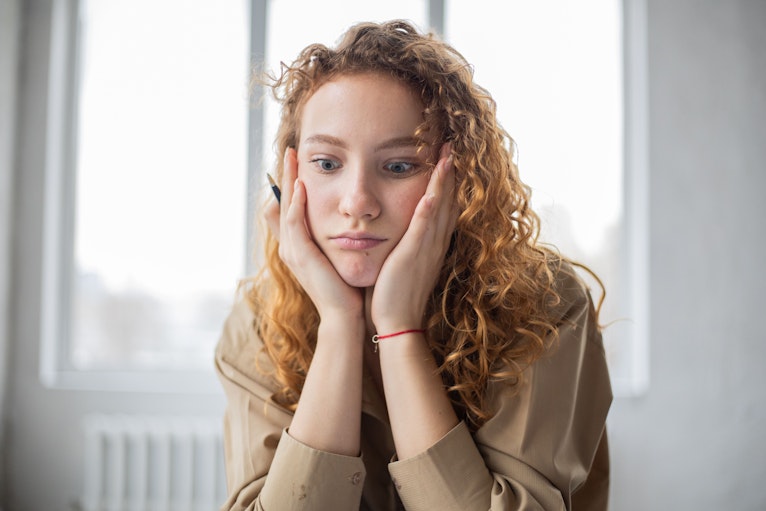
Why is your daughter so moody before her period?
Understanding her premenstrual moods
Updated August 4, 2026
In this article
In short
Mood swings, irritability and tearfulness in the week or two before your daughter's period are usually PMS (premenstrual syndrome).
They're triggered by the hormone changes of the luteal phase, they're common in teenage girls, and they ease once her period starts.
If her low mood lasts all month or feels severe, it's worth speaking to a doctor.
Why does my daughter get so moody before her period?
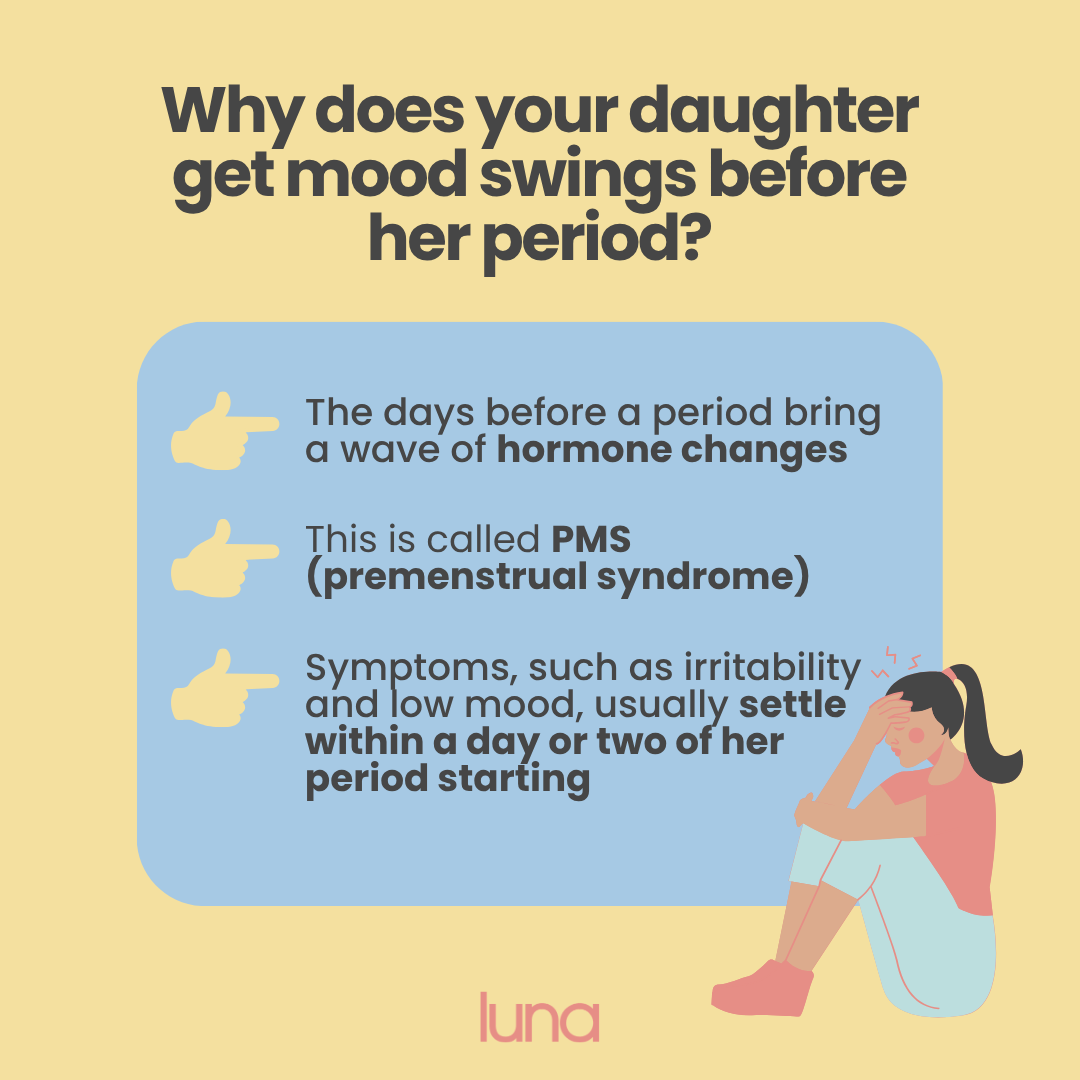
Most of the time, it's PMS. The days before a period bring a wave of hormone changes, and mood swings, irritability and tearfulness are some of the most common symptoms.
PMS stands for premenstrual syndrome: the mix of emotional and physical symptoms many girls and women get in the two weeks before their period.
According to the NHS, the exact cause isn't fully understood, but it's linked to the natural rise and fall of hormones across the cycle.
Some people are simply more sensitive to those shifts than others.
The reassuring part is that this is a phase of her cycle, not her personality.
It usually lifts once her period arrives, and understanding how each phase of her cycle can affect her mood can make the ups and downs feel a lot more predictable.
What is the luteal phase and why does it affect her mood?
The luteal phase is the roughly two-week stretch between ovulation and the start of her period. It's the part of the cycle when PMS symptoms tend to show up.
During this phase, the hormones oestrogen and progesterone rise and then drop sharply just before her period.
That drop is thought to affect brain chemicals like serotonin, which help regulate mood, and that's why the days before a period can feel so emotionally intense for her.
Symptoms usually build in the luteal phase and settle within a day or two of her period starting.
The most common premenstrual signs to look out for include:
- Mood swings, irritability or feeling snappy
- Low mood, tearfulness or feeling anxious
- Tiredness and trouble sleeping
- Bloating, cramps or sore breasts
- Headaches, spots or greasy hair
- Changes in appetite or food cravings
You might notice her mood follows a pattern each month once you start paying attention.
That pattern is the clue that hormones, rather than something you've done or she's done, are behind it.
Is it just PMS, or could it be something more?
For most girls it's ordinary PMS, but a small number experience something more severe, and it's worth knowing the difference.
When premenstrual symptoms are intense enough to disrupt daily life, it can be a condition called PMDD (premenstrual dysphoric disorder).
The RCOG (Royal College of Obstetricians and Gynaecologists) estimates that severe PMS affects around 2 to 4 in 100 women.
With PMDD, the low mood, anxiety or anger are much stronger and can seriously affect school, friendships and family life.
The other thing to watch is timing. PMS lifts once her period starts, so if her low mood, irritability or withdrawal lasts all month rather than easing with her period, it may not be about her cycle at all.
YoungMinds notes that while occasional down days are a normal part of growing up, low mood that lasts more than a week or two and gets in the way of everyday life is worth taking seriously.
If you're not sure which side of the line she's on, it can help to read up on the difference between PMS and PMDD in teens, and to talk to a doctor if her mood is affecting her day to day.
How can I help my daughter with her premenstrual mood swings?
The same steady habits that help adults with PMS help teenagers too, and none of them are complicated.
Things that can help include:
- Regular exercise
- A balanced diet of healthy eating with smaller, more frequent meals
- Good sleep
- Stress-lowering activities like yoga or breathing exercises
Keeping a simple symptom diary for a couple of cycles can also help her spot when the tough days are coming, so they feel less like they arrive out of nowhere.
Naming what's happening can be surprisingly powerful. When she understands that a horrible-feeling few days are a predictable part of her cycle, it can take some of the fear and self-blame out of it.
Some parents find that gently tracking her cycle together, or leaving her to track it privately, gives her a sense of control.
luna gives teen girls a space to understand their cycle and their mood at their own pace, with content reviewed by medical experts rather than driven by influencers or ads.
If you want more practical ideas, this guide on helping her manage PMS mood swings goes further.
And on the hardest days, staying calm when she snaps can help her feel safe to come back to you later, even when it's the last thing you feel like doing.
Where to go from here
Premenstrual moodiness can be exhausting for both of you, but for most girls it's a normal, manageable part of settling into her cycle.
Knowing it's coming, and knowing it will pass, is often half the battle.
If you'd like to understand the bigger picture of what's driving her ups and downs, luna’s guide on how teen hormones affect her periods, skin and mood is a good next read.
And if her mood ever worries you beyond the usual premenstrual dip, a doctor is always the right place to start.
Frequently asked questions
At what age do PMS mood swings start?
They can begin around the time her periods start, usually between ages 11 and 14, though periods can start as early as 8.
Symptoms may be more noticeable once her cycle settles into a regular pattern.
How long before her period do mood swings last?
Symptoms usually appear in the one to two weeks before her period, during the luteal phase, and ease within a day or two of it starting.
If they don't lift when her period comes, that's worth noting.
Can PMS really make my daughter cry for no reason?
Yes. Tearfulness and feeling extra emotional or sensitive are common premenstrual symptoms, driven by the hormone changes before her period.
It doesn't mean anything is wrong with her.
When should we see a doctor about her mood?
It's worth speaking to a doctor if her mood is severe, if it's affecting school, friendships or home life, or if low feelings last all month rather than easing with her period.
A doctor can look into PMS, PMDD, or other causes.
How we created this article:
luna's team of experts comprises GPs, Dermatologists, Safeguarding Leads and Junior Doctors as well as Medical Students with specialised interests in paediatric care, mental health and gynaecology. All articles are created by experts, and reviewed by a member of luna's senior review team.
Sources:
NHS "PMS (premenstrual syndrome)" | 04.08.26
https://www.nhs.uk/conditions/pre-menstrual-syndrome/RCOG "Managing premenstrual syndrome (PMS)" | 04.08.26
https://www.rcog.org.uk/for-the-public/browse-our-patient-information/managing-premenstrual-syndrome-pms/NHS "Starting your periods" | 04.08.26
https://www.nhs.uk/conditions/periods/starting-periods/YoungMinds "Depression and low mood" | 04.08.26
https://www.youngminds.org.uk/parent/parents-a-z-mental-health-guide/depression-and-low-mood/We'd love to keep in touch!
Sign up to our parent newsletter for emails on the latest teen trends, insights into our luna community and to keep up to date
By signing up, you are agreeing that we can use your email address to market to you. You can unsubscribe from marketing emails at any time by using the link in our emails. For more information, please review our privacy statement.