Is your daughter's ovulation pain normal or worth checking?
Mid-cycle pain and what it could mean
Updated July 9, 2026
In this article
In short
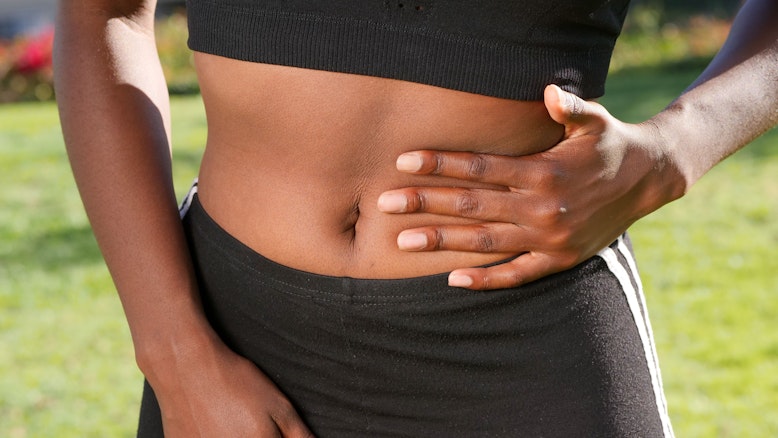
Ovulation pain is a dull cramp or sharp twinge in the lower tummy that happens roughly mid-cycle, about 14 days before a period.
According to the NHS, it's common and usually harmless, lasting minutes to two days. It typically settles with paracetamol or a warm bath.
If the pain is severe or keeps coming back, a doctor can help.
Why does my daughter get pain in the middle of her cycle?
That mid-cycle twinge has a name: mittelschmerz (German for "middle pain").
It's caused by the ovary releasing an egg, which can irritate the surrounding tissue and trigger a cramping or sharp sensation.
The pain tends to sit on one side of the lower tummy, and it can switch sides each cycle depending on which ovary releases the egg.
Your daughter might also notice light spotting or a change in discharge around the same time and both are normal signs of ovulation.
Ovulation is a menstrual cycle phase, and tracking her cycle on luna can help your teen identify ovulation pain.
How do I know if my daughter's mid-cycle pain is normal?
If the pain fits a regular pattern.
If it is on one side, roughly two weeks before her period, and over within a day or two, it's most likely simple ovulation pain.
Typical ovulation pain looks like:
- A dull ache or sudden sharp twinge in the lower tummy
- Pain on one side only, around 14 days before her period
- Lasting from a few minutes to one or two days
- May come with light spotting or clear discharge
According to medical research, ovulation pain may affect up to 40% of people who ovulate regularly.
If it settles with paracetamol or ibuprofen and doesn't significantly disrupt her day, there's usually no cause for concern.
That said, some conditions can cause very similar pain, including endometriosis, ovarian cysts, and pelvic infections.
Mid-cycle pain can even occasionally mimic appendicitis, which is worth keeping in mind if the pain is sudden or severe.
When should my daughter see a doctor about mid-cycle pain?
It can be hard to know when to act and when to wait.
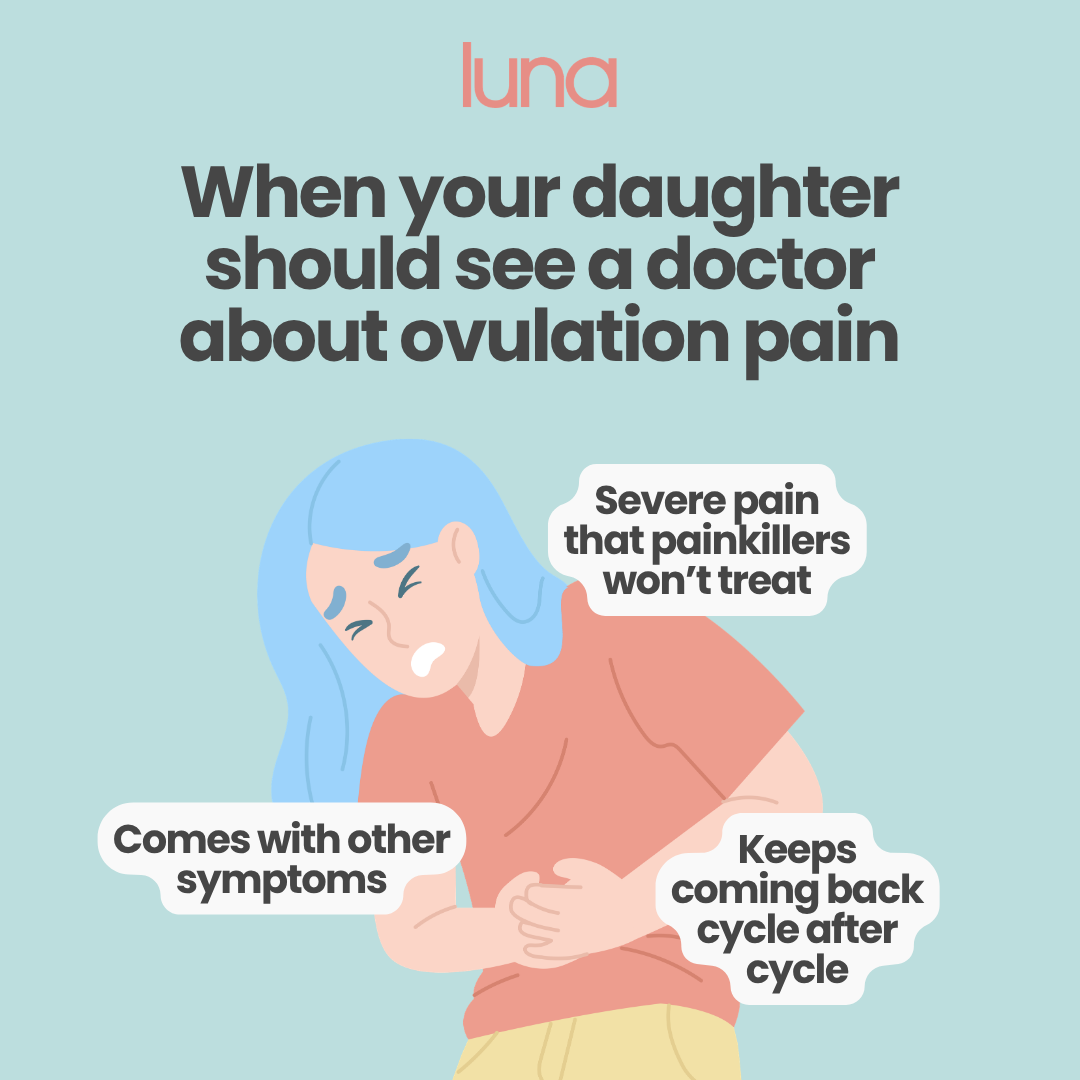
You may want to see a doctor if your daughter's pain:
- Is severe and hasn't improved with paracetamol or ibuprofen
- Keeps coming back cycle after cycle
- Comes with other symptoms like painful periods, bowel problems, fatigue, or pain during or after sex
These could point to endometriosis, a condition where tissue similar to the womb lining grows elsewhere in the body.
Endometriosis can affect girls from puberty onwards.
Its symptoms often overlap with other conditions, which can make it difficult to diagnose, which is exactly why it's worth flagging early rather than dismissing it as "just period pain."
If you're wondering whether this could be more than ovulation discomfort, luna's guide on could my daughter have endometriosis may be a useful read.
What can my daughter do to manage ovulation pain?
For most teens, ovulation pain is manageable at home.
The NHS suggests:
- Over-the-counter painkillers like paracetamol or ibuprofen, taken at the first sign of pain
- A warm bath or heat pad on the lower tummy
- Rest if the pain is significant
For a fuller picture of what actually helps, luna's guide to teenage period pain relief covers practical options beyond the basics.
If the pain is regularly disrupting her day, a doctor might suggest hormonal contraception like the pill or implant.
These work by stopping ovulation, which removes the trigger for the pain.
A doctor can discuss whether this is appropriate based on your daughter's age and circumstances.
FAQs
Is ovulation pain normal in teenagers?
Yes, it can be.
Medical research suggests ovulation pain may affect up to 40% of people who ovulate regularly, though it typically develops a few years after the first period, once cycles become consistently ovulatory.
If your daughter is in the earlier stages of puberty and experiencing mid-cycle pain, it's worth mentioning to a doctor.
How long should ovulation pain last?
According to the NHS, ovulation pain usually lasts from a few minutes up to one or two days.
If it's lasting longer, getting worse rather than better, or not responding to standard painkillers, that's a reason to get it checked rather than wait it out.
Could my daughter's ovulation pain be endometriosis?
Ovulation pain and endometriosis can feel similar, and endometriosis can affect how ovulation feels.
If the pain is severe, doesn't respond to painkillers, or comes with other symptoms like very painful periods, bowel changes, or unusual fatigue, it's worth raising with a doctor.
Can ovulation pain feel like appendicitis?
Sometimes, yes. Pain in the lower right tummy around mid-cycle can occasionally be mistaken for appendicitis.
Will the contraceptive pill stop ovulation pain?
It can.
The contraceptive pill and some other hormonal methods stop ovulation, which typically stops ovulation pain too.
The NHS lists this as a recognised treatment option.
A doctor can advise whether it's suitable for your daughter.
How we created this article:
luna's team of experts comprises GPs, Dermatologists, Safeguarding Leads and Junior Doctors as well as Medical Students with specialised interests in paediatric care, mental health and gynaecology. All articles are created by experts, and reviewed by a member of luna's senior review team.
Sources:
NHS "Ovulation pain" | Accessed 19.06.26
https://www.nhs.uk/symptoms/ovulation-pain/NHS "Endometriosis" | Accessed 19.06.26
https://www.nhs.uk/conditions/endometriosis/RCOG "Endometriosis" | Accessed 19.06.26
https://www.rcog.org.uk/for-the-public/browse-our-patient-information/endometriosis/Brott NR et al. "Mittelschmerz" | Accessed 19.06.26
https://www.ncbi.nlm.nih.gov/books/NBK549822/We'd love to keep in touch!
Sign up to our parent newsletter for emails on the latest teen trends, insights into our luna community and to keep up to date
By signing up, you are agreeing that we can use your email address to market to you. You can unsubscribe from marketing emails at any time by using the link in our emails. For more information, please review our privacy statement.