What is endometriosis in teen girls?
Symptoms, diagnosis, and getting support

Updated May 27, 2026
In this article
In short
Endometriosis is a condition where tissue similar to the lining of the womb grows in other parts of the body, most commonly around the ovaries, fallopian tubes, and pelvis.
It affects 1 in 10 women of reproductive age in the UK, and symptoms can begin as early as the first period.
In teenagers, it is often underdiagnosed because severe period pain is frequently dismissed as normal.
If your daughter is experiencing pain that disrupts her daily life, it is worth taking it seriously and seeking assessment.
What is endometriosis?
According to the NHS, endometriosis is where cells similar to those in the lining of the womb (uterus) grow in other parts of the body.
During each menstrual cycle, these cells respond to hormones the same way the womb lining does.
They build up and then break down, but unlike the womb lining, the resulting blood has nowhere to leave the body.
This causes inflammation, pain, and over time can lead to scar tissue and adhesions (areas where organs stick together).
Can teenagers develop endometriosis?
Yes. Symptoms can start as early as the first period. The condition is not just an adult health issue.
Around 50% of girls who experience severe period pain in the first years of menstruation will find it improves with time, but the other half should seek medical help.
Endometriosis is more common in teenage girls than was previously understood.
What are the symptoms to look out for?
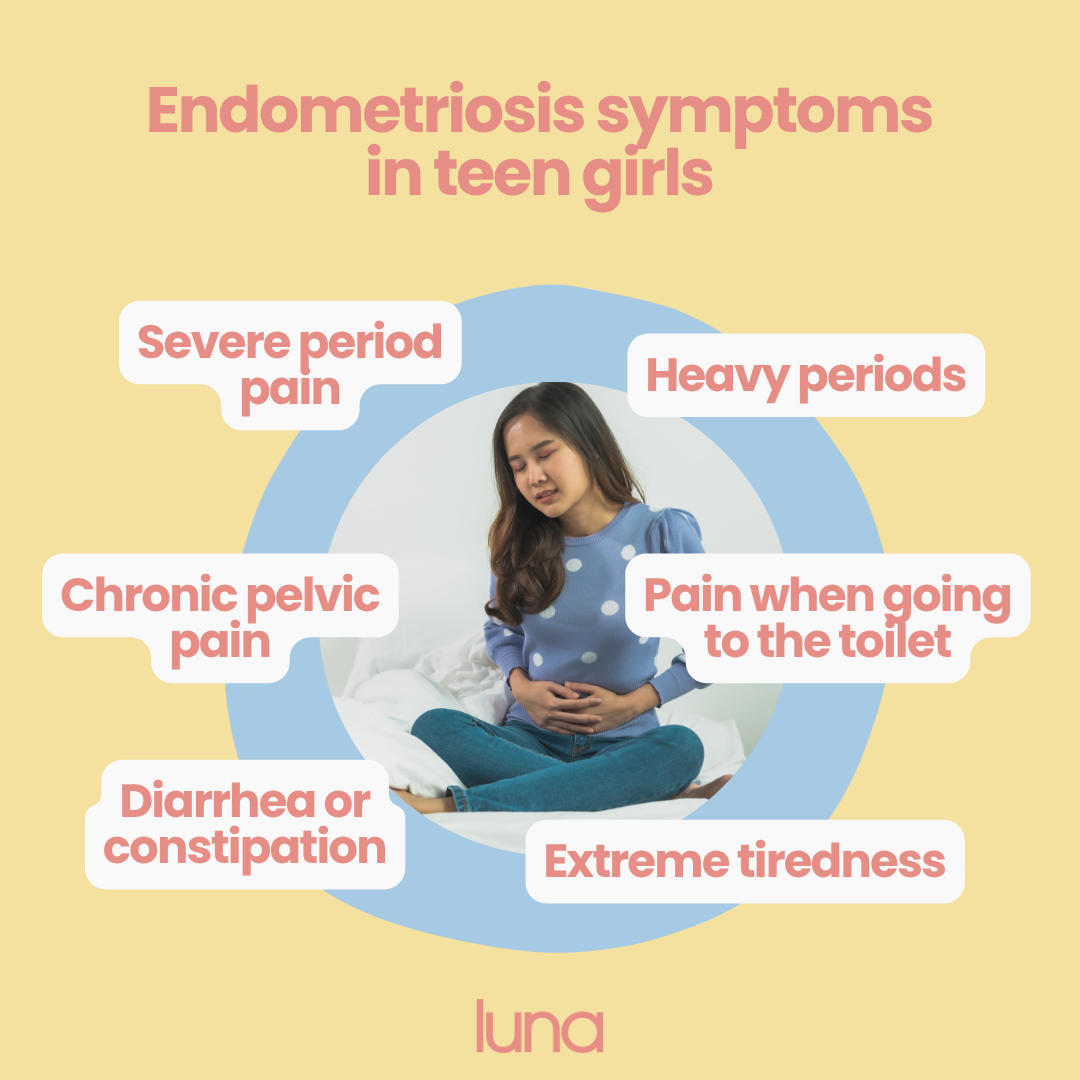
The NHS describes symptoms of endometriosis as including:
- Severe period pain (dysmenorrhoea) that stops normal activities
- Heavy menstrual periods
- Chronic pelvic pain, not just during periods
- Pain when going to the toilet, particularly around the time of a period
- Pain during or after sex (though this is less relevant for younger teens)
- Extreme tiredness
- Bowel symptoms including diarrhea, constipation, or pain when opening the bowels around her period
Signs that period pain may need investigation rather than just relying on period pain relief include pain that:
- Begins before the period starts and continues after it ends
- Cannot be controlled with standard painkillers like ibuprofen and paracetamol
- Causes her to miss school or be unable to carry out normal activities
- Comes with nausea or vomiting
Why is endometriosis hard to diagnose in teens?
Diagnosis can be delayed for many years. According to Endometriosis UK, the average wait for a diagnosis is 8 years and 10 months.
Part of the problem is that severe period pain is often normalised or dismissed.
Furthermore, endometriosis also cannot always be seen on standard ultrasound scans, particularly in teenagers, where early-stage disease may be too small to detect.
In some cases, a laparoscopy (a keyhole surgical procedure to look inside the abdomen) is needed to confirm diagnosis.
What should I do if I am concerned?
Start by tracking your daughter's symptoms, noting:
- When pain begins and ends in relation to her period
- How severe the pain is and whether it responds to painkillers
- If your daughter's period is making her miss school
- Any bowel or bladder symptoms around her period
Then take this information to a doctor. If a doctor suspects endometriosis, they may refer to a gynaecologist for further assessment.
You do not need to wait until symptoms become severe to seek a referral.
FAQ
Is endometriosis curable?
There is currently no cure for endometriosis.
However, treatments including painkillers, hormonal medicines (such as the combined contraceptive pill), and surgery can significantly reduce symptoms and improve quality of life.
Does endometriosis affect fertility?
Endometriosis can in some cases affect fertility, though many people with the condition go on to conceive without difficulty.
Early diagnosis and treatment can help protect reproductive health over the long term.
How is endometriosis different from normal period pain?
Normal period pain (dysmenorrhoea) usually responds to standard painkillers and does not significantly disrupt daily life.
Endometriosis-related pain tends to be more severe, starts before the period and lasts longer, and is often accompanied by other symptoms such as bowel changes and pelvic pain outside of periods.
What if my daughter is too young to be referred?
Age is not a barrier to referral. A doctor can refer any patient they suspect may have endometriosis, regardless of age. If you feel your GP won’t help your daughter's periods, it is reasonable to ask for a second opinion or referral to a specialist.
For more information, Endometriosis UK has a dedicated helpline and resources for young people.
How we created this article:
luna's team of experts comprises GPs, Dermatologists, Safeguarding Leads and Junior Doctors as well as Medical Students with specialised interests in paediatric care, mental health and gynaecology. All articles are created by experts, and reviewed by a member of luna's senior review team.
Sources:
NHS "Endometriosis" | 27.05.26
https://www.nhs.uk/conditions/endometriosis/Endometriosis UK "Is this normal? Educating teenagers and young women about periods" | 27.05.26
https://www.endometriosis-uk.org/normal-educating-teenagers-and-young-women-about-periodsPMC "Endometriosis in adolescents: a closer look at the pain characteristics and atypical symptoms" | 27.05.26
https://pmc.ncbi.nlm.nih.gov/articles/PMC11856142/RCOG "Endometriosis" patient information | 27.05.26
https://www.rcog.org.uk/for-the-public/browse-our-patient-information/endometriosis/Endometriosis UK "Getting diagnosed" | 27.05.26
https://www.endometriosis-uk.org/getting-diagnosed-0We'd love to keep in touch!
Sign up to our parent newsletter for emails on the latest teen trends, insights into our luna community and to keep up to date
By signing up, you are agreeing that we can use your email address to market to you. You can unsubscribe from marketing emails at any time by using the link in our emails. For more information, please review our privacy statement.