Is your daughter too young for the pill?
What parents actually need to know
Updated August 11, 2026
In this article
In short
There's no set minimum age for the contraceptive pill.
A doctor decides based on your daughter's health and reasons for wanting it, not her age alone.
The pill is often prescribed for heavy or painful periods, acne, PMS and endometriosis, not only for contraception.
Taken correctly, it's over 99% effective, but it only works if she remembers it every day.
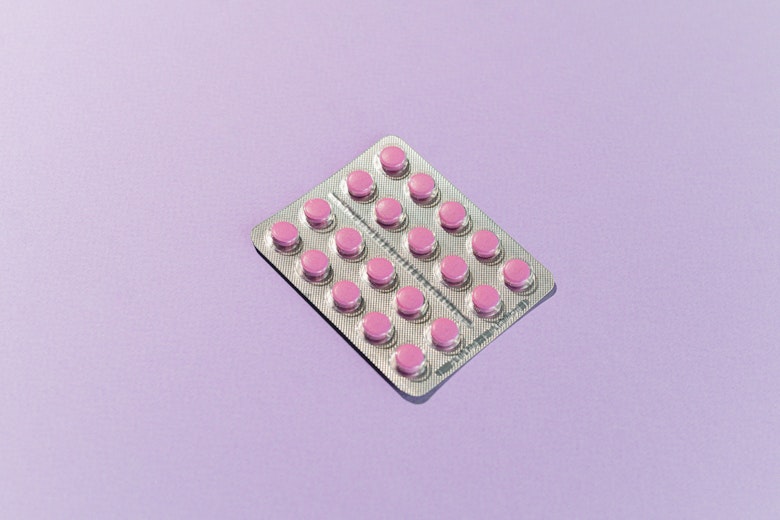
Is my daughter too young to go on the pill?
If your daughter has asked about the pill, your first thought might be that she's far too young to be thinking about it. That worry is completely understandable.
The reassuring part is that there's no minimum age set for the combined pill.
A doctor decides whether it's suitable by looking at her health, her reasons for wanting it and whether it's the right fit, rather than her age on its own.
Before prescribing, a doctor, nurse or pharmacist checks for certain risk factors.
The pill isn't suitable for everyone, and they'll ask about things like:
- Migraines with warning signs called aura
- A history of blood clots, or a close family member who had one before the age of 45
- Heart problems or high blood pressure
- Being significantly overweight
So "too young" isn't really the question a doctor asks.
It's more about whether the pill is safe and right for her as an individual.
My daughter isn't having sex, so why would she want the pill?
This is one of the biggest misunderstandings about the pill, and it's worth knowing: the pill is very often prescribed for reasons that have nothing to do with contraception.
The hormones in the combined pill can settle a lot of the things that make periods hard to live with. A doctor might suggest it for:
- Heavy periods that soak through protection or affect school
- Painful periods, because the pill thins the womb lining and eases cramps
- Premenstrual syndrome (PMS), the low mood and physical symptoms before a period
- Acne, as the pill can help skin that flares with hormones
- Endometriosis, a condition where tissue like the womb lining grows elsewhere and causes pain
For skin in particular, the combined pill can take several months and sometimes up to a year to see the full effect.
If acne is the main worry, luna’s guide on hormonal acne in teens covers the other options too.
What does my daughter need to know about taking the pill properly?
Here's the part that matters most, and it's where the responsibility really comes in: the pill only works if it's taken consistently.
Taken correctly, the combined pill is more than 99% effective.
With typical use, where the odd pill gets forgotten, that drops to around 91%.
The difference between those two numbers is basically remembering it.
Taking it usually means one of these routines:
- A pill every day for 21 days, then a 7 day break when she'll usually bleed
- An everyday pack, where she takes a pill every single day with no break
- A tailored routine with fewer or no breaks, if a doctor advises it
The habit is the hard bit, not the science.
It's a daily commitment, ideally at around the same time each day, and missing pills or being unwell with sickness or diarrhoea can make it less effective.
That's genuinely a lot to ask of a younger teen, and it's a fair thing to think through together: is she ready to build that daily routine, and does she understand why it matters?
A period-tracking habit can help her stay on top of it, and it's the kind of thing luna is designed to support teen girls with, at their own pace.
Is the pill safe for my teenage daughter?
For most healthy teenagers, the combined pill is considered safe, which is exactly why a doctor checks her history before prescribing it.
Some side effects are common in the first few months, like breakthrough bleeding between periods, headaches, nausea or tender breasts. These often settle down.
It's worth knowing there's no evidence that the pill causes weight gain or changes sex drive, despite what she might read online.
Serious risks are rare. The risk of a blood clot is very small and affects up to 1 in 1,000 people using combined hormonal contraception.
The pill can also slightly raise the risk of breast and cervical cancer, though that risk returns to normal within 10 years of stopping, and it can lower the risk of womb, ovarian and bowel cancers.
One important point if contraception is the reason: the pill doesn't protect against sexually transmitted infections, so condoms are still needed for that.
If your daughter takes the pill, talking to them about sex and safety is still necessary.
FAQ
Can my daughter get the pill without telling me?
Potentially, yes. Contraception services are confidential for all ages, and a doctor can prescribe to an under-16 without telling parents if they believe she fully understands the decision.
They'll usually encourage her to talk to you, but can't force it.
For under-13s, or where there's a safety concern, different rules apply.
Does the pill protect against STIs?
No. The pill only prevents pregnancy.
Condoms are the only method that also protects against sexually transmitted infections, so they're still needed alongside it.
Will the pill mess with her mood or weight?
Some people notice mood changes, but the evidence is mixed, and there's no good evidence that the pill causes weight gain.
If she's struggling with PMS or premenstrual mood swings, it's worth mentioning to the doctor, as the right pill can sometimes help.
What happens if she misses a pill?
Missing a pill can reduce how well it works, and the advice depends on which pill she takes and how many she's missed. Every pack comes with instructions, and a pharmacist can talk her through what to do.
Can she just stop taking it?
Yes. There's no need to taper off, and her natural cycle usually returns fairly quickly. If she's taking it for periods or skin, those symptoms may come back once she stops.
How we created this article:
luna's team of experts comprises GPs, Dermatologists, Safeguarding Leads and Junior Doctors as well as Medical Students with specialised interests in paediatric care, mental health and gynaecology. All articles are created by experts, and reviewed by a member of luna's senior review team.
Sources:
NHS "What is the combined pill?" | 11.08.26
https://www.nhs.uk/contraception/methods-of-contraception/combined-pill/what-is-it/NHS "How to take the combined pill" | 11.08.26
https://www.nhs.uk/contraception/methods-of-contraception/combined-pill/how-to-take-it/NHS "Who can take the combined pill" | 11.08.26
https://www.nhs.uk/contraception/methods-of-contraception/combined-pill/who-can-take-it/NHS "Side effects and risks of the combined pill" | 11.08.26
https://www.nhs.uk/contraception/methods-of-contraception/combined-pill/side-effects/NHS "Period pain" | 11.08.26
https://www.nhs.uk/symptoms/period-pain/NHS "Acne: treatment" | 11.08.26
https://www.nhs.uk/conditions/acne/treatment/NHS "If I use a sexual health service will they tell my parents?" | 11.08.26
https://www.nhs.uk/live-well/sexual-health/confidentiality-at-sexual-health-services/We'd love to keep in touch!
Sign up to our parent newsletter for emails on the latest teen trends, insights into our luna community and to keep up to date
By signing up, you are agreeing that we can use your email address to market to you. You can unsubscribe from marketing emails at any time by using the link in our emails. For more information, please review our privacy statement.