What age should you stop putting your daughter to bed?
How to stay involved in the right way

Updated July 9, 2026
In this article
In short
There's no official age when parents stop putting their daughter to bed.
Tucking in tends to fade naturally in the tween years, but staying involved in bedtime still matters: research shows teens with parent-set bedtimes fall asleep earlier, sleep longer, and feel less tired in the day.
The NHS says teenagers need around 9 to 10 hours of sleep a night.
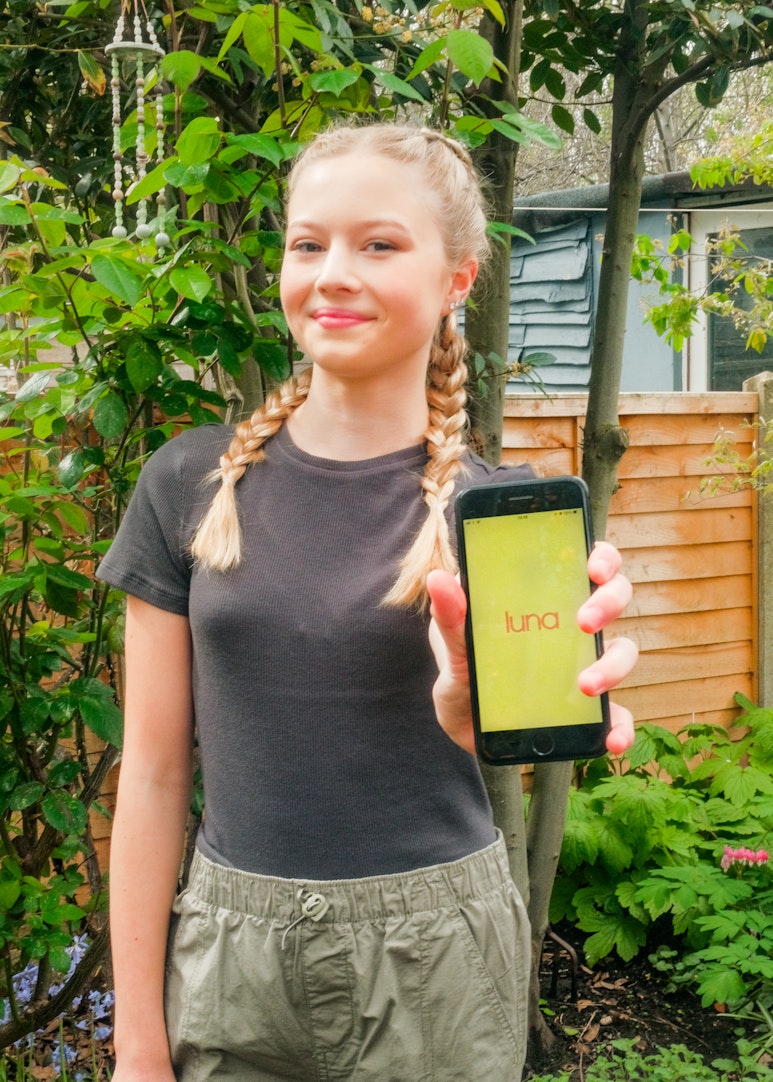
What age should I stop putting my daughter to bed?
There's no set age, and no NHS guidance that names one.
For most families it's a slow fade rather than a hard stop.
If part of you is sad about your daughter growing up and losing the tucking-in years, that's a real feeling, not silliness.
The good news is that bedtime involvement doesn't end, it just changes shape.
Through the tween years she'll likely take over the practical bits herself: washing, pyjamas, choosing what to read.
Your role shifts from running the routine to protecting it, which is part of encouraging independence in your teen more widely.
What the evidence is clear on: parents staying involved in when bedtime happens, and what the hour before it looks like, still benefits teenagers right up to 18.
Should I still set a bedtime for my teenager?
The research says it's worth keeping one, even if she negotiates it.
Teens with parent-set bedtimes sleep more and cope better in the day.
In an Australian study of 385 teenagers aged 13 to 18, teens with parent-set bedtimes went to bed earlier, slept longer, and felt more awake and less fatigued than teens without one.
They also fell asleep just as quickly, so an earlier bedtime didn't mean lying awake.
However, only 17.5% of those teens said a parent-set bedtime was the main thing deciding when they went to bed on school nights.
So if your daughter claims nobody else has a bedtime, she's not entirely wrong, but the minority who do are getting the better deal.
There's a mood and mental health link too.
In a US study of over 15,000 teenagers, those whose parents set bedtimes of midnight or later were 24% more likely to experience depression than those with bedtimes of 10pm or earlier.
How much sleep does my daughter actually need?
Around 9 to 10 hours a night, according to the NHS.
The realistic range is 7 to 11 hours, and less than 7 most nights is probably not enough.
It's also worth knowing her body clock really does shift later during the stages of puberty.
Melatonin (the hormone that makes her sleepy) kicks in later, so her natural fall-asleep time is often 11pm to midnight.
That's biology, not defiance. If she can't drop off at 9.30pm, she's probably not being difficult.
For the full breakdown, luna has a guide on how much sleep your teen really needs.
How do I stay part of my daughter's bedtime without babying her?
Swap tucking in for being the keeper of the wind-down hour.
The NHS suggests teen sleep routines built around a few habits.
Things that help her wind down:
- Dimming the lights and switching off screens an hour before bed, since blue light delays melatonin
- Quiet offline activities in that hour, like reading, podcasts or colouring
- Charging phones outside the bedroom overnight, ideally as a whole-family rule
- Keeping her wake time roughly the same all week, with weekend lie-ins capped at about an hour
- No caffeine after lunch, including energy drinks and some fizzy drinks
A two-minute chat at lights-out can quietly replace the tucking-in ritual.
Some parents find it's the moment their daughter finally says what's actually on her mind.
If her phone is the sticking point, luna's guide to how phones affect sleep covers it.
And if she'd rather look into sleep herself, luna gives teen girls a space to explore health topics at their own pace, with content reviewed by medical experts.
FAQs
Is 13 too old to be tucked in?
No.
If she still wants a goodnight ritual, there's nothing wrong with keeping it, and it's one of the easiest connection points you have.
Letting her lead on when it changes usually works best.
What time should my teenager go to bed?
Work back from her wake-up time using 9 to 10 hours.
If she's up at 7am for school, that points to roughly 9pm to 10pm, though her body clock may not cooperate until closer to 10.30pm.
What should I do if she wakes in the night?
Waking briefly is common and normal for teenagers.
The NHS suggests encouraging her back to bed with a relaxing screen-free activity, like reading or breathing exercises, until she feels sleepy again.
What if she just can't fall asleep?
If she's still awake after 20 to 30 minutes, the NHS suggests getting up for a short, calm activity in dim light, then trying again.
The aim is for her to learn she can settle herself, with you nearby if she needs you.
However bedtime looks in your house right now, you haven't missed a window. Moving from tucking in to a goodnight chat is still showing up.
For more ideas on the wind-down hour, luna's sleep tips for your teen is a good next read.
And if sleep has become a nightly battle or she seems exhausted whatever you try, a doctor can help rule out anything underlying.
How we created this article:
luna's team of experts comprises GPs, Dermatologists, Safeguarding Leads and Junior Doctors as well as Medical Students with specialised interests in paediatric care, mental health and gynaecology. All articles are created by experts, and reviewed by a member of luna's senior review team.
Sources:
NHS "Sleep routines for young people and teenagers" | 19.06.26
https://cambspborochildrenshealth.nhs.uk/sleep/healthy-sleep-routines/sleep-routines-for-young-people-and-teenagers/NHS "How to sleep well for teenagers" | Accessed 19.06.26
https://www.evelinalondon.nhs.uk/our-services/hospital/sleep-medicine-department/how-to-sleep-well-for-teenagers.aspxShort MA et al. "Time for bed: parent-set bedtimes associated with improved sleep and daytime functioning in adolescents" | Accessed 19.06.26
https://pubmed.ncbi.nlm.nih.gov/21629368/Gangwisch JE et al. "Earlier parental set bedtimes as a protective factor against depression and suicidal ideation" | Accessed 19.06.26
https://pubmed.ncbi.nlm.nih.gov/20120626/Khor SPH et al. "Modifiable parental factors in adolescent sleep: a systematic review and meta-analysis" | Accessed 19.06.26
https://pubmed.ncbi.nlm.nih.gov/33326915/We'd love to keep in touch!
Sign up to our parent newsletter for emails on the latest teen trends, insights into our luna community and to keep up to date
By signing up, you are agreeing that we can use your email address to market to you. You can unsubscribe from marketing emails at any time by using the link in our emails. For more information, please review our privacy statement.