Can your daughter have a 'phantom period'?
What causes phantom periods
Updated September 11, 2026
In this article
In short
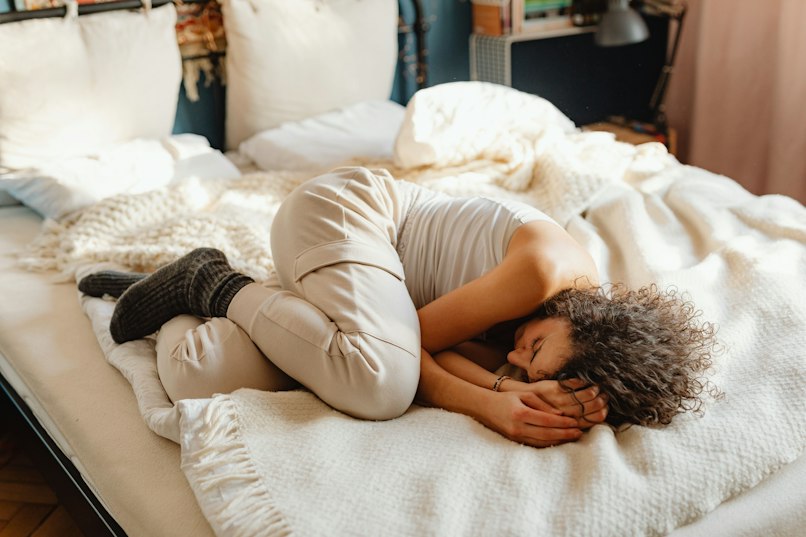
A "phantom period" isn't a medical term, but it describes something real: feeling like a period is happening, with cramps and sometimes even a little bleeding, without an actual period following.
It's usually down to ovulation pain, a cycle where ovulation didn't quite happen properly, or a hormonal condition like endometriosis or PMOS.
Most of the time it's harmless, but it's worth mentioning to a doctor if it happens often or the pain is severe.
What is a phantom period?
It's not something a doctor will diagnose her with; it's more of an everyday way to describe cramps, bloating, or even light bleeding that feels exactly like a period but isn't followed by one.
There are a few different things that can cause period-like symptoms, so it’s good to have a chat with your daughter about exactly how she is feeling.
Could it just be ovulation pain?
Quite possibly.
Ovulation pain, sometimes called mittelschmerz, happens around two weeks before a period and can come with cramping on one side, and occasionally a small amount of bleeding or discharge.
It's common, affecting anyone who ovulates, and usually settles on its own within a day or two.
A warm compress or a painkiller like paracetamol is often enough.
Could it be because her cycle skipped ovulation?
This is especially common in the first year or two when periods are irregular.
Her body can still go through hormonal ups and downs, PMS-type symptoms included, even in a cycle where an egg wasn't actually released.
Since there's no lining built up in quite the same way, a period doesn't follow, even though everything leading up to it felt familiar.
Could an underlying condition be behind it?
Sometimes, yes. A few conditions are worth knowing about if this keeps happening:
- Endometriosis, which can cause pelvic pain even when she isn't on her period, not just during it
- PCOS, now called PMOS, where ovulation is often irregular or doesn't happen every cycle
- Ovarian cysts
- Digestive issues
- Thyroid problems, which can throw off the whole menstrual cycle
None of these are things to assume on your own, a doctor can help work out what's actually going on.
luna gives teen girls a space to track symptoms like this over a few months, which can make these patterns much easier to explain to a doctor later.
When should I take my daughter to the doctor?
It's worth a doctor's appointment if this happens regularly, the pain is severe, or it's paired with anything unusual like very heavy menstrual bleeding or pain that doesn't ease with over-the-counter painkillers.
Keeping a note of when it happens and what the symptoms felt like can make appointments a lot more useful.
FAQs
Is a phantom period a sign of pregnancy?
It can be one possible explanation, since early pregnancy can sometimes cause cramping and light spotting.
If there's any chance of pregnancy, it's worth ruling out with a test before assuming it's something else.
Can stress cause phantom period symptoms?
Yes, stress can disrupt ovulation and hormone levels enough to cause period-like symptoms without an actual period following.
Does starting or stopping birth control cause this?
It can, especially in the first few months while her body adjusts. If it carries on for longer than that, it's worth mentioning at a follow-up appointment.
How we created this article:
luna's team of experts comprises GPs, Dermatologists, Safeguarding Leads and Junior Doctors as well as Medical Students with specialised interests in paediatric care, mental health and gynaecology. All articles are created by experts, and reviewed by a member of luna's senior review team.
Sources:
NHS "Ovulation pain" | 11.09.26
https://www.nhs.uk/symptoms/ovulation-pain/NHS "Irregular periods" | 11.09.26
https://www.nhs.uk/symptoms/irregular-periods/NHS "PMS (premenstrual syndrome)" | 11.09.26
https://www.nhs.uk/conditions/pre-menstrual-syndrome/We'd love to keep in touch!
Sign up to our parent newsletter for emails on the latest teen trends, insights into our luna community and to keep up to date
By signing up, you are agreeing that we can use your email address to market to you. You can unsubscribe from marketing emails at any time by using the link in our emails. For more information, please review our privacy statement.