Should my daughter use scented period products?
What the evidence actually says
Updated May 29, 2026
In this article
In short
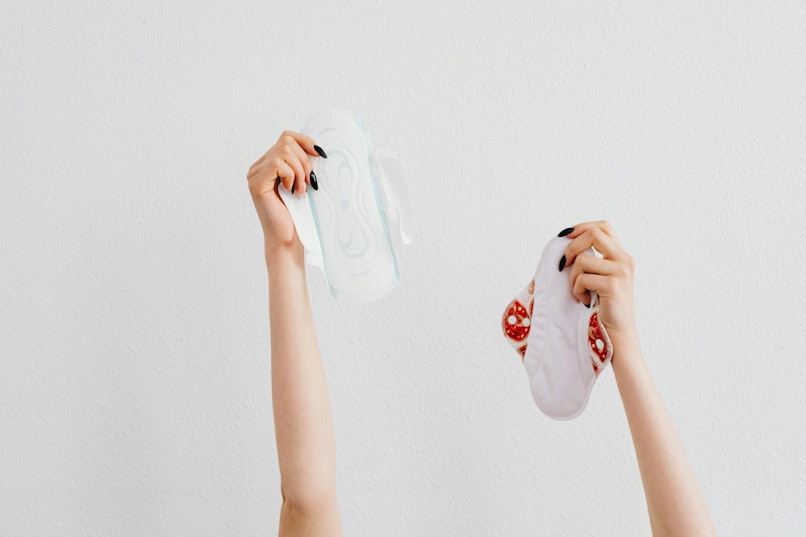
Scented period products, including fragranced pads, panty liners, and intimate wipes, are not recommended for teen girls or adults.
The Royal College of Obstetricians and Gynaecologists (RCOG) specifically advises avoiding scented period products as they can irritate sensitive vulval skin.
Research also links fragranced products to disruption of the vaginal microbiome and increased exposure to irritant chemicals. Unscented products do the same job without the risk.
Why are scented period products marketed to girls?
The marketing angle is freshness and odour control, which appeals to teenagers who are already self-conscious about their bodies during puberty.
But a healthy period does not produce an unpleasant smell when products are changed regularly.
Scent in period products does not address the source of any odour, it just masks it with chemicals that can cause harm.
What does the RCOG say?
The RCOG patient information on vulval skin conditions is explicit: symptoms can be made worse by the use of scented products and deodorants.
It specifically lists period products among the irritants to avoid, recommending instead that products be simple and free of fragrances and chemicals.
The vulval area is particularly sensitive because the skin is thin and warm.
Products worn against that skin for several hours are in prolonged contact with it, making irritation more likely than with scented products used elsewhere on the body.
What are the specific risks?
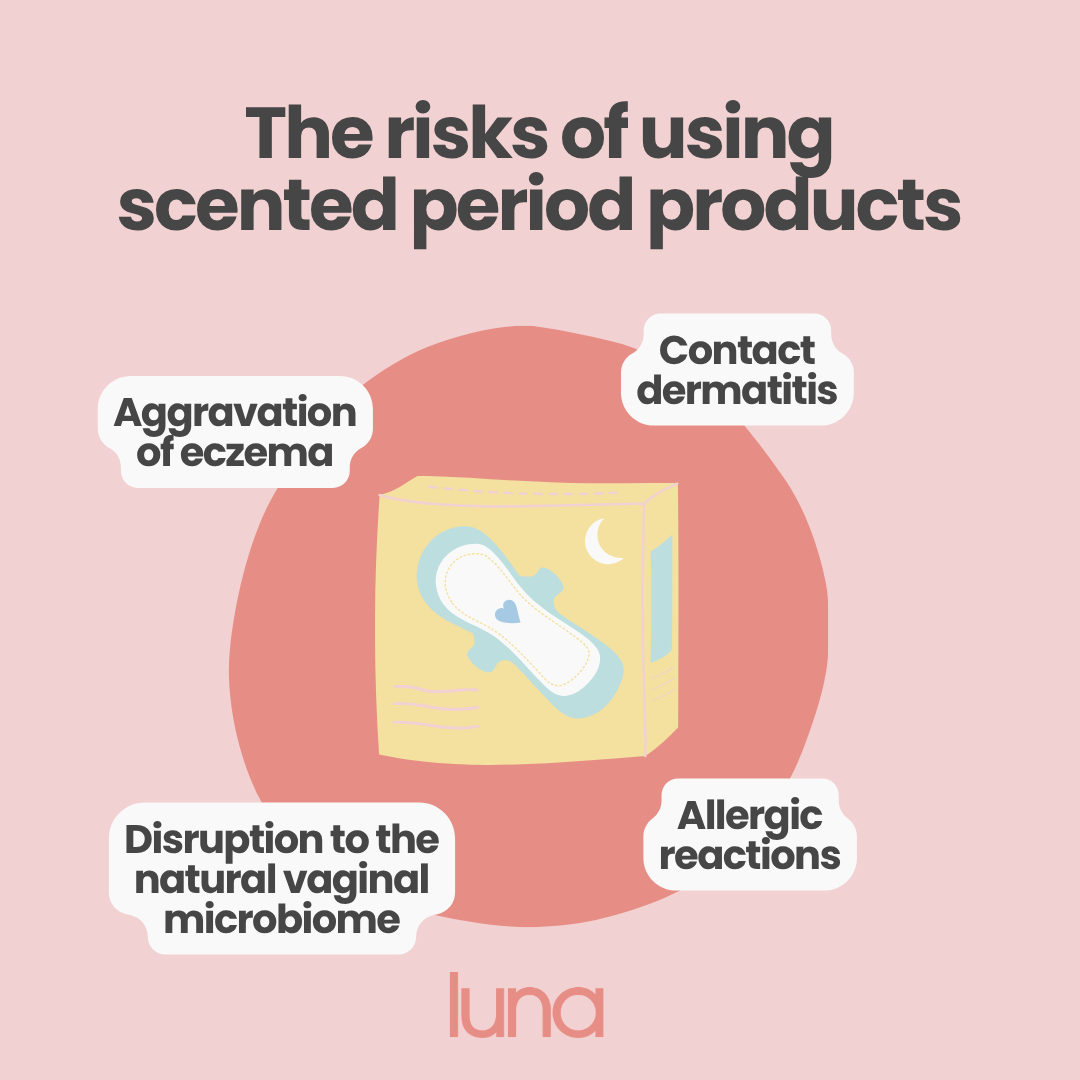
Fragranced period products can cause:
- Contact dermatitis (redness, itching, soreness around the vulva)
- Aggravation of eczema or sensitive skin conditions
- Disruption to the natural vaginal microbiome, which can make infections more likely
- Allergic reactions to fragrance compounds or preservatives
Research published in PubMed found that individuals who used any vaginal or genital product had approximately three times higher odds of reporting an adverse health condition.
Teen girls, whose vulval skin is still maturing, may be especially vulnerable to irritation.
What should she use instead?
Unscented alternatives do the same job without the risks:
- Unscented disposable pads in the right absorbency for her flow
- Unscented reusable period pads (cotton, which is gentler on skin)
- Period pants, which uses absorbent fabric without added fragrance
- Menstrual cups, which collect rather than absorb blood and contain no chemicals
The NHS lists all of these as appropriate options. The right choice of period products for your teen depends on her comfort and preference.
How do I explain this to her?
She may already be using or asking about scented products.
A brief, factual explanation works well: "The skin in that area is really sensitive, and fragrances can actually cause irritation even if they seem nice. Unscented ones do exactly the same job."
Framing it as looking after her body rather than restricting her choice lands better with most teenagers.
FAQ
What about scented intimate wipes?
Intimate wipes in general, scented or otherwise, are not needed for routine period hygiene.
The vagina is self-cleaning, and the vulva only needs gentle washing with plain water or an unscented soap substitute.
Are there any safe ways to manage period odour?
Changing products regularly (every three to four hours for pads, as recommended) is the most effective approach.
Good overall hygiene, including daily washing with plain water, manages any odour without the need for scent.
She uses scented pads and has never had a problem. Should I still switch?
Sensitivity varies. Some girls tolerate fragranced products without obvious irritation, while others react immediately.
Given that the recommendation from RCOG is clear and the alternatives are just as effective, switching to unscented products is a low-effort way to reduce risk even if she has not had problems so far.
Are organic or natural period products safer?
Unscented organic cotton products are a good option, particularly for girls with sensitive skin. The key criterion is unscented, whether organic or conventional.
Helping her build good period hygiene habits early, including choosing the right products, is one of the most practical things you can do for her long-term comfort and health.
How we created this article:
luna's team of experts comprises GPs, Dermatologists, Safeguarding Leads and Junior Doctors as well as Medical Students with specialised interests in paediatric care, mental health and gynaecology. All articles are created by experts, and reviewed by a member of luna's senior review team.
Sources:
RCOG "Skin conditions of the vulva" | 29.05.26
https://www.rcog.org.uk/for-the-public/browse-our-patient-information/skin-conditions-of-the-vulva/NHS "Periods" | 29.05.26
https://www.nhs.uk/conditions/periods/NHS Cambridgeshire & Peterborough Children's Health "Hygiene for young people and teenagers" | 29.05.26
https://cambspborochildrenshealth.nhs.uk/child-development-and-growing-up/hygiene/hygiene-for-young-people-and-teenagers/PubMed "The vaginal microbiome in health and disease: what role do common intimate hygiene practices play?" | 29.05.26
https://pmc.ncbi.nlm.nih.gov/articles/PMC9959050/We'd love to keep in touch!
Sign up to our parent newsletter for emails on the latest teen trends, insights into our luna community and to keep up to date
By signing up, you are agreeing that we can use your email address to market to you. You can unsubscribe from marketing emails at any time by using the link in our emails. For more information, please review our privacy statement.