Why is your daughter upset about Snapchat best friends?
When a ranking feels personal

Updated July 7, 2026 • Medically reviewed by Dr. Emma Dickie
Medically reviewed by Dr. Emma DickieIn this article
In short
Snapchat's Best Friends list is automatically generated based on who she messages most. It can't be manually set, and only she can see her own list.
Being dropped from someone's list just means that person has been snapping others more frequently.
It's not a deliberate rejection. But for many teen girls, it can feel like one, especially if the friendship group is already difficult.
How do Snapchat best friends actually work?
Snapchat's Best Friends feature shows whoever your daughter snaps and chats with most often.
It's calculated by the app automatically and updates regularly. It isn't something anyone chooses or manually edits.
She can have up to eight best friends at a time.
Only she can see her own Best Friends list.
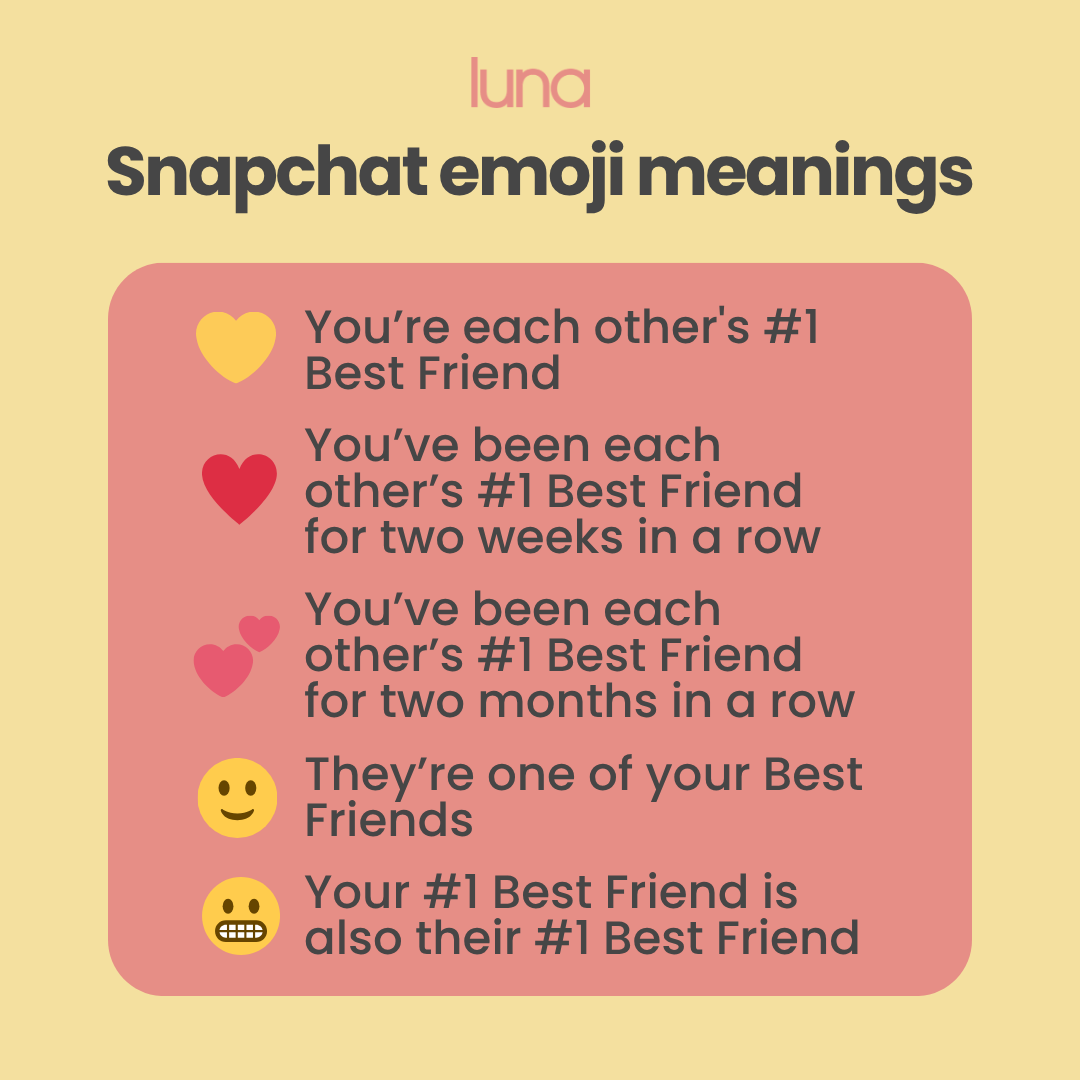
What her friends can see is a small emoji that appears next to their own name on her end, a yellow heart (💛) if they're mutual number-one best friends, for example, or a smiley face (😊) if she's one of their best friends but not their top one.
When that emoji changes or disappears, it means the messaging pattern has shifted.
Snapchat itself is clear that it cannot add, restore, or replace Friend Emojis, and the system is entirely automatic.
So if your daughter has dropped off someone's list, it's because messaging frequency changed, not because the person went in and removed her.
Why does my daughter care so much about a Snapchat ranking?
At this age, social belonging feels genuinely high stakes, and Snapchat ranking changes can hurt just as much as not being invited to a party.
Research consistently shows that teen girls are particularly sensitive to peer validation and the fear of being excluded, and social media makes that process visible in ways that didn't exist for previous generations.
YoungMinds notes that online engagement can quickly become tied to a teen's sense of self-worth.
When your daughter sees a change in her emoji status, she's not being irrational.
She's responding to something that carries real social meaning in the world she and her friends navigate every day.
What makes Snapchat particularly intense is the ranking element.
It's not just "am I included" but "where do I fall in the order."
luna hears from parents regularly about how much distress these invisible hierarchies can cause, and you're not alone in finding it hard to know how seriously to take it.
Is it normal for my daughter to be this upset about a Snapchat list?
Yes, and the research supports it.
A 2023 systematic review in Cureus found that social media use in teenagers is linked to increased mental distress, particularly around social comparison and the fear of missing out.
Feeling hurt by a Snapchat best friends change isn't overreacting. It's a real emotional response to a real social signal.
YoungMinds is clear that parents shouldn't dismiss online hurt as "just the internet." Their feelings are valid.
That said, there's a difference between normal upset and something worth keeping a closer eye on.
If your daughter seems persistently withdrawn, is checking the app compulsively, or if the Snapchat situation seems connected to a wider pattern of friendship difficulty, it might be worth reading luna's guide on what to do when your teenage daughter feels left out by friends.
What should I do if a friend is using Snapchat best friends to control my daughter?
This is a harder situation and more common than many parents expect.
Some teens use Best Friend status as social leverage, such as demanding a friend stop messaging certain people or using the ranking to create jealousy.
YoungMinds describes this as an unhealthy friendship dynamic, one where your daughter is made to feel guilty or uncomfortable about her relationships with other people.
If this is happening, it's worth looking at the broader picture rather than the Snapchat list in isolation.
luna's guide on how to tell if your teen has a toxic friend can help you read the signs.
You don't need to tell her what to do. Asking open questions, such as "how does spending time with this friend make you feel overall?", tends to be more useful than focusing on the app itself.
If you're weighing up whether Snapchat is right for your daughter more generally, luna's guide on whether to let your teenager on Snapchat covers what to consider.
FAQs
Can you manually remove a best friend on Snapchat?
No. Snapchat's Best Friends list can't be manually edited.
Snapchat states clearly that it cannot add, restore, or replace Best Friend emojis.
The list is entirely automatic and based on messaging frequency.
If your daughter has dropped from someone's list, it's because the conversation pattern shifted, not because she was deliberately removed.
What do the Snapchat friend emojis actually mean?
The emojis next to a name reflect messaging patterns, not the depth of the friendship.
A yellow heart (💛) means mutual number-one best friends, they snap each other more than anyone else.
A smiley face (😊) means your daughter is one of their best friends, but not their top one.
If an emoji disappears entirely, messaging frequency has dropped below the threshold for their top eight.
None of this measures how much someone actually cares about her.
Should I be worried if my daughter is very distressed by this?
A degree of upset is normal and expected; this is real social pain, and it's worth acknowledging rather than dismissing.
The concern worth watching for is distress that seems disproportionate, persistent, or connected to a wider pattern of anxiety, low mood, or friendship problems.
If that's the picture, a gentle conversation about how she's feeling more broadly is a good place to start.
Can Snapchat best friends be used to bully?
Yes, in some cases.
When someone uses Best Friend status to control or punish another person, like demanding they stop messaging certain people or withdrawing the emoji as a threat, it can cross into bullying behaviour.
Social exclusion online is a recognised form of cyberbullying.
If your daughter is being pressured or manipulated around her Snapchat status, that's worth taking seriously.
How do I start a conversation with my daughter about this?
The most useful first move is to acknowledge the feeling before trying to explain it away.
Saying "that sounds really painful" before explaining how the algorithm works makes her far more likely to stay in the conversation.
Once she feels heard, you can gently put it in context: the list is automatic, it shifts constantly, and it doesn't measure what someone actually thinks of her.
How we created this article:
luna's team of experts comprises GPs, Dermatologists, Safeguarding Leads and Junior Doctors as well as Medical Students with specialised interests in paediatric care, mental health and gynaecology. All articles are created by experts, and reviewed by a member of luna's senior review team.
Sources:
Snapchat Support "How do best friends work on Snapchat?" | Accessed 29.06.26
https://help.snapchat.com/hc/en-gb/articles/7012344894356-How-do-Best-Friends-work-on-SnapchatYoungMinds "Social media" | Accessed 29.06.26
https://www.youngminds.org.uk/parent/parents-a-z-mental-health-guide/social-media/YoungMinds "Friendships" | Accessed 29.06.26
https://www.youngminds.org.uk/young-person/coping-with-life/friends/NSPCC "Helping children stay safe on social media" | Accessed 29.06.26
https://www.nspcc.org.uk/keeping-children-safe/online-safety/social-media/Khalaf AM et al. "The impact of social media on the mental health of adolescents and young adults: a systematic review" | Accessed 29.06.26
https://pubmed.ncbi.nlm.nih.gov/37671234/We'd love to keep in touch!
Sign up to our parent newsletter for emails on the latest teen trends, insights into our luna community and to keep up to date
By signing up, you are agreeing that we can use your email address to market to you. You can unsubscribe from marketing emails at any time by using the link in our emails. For more information, please review our privacy statement.