What should your daughter's mood be like after her period?
The follicular phase, explained

Updated August 4, 2026
In this article
- In short
- What should my daughter's mood be like after her period?
- Why does my daughter seem happier after her period?
- Is it normal for my daughter's mood to still be low after her period?
- When should I be worried about my daughter's mood around her period?
- What's the best next step?
- Frequently asked questions
In short
After her period, your daughter enters the follicular part of the menstrual cycle phases, when oestrogen rises again.
For many girls this is when mood lifts: the irritability, low mood, and anxiety of premenstrual syndrome (PMS) usually ease once a period starts and often go by the time it ends.
She may feel calmer, brighter and more energetic. Every girl is different.
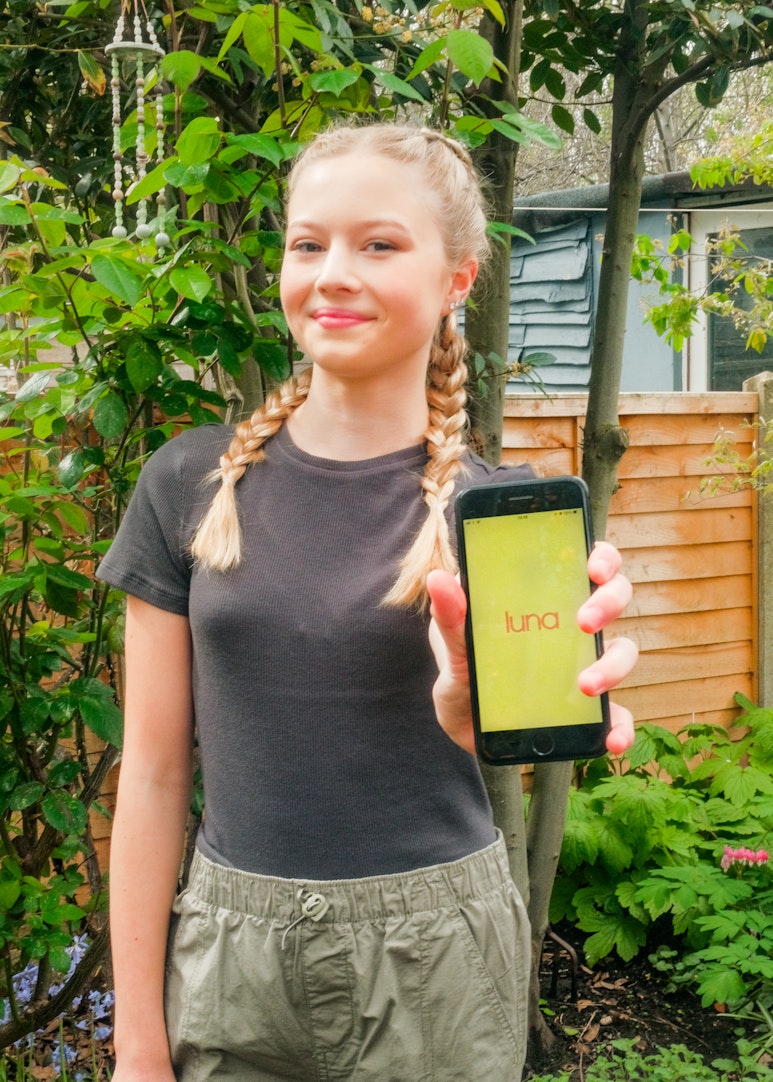
What should my daughter's mood be like after her period?
There's no single "right" mood, but for a lot of girls the days after a period are the emotionally easiest part of the month.
The week or so after a period is called the follicular phase. Oestrogen, which dropped just before her period, starts to climb again.
The NHS explains that this rising oestrogen is what prompts the ovary to develop and release an egg later in the cycle.
At the same time, any PMS symptoms she had in the run-up to her period tend to fade.
So if she was tearful or snappy last week, you might notice her seeming much more like herself now.
It helps to think about her mood across the whole cycle rather than expecting one fixed feeling. luna's guide to how mood changes across each phase of the cycle walks through what to expect and when.
Why does my daughter seem happier after her period?
It's largely down to hormones. The low points of PMS lift once bleeding starts, and the rising oestrogen of the follicular phase tends to go hand in hand with a steadier mood.
The Royal College of Obstetricians and Gynaecologists (RCOG) says PMS symptoms usually get better once a period starts, and often disappear by the time it ends.
So the gap between the pre-period week and the days after can feel striking, both for her and for you.
As the PMS fog lifts, you might notice she:
- Seems calmer and less easily irritated
- Has a bit more energy and motivation
- Feels more social and up for plans
- Finds it easier to concentrate
- Generally seems more herself
Every cycle is different, so she won't necessarily feel a big lift every single month.
If the harder stretch is really the week before, it's worth reading up on the mood swings that come with PMS so you know what's driving them.
Is it normal for my daughter's mood to still be low after her period?
Yes, it can be. Not every girl feels a clear lift once her period ends, and low mood afterwards doesn't automatically mean something is wrong.
In the first couple of years, irregular periods are normal while her hormones settle. That neat "up then down" pattern may simply not show up yet.
Low mood can also have nothing to do with her cycle at all. Sleep, stress, friendships and school pressure all shape how she feels from day to day.
luna gives teen girls a space to explore what's happening with their hormones and mood at their own pace, with content reviewed by medical experts rather than driven by influencers or ads.
If you want to know what you can do alongside that, here's luna's guide to supporting your teen's mental health.
When should I be worried about my daughter's mood around her period?
It's worth paying closer attention when low mood sticks around across the whole cycle, not just before her period, or when it lasts more than about two weeks and starts getting in the way of daily life.
YoungMinds notes that ordinary low mood in teenagers usually lifts within a few days to a week.
Signs it's worth speaking to a doctor include if she:
- Seems sad, low or numb most of the time for more than two weeks
- Loses interest in things she used to enjoy
- Pulls away from friends and family
- Has big changes to her sleep or appetite
- Is struggling to concentrate or keep up at school
- Is very hard on herself, or talks about feeling hopeless
There's also a severe form of PMS called premenstrual dysphoric disorder (PMDD), where mood symptoms in the run-up to a period are intense enough to disrupt daily life.
Around 5 to 8% of women have PMDD, according to RCOG.
The key difference is timing: PMDD symptoms lift once her period arrives, rather than lingering afterwards.
If you're trying to work out whether it's PMS or PMDD, a doctor can help you get to the bottom of it.
What's the best next step?
Tracking her period and her mood for a couple of months can make patterns much easier to spot, both for her and for a doctor if you ever need one.
If nothing seems to follow her cycle, or her low mood is there most of the time, that's your cue to check in with a doctor rather than wait it out.
And if you just want to understand the bigger picture, luna is built as a calm, judgement-free space for teen girls to learn how their bodies and moods work, all reviewed by medical experts.
Frequently asked questions
How long after her period should my daughter's mood improve?
For many girls, mood starts to pick up within a day or two of their period starting, and the lift is often clearest in the week or so afterwards.
There's no fixed timeline though, and some girls don't notice a big change at all.
Can the follicular phase really make my daughter feel more energetic?
Often, yes. As oestrogen rises and PMS eases, a lot of girls feel more up for things in the days after their period.
It's a general pattern rather than a promise, so try not to expect the exact same lift every month.
My daughter's moods don't follow any clear pattern. Is that normal?
In the first year or two of periods, it's very common. Cycles are often irregular while her hormones settle, so her mood can feel all over the place.
If it carries on for a long time or worries you, a doctor can help.
Could low mood after her period be PMDD?
It's unlikely. PMDD symptoms come in the run-up to a period and ease once it starts, so low mood that appears or lingers afterwards doesn't fit the usual PMDD pattern.
If low mood is persistent, it's still worth speaking to a doctor.
How we created this article:
luna's team of experts comprises GPs, Dermatologists, Safeguarding Leads and Junior Doctors as well as Medical Students with specialised interests in paediatric care, mental health and gynaecology. All articles are created by experts, and reviewed by a member of luna's senior review team.
Sources:
NHS "Periods and fertility in the menstrual cycle" | 04.08.26
https://www.nhs.uk/conditions/periods/fertility-in-the-menstrual-cycle/NHS "PMS (premenstrual syndrome)" | 04.08.26
https://www.nhs.uk/conditions/pre-menstrual-syndrome/RCOG "Managing premenstrual syndrome (PMS)" | 04.08.26
https://www.rcog.org.uk/for-the-public/browse-our-patient-information/managing-premenstrual-syndrome-pms/RCOG "Raising awareness of premenstrual dysphoric disorder (PMDD)" | 04.08.26
https://www.rcog.org.uk/news/blog-raising-awareness-of-premenstrual-dysphoric-disorder-pmdd/YoungMinds "Depression and low mood" | 04.08.26
https://www.youngminds.org.uk/parent/parents-a-z-mental-health-guide/depression-and-low-mood/We'd love to keep in touch!
Sign up to our parent newsletter for emails on the latest teen trends, insights into our luna community and to keep up to date
By signing up, you are agreeing that we can use your email address to market to you. You can unsubscribe from marketing emails at any time by using the link in our emails. For more information, please review our privacy statement.